

A bike riding rain jacket is an essential piece of gear for riders who travel in wet or unpredictable weather. Designed with waterproof and wind-resistant materials, it helps keep cyclists dry, comfortable, and safe during rides. Good rain jackets also offer breathability, reflective elements for visibility, and lightweight comfort, making them ideal for both daily commuting and long-distance cycling.
Why Your Last Rain Jacket Failed You
Most cyclists don’t get soaked because they bought a “bad” jacket. They get soaked or feel like they’re inside a wet plastic bag because they bought the wrong type of jacket for how they actually ride.
A hiking rain jacket is built for slow movement. A cyclist at 25 km/h generates significantly more body heat and sweat vapour than a hiker at the same temperature. When a jacket’s breathability membrane can’t move that moisture fast enough, it condenses back onto your skin. You don’t feel wet from rain. You feel wet from yourself.
According to Bikepacking.com’s 2024 eight-jacket field test, jackets rated below 10,000 g/m 2 breathability consistently cause interior condensation on rides with any sustained climbing or tempo effort. Their recommended floor for cyclists who push hard is 20,000 g/m² double what most general outdoor jackets offer.
Decoding the Two Numbers on Every Jacket Tag
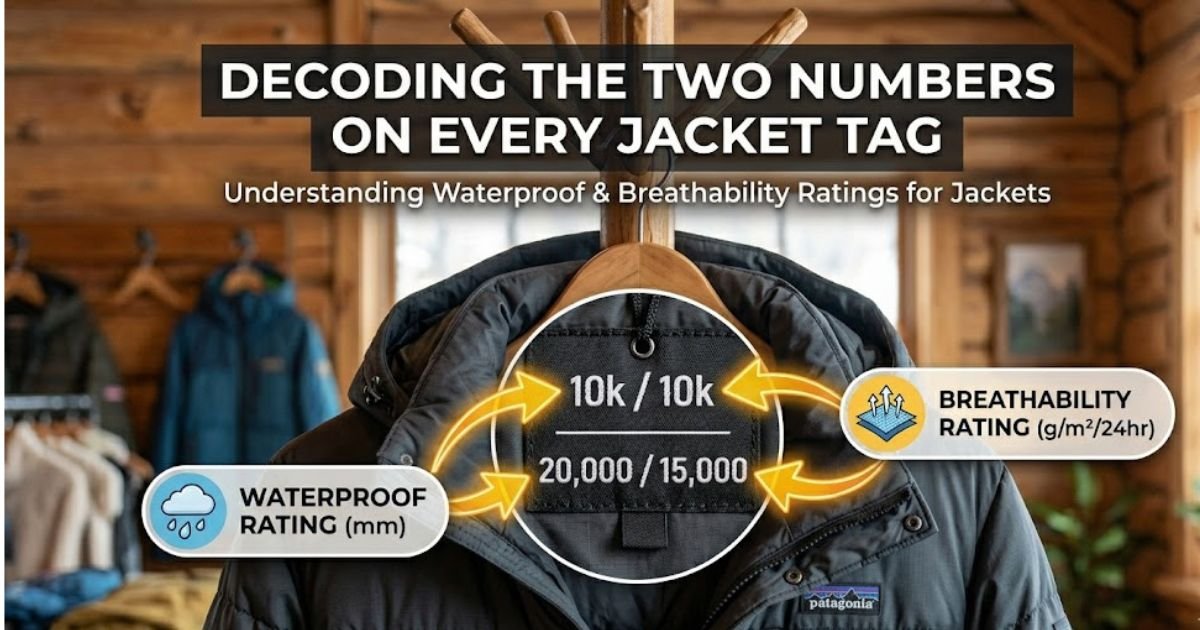
Waterproof rating (mm) and breathability rating (g/m²) are the two specs that matter. Everything else hood design, pocket placement, colour is secondary until you get these right.
Waterproof Rating: How Much Rain Can It Actually Handle?
The waterproof rating measures how many millimetres of water a column can press against the fabric before it leaks through. The scale works like this:
- Under 10,000mm fine for light drizzle and short commutes
- 10,000–15,000mm handles moderate rain for 1–2 hours
- 15,000mm and above appropriate for sustained heavy rain
Most quality cycling jackets sit between 15,000mm and 20,000mm. The Endura MT5000 II, for example, is rated at 20,000mm, genuinely adequate for hours-long rides in downpour conditions.
A waterproof rating only holds up if the DWR (Durable Water Repellent) coating on the outer fabric is intact. When DWR degrades from sweat, sunscreen, or just washing without proper re-treatment the outer fabric saturates and the breathability drops even if the membrane underneath is fine. Wash your jacket with a tech wash every 8–10 rides and tumble-dry on low heat to reactivate the DWR. That’s not optional maintenance. It’s the difference between a jacket that works and one that doesn’t.
Breathability Rating: The Number Cyclists Actually Need to Understand
Breathability is measured in grams of moisture vapour that pass through a square metre of fabric over 24 hours (g/m²/24hr). The higher the number, the faster the jacket vents your sweat.
Quick Comparison
| Breathability Rating | Best For | Key Benefit | Limitation |
| Under 10,000 g/m² | Short commutes, light drizzle | Lightweight, packable | Sweats out on climbs |
| 10,000–15,000 g/m² | Moderate rides, mixed weather | Balanced performance | Can clam up under high effort |
| 20,000–30,000 g/m² | Hard training rides, long gravel days | Genuine comfort at pace | Higher cost |
| 30,000+ g/m² | Racing, sustained climbs | Maximum moisture escape | Usually less waterproof |
The Pearl Izumi Summit PRO NeoShell WxB sits at 30,000 g/m², using Polartec NeoShell fabric which Pearl Izumi describes as among the most breathable waterproof materials available. The Endura MT5000 II pushes to 40,000 g/m², the highest breathability rating in its test category. The Rab Cinder Kinetic was the only jacket in the 2024 Bikepacking.com test that matched or exceeded the Pearl Izumi on raw breathability performance in real riding conditions.
I’ve seen conflicting data on whether the jump from 20,000 to 30,000 g/m² is perceptible to the average rider. Some testers say yes others argue the difference only shows up at race pace on back-to-back climbing days. My read is that 20,000 g/m 2 is the practical ceiling for most cyclists; going higher is mainly relevant if you’re doing unsupported bikepacking in wet mountain conditions.
2-Layer vs. 3-Layer Which Construction Is Right for You?
Or maybe I should say it this way the “layer” number isn’t about warmth. It describes how the waterproof membrane is bonded to the other fabrics.
2.5-layer jackets bond a waterproof membrane directly to the outer face fabric, with a printed pattern on the inside rather than a full liner. They’re lighter and pack smaller. They’re not as durable and typically not as breathable as 3-layer options. Good for commuters who don’t push hard and need something packable.
3-layer jackets sandwich the waterproof membrane between a face fabric and a bonded inner lining. The inner lining protects the membrane, which lets it be thinner and more porous — and therefore more breathable. These last longer and perform better at sustained effort. They cost more.
Look if you’re doing 2-hour training rides in consistent rain, 3-layer construction is worth the price jump. If you’re commuting 6 km to the office on mixed-weather days, a 2.5-layer packable jacket is entirely adequate.
The Cycling-Specific Features That Actually Change Your Experience
Most hiking waterproof jackets will technically keep rain off a cyclist. But three design details make a cycling jacket genuinely different and worth seeking out.
Dropped Rear Hem
When you’re in a forward riding position, a standard-length jacket rides up and exposes your lower back and jersey pockets. A cycling jacket’s rear hem drops 5–8 cm longer at the back than the front. It sounds minor. After two hours in the rain with an exposed back panel, it isn’t.
Hood-Over-Helmet Compatibility
This one matters specifically for urban commuters. A hood designed for a bare head sits differently when pulled over a cycling helmet — most won’t seal properly without adjustment. Look for jackets that explicitly state helmet-compatible hood design, usually with a structured peak and wider opening. Reflective trim around the hood is worth prioritising here too.
Seam Taping and Zipper Waterproofing
Any jacket can resist rain through the fabric. Water enters at seams and zippers. Fully taped seams visible tape strips bonded over every stitch line on the interior — are non-negotiable for riding in sustained rain. Water-resistant (not waterproof) zippers are the industry standard; look for a storm flap behind the main zip as a secondary barrier.
Some experts argue that reflective panels are overrated given how few cyclists actually ride at night in heavy rain. That’s valid for weekend recreation riders. But if you’re a year-round urban commuter, departing before dawn in November, reflective placement becomes a genuine safety decision not a cosmetic one.
How to Choose Based on How You Actually Ride
2-layer or 2.5-layer jacket with a waterproof rating of 10,000–15,000mm
Right for short commutes under 45 minutes in light to moderate rain where packability matters more than breathability.
3-layer jacket with 20,000mm waterproofing and 20,000+ g/m² breathability
Right for training rides over 1.5 hours, gravel riding in variable weather, or commutes with significant elevation gain.
To choose a bike riding rain jacket that fits your riding style, follow these steps
- Identify your typical ride duration and intensity the main variable
- Set a minimum breathability floor: 10,000 g/m² for casual, 20,000 g/m² for active riding
- Confirm the jacket has a dropped rear hem and taped seams before anything else
- Check that the hood fits over your helmet if you commute in traffic
- Verify DWR is PFAS-free if environmental impact is a consideration for you
A 3-layer construction is better suited for hard training rides or multi-hour wet weather exposure because the bonded liner keeps the membrane thin and breathable. A 2.5-layer jacket works better when packability and low weight are the priority and you aren’t riding at sustained high intensity. The key difference is how much sweat you generate.
Most people assume that spending more money automatically buys them a more waterproof jacket. The data says otherwise — price at the upper end of the market buys breathability, not waterproofing. A £60 jacket can be as waterproof as a £250 one. It just can’t breathe like it.
Conclusion
A high-quality bike riding rain jacket is a smart investment for every cyclist who rides in rainy conditions. It not only protects you from heavy rain and wind but also improves safety and comfort on the road. With the right jacket, you can continue riding confidently in all weather conditions without compromising performance or comfort.
FAQs
What’s the best bike riding rain jacket for commuters?
A 2.5-layer jacket with 15,000mm waterproofing, taped seams, a helmet-compatible hood, and reflective trim covers most urban commuting needs without over-engineering the purchase.
How do I know if a cycling rain jacket is breathable enough?
Look for a g/m² breathability rating above 20,000 if you ride at pace or climb regularly. Anything below 10,000 g/m² will feel like a sauna on a hard effort.
Should I buy a cycling-specific rain jacket or a regular hiking shell?
A cycling-specific jacket is worth it for rides over 45 minutes the longer rear hem, forward-lean cut, and higher breathability ceiling all serve a cyclist’s body position and sweat rate in ways a hiking shell doesn’t.
Why does my waterproof jacket feel wet inside even when the rain isn’t getting through?
That’s condensation from sweat, not rain penetration a breathability problem, not a waterproofing problem. Upgrade to a higher g/m² rating or wash and re-treat the DWR coating.
When should I choose a 3-layer jacket over a 2.5-layer?
When you ride for 90+ minutes in sustained rain or at training intensity. The 3-layer construction keeps the membrane breathable under prolonged sweat output; the 2.5-layer starts struggling in those conditions.


