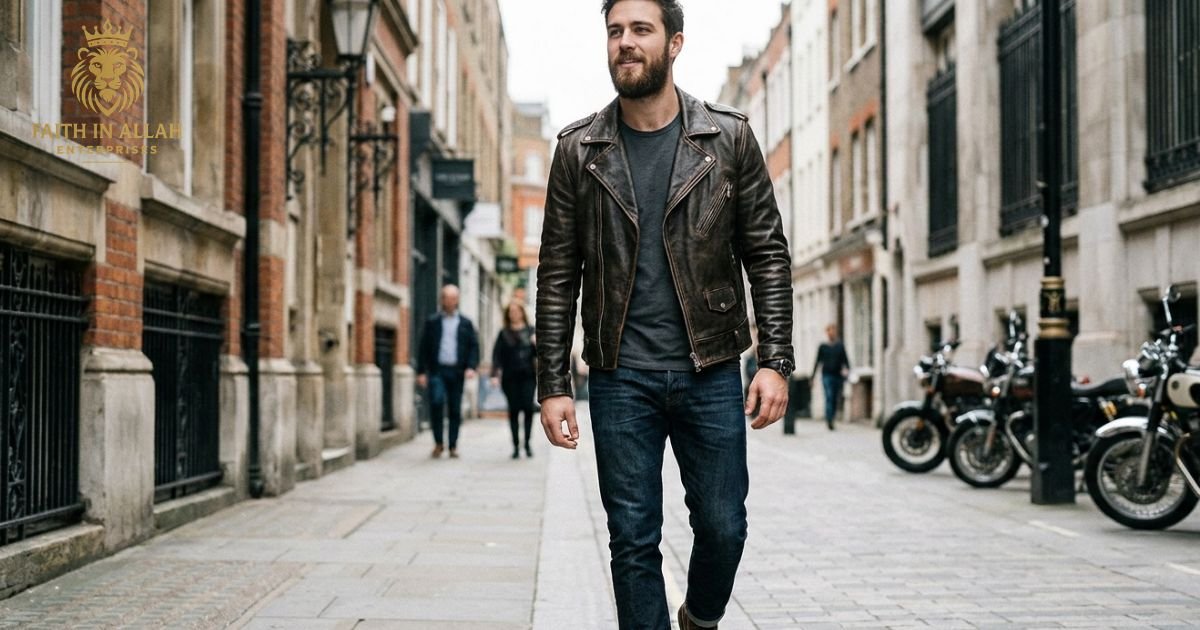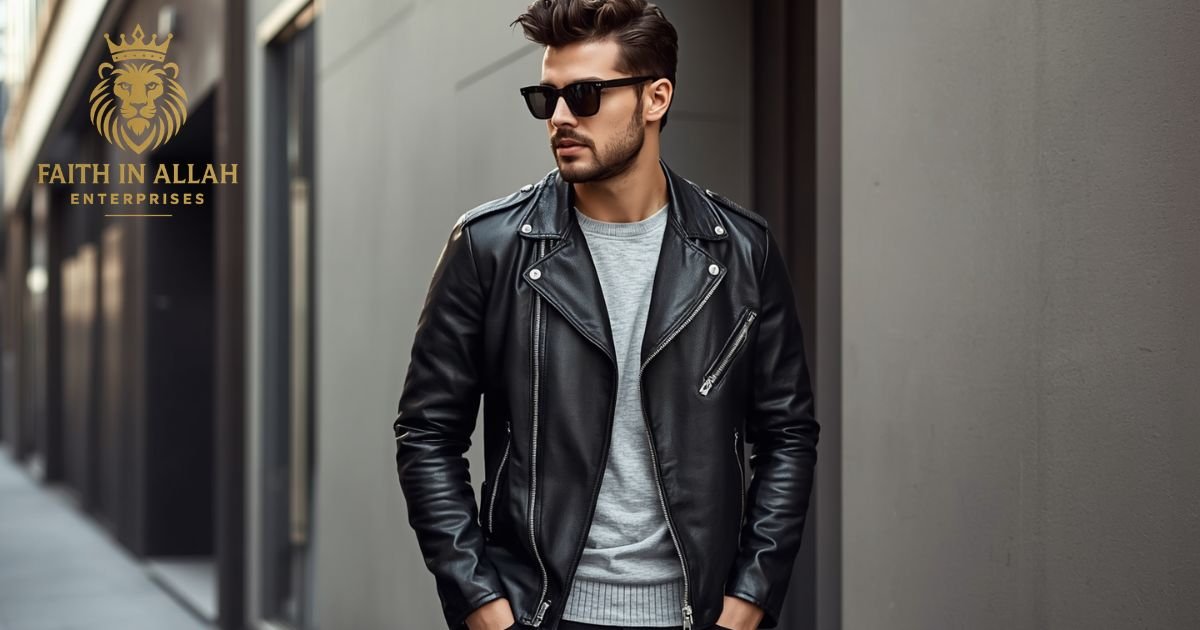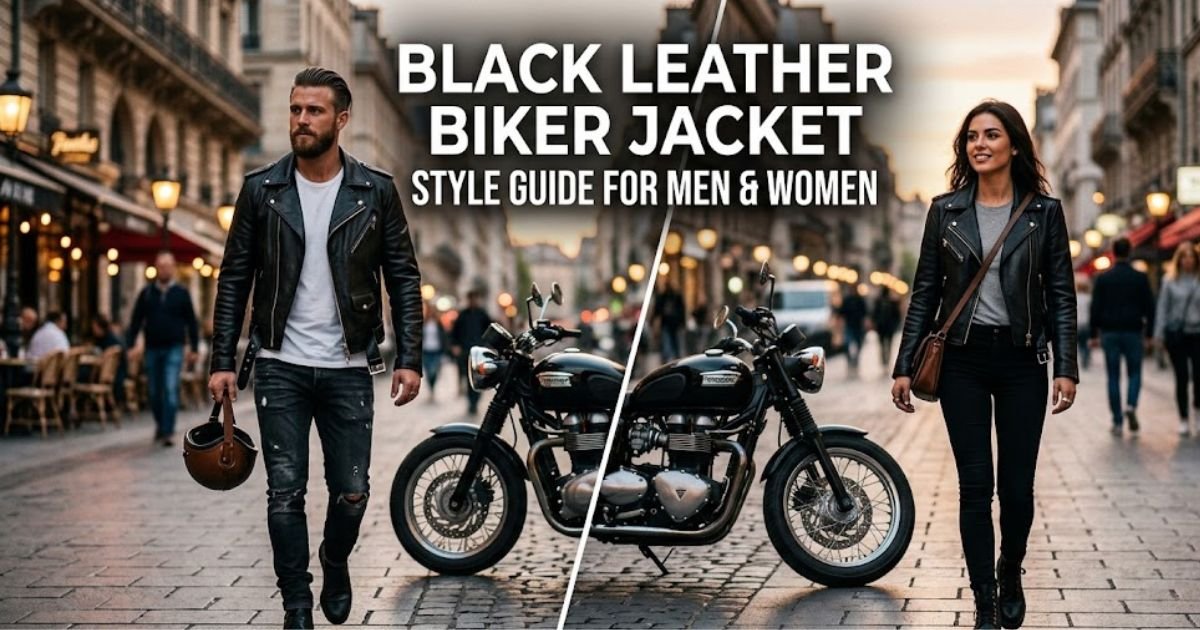
The black leather biker jacket is a timeless fashion essential known for its bold, edgy, and versatile style. Originally designed for motorcycle riders, it has now become a global fashion icon worn by both men and women. Its durability, sleek design, and effortless cool factor make it a must-have piece in every modern wardrobe.
Why the Black Leather Biker Jacket Has Never Gone Out of Style
Some things get old. This jacket refuses to.
The black leather biker jacket has been turning heads for nearly a century — and it shows absolutely zero signs of slowing down. It outlasted every trend that tried to replace it. Disco came and went. Athleisure has arrived. Streetwear exploded. The leather biker jacket just stood there, arms crossed, looking incredible.
From Marlon Brando to Modern Streetwear: A Cultural Timeline Worth Knowing
Here’s the origin story that makes this jacket so much more than outerwear.
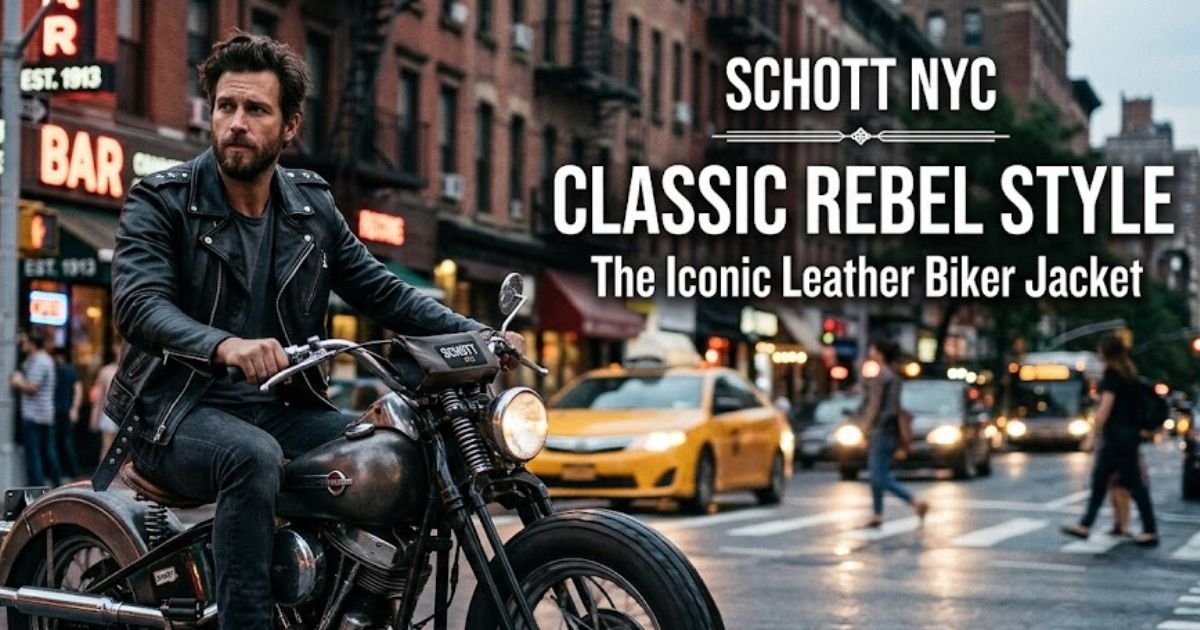
In 1928, Irving Schott of Schott NYC designed the Perfecto the world’s first leather motorcycle jacket. He sold it for $5.50 at a Harlem Harley-Davidson dealership. It was built for riders: asymmetric zipper to deflect wind, belted waist for a snug fit, reinforced shoulders for road protection.
Then came 1953. Marlon Brando wore a Schott Perfecto in The Wild One, and everything changed overnight. The jacket stopped being functional gear and became a cultural statement rebellion, freedom, and a little danger wrapped in cowhide.
The Ramones picked it up in the 1970s and gave it a punk edge. James Dean wore it and made it heartbreaking. David Beckham wore it and made it sexy. Today, it lives in luxury fashion houses and biker rallies with equal confidence.
That’s a 70-year run. No other jacket comes close.
Key milestones at a glance:
- 1928 Schott NYC creates the original Perfecto biker jacket
- 1953 Marlon Brando wears it in The Wild One; sales spike overnight
- 1970s The Ramones adopt it; punk culture claims it permanently
- 1980s–90s Rock and heavy metal cement its rebellious identity
- 2000s–present High fashion (Saint Laurent, Belstaff) brings it into luxury territory
What to Look for When Buying a Black Leather Biker Jacket
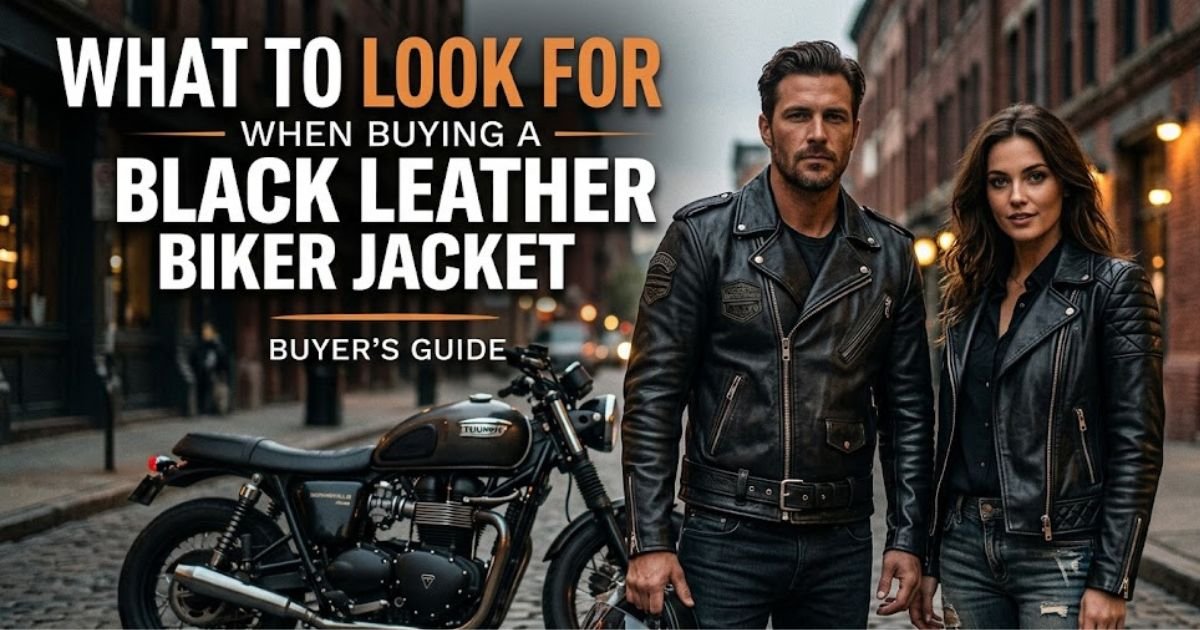
This is where most buyers go wrong. They see a jacket, they like the look, they buy it and three months later, the zipper breaks, the leather peels, and they’re back to square one.
Don’t do that. Here’s what actually matters.
Leather Type Decoded: Full-Grain vs. Top-Grain vs. Genuine vs. Bonded
Not all leather is created equal. Not even close.
$–$$–$
| Leather Grade | What It Is | Durability | Price Range | Best For |
| Full-grain | The entire hide, untouched natural texture intact | Exceptional (decades) | Serious riders, investment buyers | |
| Top-grain | Sanded to remove imperfections smooth, uniform look | Very good (5–10+ years) | Style buyers, everyday wear | |
| Genuine leather | Lower layers of the hide, processed and painted | Moderate (2–5 years) | – –$ | Budget buyers, occasional use |
| Bonded leather | Leather scraps bonded with polyurethane not real leather | Poor (often under 2 years) | $ | Avoid for serious use |
The honest truth: If you’re riding, go full-grain or top-grain. The abrasion resistance is not comparable and that matters when the road is coming up to meet you fast.
If you’re buying purely for style, top-grain gives you that clean, refined look without the premium price tag of full-grain cowhide.
Hardware and Construction What Separates a $150 Jacket From a $600 One
You can feel the difference before you even put it on.
A quality black leather biker jacket has:
- YKK zippers the gold standard in zipper hardware; they don’t jam, snag, or fail
- Double or triple stitching at shoulders, armholes, side panels, and pocket seams these are the stress points that cheap jackets tear through first
- Solid metal snap closures, not plastic they should feel weighty and click with authority
- Reinforced back panel with no center seam a single-piece back holds up better and looks cleaner
Run your fingers along the seams. Feel the zipper pull. Check the hardware. Quality construction announces itself immediately.
CE Armor, Concealed Carry, and Removable Liners: Features That Actually Matter
This is where rider-specific jackets pull ahead of fashion-only options.
If you actually ride, these features are not optional extras:
- CE-rated armor pockets at shoulders and elbows look for CE Level 1 or CE Level 2 certification. Level 2 offers significantly better impact absorption at high speeds.
- A back armor pocket with a full spine protector slot adds coverage that most jackets skip entirely.
- Concealed carry pockets interior zippered pockets for organized storage, keep essentials secure on long rides.
- Removable thermal liner a zip-out quilted liner extends the jacket’s usable season dramatically. One jacket, three seasons.
- Reflective piping or panels low-visibility riding is dangerous. Reflective detailing is a quiet safety feature that matters more than most buyers realize.
Is Genuine Leather Really Worth It Over Faux Leather?
Short answer: yes if you ride. More nuanced answer: it depends on what you need.
The genuine leather vs. faux leather debate has gotten louder in 2026 as high-quality vegan alternatives have improved dramatically. Here’s an honest breakdown.
| Factor | Genuine Leather | Faux / Vegan Leather |
| Durability | Exceptional ages beautifully for decades | Good to moderate depends heavily on quality |
| Abrasion resistance | Superior critical for riding protection | Lower not recommended for road protection |
| Feel and break-in | Stiff at first, molds to your body over time | Softer immediately, but less character development |
| Price | Higher upfront, lower cost-per-wear | Lower upfront, may need replacing sooner |
| Sustainability | Animal-derived ethical concerns for some | No animal products better option for vegans |
| Maintenance | Requires conditioning 2–3 times a year | Generally lower maintenance |
The bottom line: If you ride a motorcycle, genuine leather, specifically full-grain or top-grain cowhide is the only responsible choice for protection. If you’re buying purely for street style and ethical concerns matter to you, today’s premium faux leather options like Piñatex or high-density PU leather are genuinely impressive alternatives.
How Much Should You Spend on a Black Leather Biker Jacket?
Here’s the pricing reality nobody wants to say out loud: a quality leather biker jacket costs more than $100.
If you see a “genuine leather” jacket for $49.99, something is wrong. You’re either looking at bonded leather (leather scraps pressed together with glue), or the construction quality is so poor it’ll fall apart within a year.
That said, you don’t need to spend $1,000 to get something exceptional. Here’s how the USA market breaks down honestly.
| Price Tier | Range | What You Get | Best Brands |
| Entry-level | $100–$250 | Genuine or top-grain leather, basic construction, limited features | First Manufacturing Co., Wilson’s Leather |
| Mid-range | $250–$500 | Top-grain or full-grain, YKK hardware, armor pockets, removable liner | Milwaukee Leather, AllSaints, Harley-Davidson |
| Premium | $500–$800 | Full-grain or lambskin, lifetime warranty, superior construction | Schott NYC, Belstaff, Ralph Lauren RRL |
| Luxury | $800+ | Italian lambskin, hand-finished, fashion-house quality | Saint Laurent, Acne Studios |
Best Black Leather Biker Jackets Under $300 in the USA
Great jackets don’t require a great sacrifice. These options consistently deliver at the accessible price point:
- First Manufacturing Co. Superstar (~$130) top-grain milled cowhide, asymmetric zip, quilted lining, YKK zippers. Phenomenal value. Brando style done right.
- First Manufacturing Co. Night Rider (~$160) platinum naked cowhide, blacked-out hardware, concealed carry, CE armor pocket. A serious jacket at a non-serious price.
- Milwaukee Leather MLM1506 (~$200) premium cowhide, utility pockets, Cool-Tec leather treatment for summer riding comfort.
At these prices, you’re making a smart long-term investment. A $200 jacket that lasts 15 years costs you about $13 per year. That’s outstanding value.
How a Black Leather Biker Jacket Should Fit and How to Break It In
Fit is everything. A poorly fitted leather jacket no matter how expensive looks wrong. And a well-fitted one looks incredible at any price point.
The 5-Point Fit Test
Before you buy, run this checklist:
- Shoulders The seam should sit exactly at the edge of your shoulder. No overhang. No pulling. If the shoulder seam slides down your arm, size down.
- Chest Snug but not tight. You should be able to button a light shirt underneath without strain. Remember: leather doesn’t stretch the way fabric does.
- Sleeves When your arms hang naturally, sleeves should reach your wrist bone. When you reach forward (as you would on a bike), they shouldn’t pull at the shoulder.
- Waist The jacket should follow your torso shape. Too boxy = looks shapeless. Too tight = restricts movement on the bike.
- Movement Lift your arms above your head. Reach forward. Twist at the waist. You should feel resistance, not restriction. If it’s binding at the shoulders during basic movement, it’s too small.
Pro tip from experienced riders: Size down from your usual if you plan to wear it without heavy layers underneath. Leather molds to your body over time it’s supposed to start a little firm.
How to Break In a Stiff Leather Biker Jacket: Step-by-Step
New full-grain leather is stiff. That’s a sign of quality, not a problem. Here’s how to speed up the break-in process without damaging the hide:
- Wear it as much as possible Your body heat and movement are the most effective softening tools available. The jacket conforms to your specific shape this way.
- Condition it before first wear Apply a quality leather conditioner (Leather Honey or Bickmore Bick 4 are trusted choices) to soften the leather fibres before they take their first beating.
- Flex the sleeves manually Bend and flex the sleeves and back panel by hand. It feels odd, but it loosens the fibres without causing damage.
- Wear it in mild rain. Light moisture followed by natural drying softens leather quickly. Don’t drench it; just let it get caught in a brief shower and dry at room temperature.
- Avoid artificial heat Never use a hair dryer or sit near a radiator to dry wet leather. Heat causes cracking. Always dry naturally at room temperature.
- Be patient: A full-grain cowhide jacket takes 30–50 hours of wear to reach peak suppleness. It’s worth every minute.
Expert Insight What Decades of Building Leather Jackets Taught Us About Quality
There’s something you learn quickly when you’ve been around leather long enough: the jackets that feel the stiffest on day one are almost always the ones that last a lifetime.
The temptation is always toward softer, lighter, more immediately comfortable leather. It feels luxurious in the store. But that softness often means the hide was heavily processed drum-dyed, snuffed, or coated to mask imperfections. What looks and feels flawless out of the box can crack, peel, and fade within a few years.
Full-grain leather, by contrast, keeps its natural texture. It has small variations in tone, a slight roughness to the touch. And it develops a patina over years of wear that no manufactured finish can replicate. Riders who’ve owned a quality leather jacket for 20 years will tell you it only gets better.
The single most important thing to check? The stitching at the shoulder seam and armhole. These are the stress points where cheap construction fails first. Run your thumb along those seams before you buy anything. Double stitching should feel dense and tight, not loose or raised. That detail tells you everything about how the rest of the jacket was made.
How to Care for Your Black Leather Biker Jacket So It Lasts Decades
The riders and style icons who own jackets for 20 years aren’t lucky. They’re consistent.
Your essential leather care routine:
- Wipe down after every ride A damp cloth removes road dust, salt, and grime before they work into the hide.
- Condition 2–3 times a year Apply leather conditioner in circular motions with a soft cloth. Let it absorb fully before wearing. This prevents cracking and keeps the leather supple.
- Store on a wide, padded hanger Thin wire hangers distort the shoulder shape permanently. Invest in a proper hanger.
- Keep away from direct sunlight UV fading is subtle but cumulative. Store your jacket away from windows.
- Never store in a plastic bag. Leather needs to breathe. A cotton garment bag is ideal.
- Treat water damage immediately If your jacket gets soaked, stuff it lightly with newspaper to maintain shape and dry naturally at room temperature. Apply conditioner once dry.
Quick dos and don’ts:
| Do | Don’t |
| Condition regularly | Use bleach or harsh cleaners |
| Air dry naturally | Use a hair dryer or radiator |
| Store on a padded hanger | Store folded or in plastic |
| Wipe off rain promptly | Ignore water stains |
| Use leather-specific products | Use baby oil or petroleum products |
Conclusion
In conclusion, the black leather biker jacket remains a classic fashion staple that never goes out of style. Whether paired with casual jeans or a smart outfit, it adds instant attitude and confidence. Investing in a quality biker jacket ensures long-lasting style, comfort, and versatility for years to come.
FAQs
Is a black leather biker jacket still in style in 2026?
Absolutely and it’s not even close. The black leather biker jacket has appeared consistently on runways at Saint Laurent, Acne Studios, and Belstaff through 2025–2026. More importantly, it has never required runway validation. Its cultural permanence is baked in. Trends come and go; this jacket simply waits for them to pass.
What’s the difference between a biker jacket and a moto jacket?
The terms are often used interchangeably, but there’s a subtle distinction. A biker jacket typically refers to the classic asymmetric-zip silhouette snap-down lapels, epaulettes, half belt descended directly from the 1928 Schott Perfecto. A moto jacket is a broader term that includes café racer styles, sport-riding jackets, and any leather jacket designed for motorcycle use, including centre-zip and minimalist collar designs.
Can you wear a black leather biker jacket to work?
Yes with the right workplace. A leather biker jacket over a clean Oxford shirt, dark tailored trousers, and Chelsea boots reads as intentional, confident, and modern in most creative, tech, and business-casual environments. In traditionally formal offices (law, finance), save it for after hours. The key is pairing it with elevated basics the jacket should feel deliberate, not accidental.
How long does a quality leather biker jacket last?
A jacket built from full-grain cowhide, with quality hardware and double-stitched seams, should last 20–30 years with proper care and some owners have jackets that outlast that. Brands like Schott NYC offer lifetime warranties on their workmanship. The key variables are leather grade, construction quality, and how consistently you condition and store it.
Who invented the leather biker jacket?
Irving Schott of Schott NYC invented the original leather motorcycle jacket in 1928. He called it the Perfecto named after his favourite cigar and sold it exclusively at a Harley-Davidson dealership in New York City for $5.50. The design he created that year asymmetric zipper, belted waist, snap-down lapels remains the blueprint every biker jacket still follows nearly 100 years later.