

Ever been tempted by a beautiful “leather” jacket, only to wonder if it’s the real deal? You’re not alone. The contest of genuine leather vs fake leather is getting tougher, and nobody wants to overpay for an imitation that peels after a few wears.
That’s why knowing how to identify genuine leather is a must have skill for any savvy shopper. It’s about more than just a label; it’s about recognising the real leather characteristics that promise quality and durability. This guide will turn you into a pro so you can spot fakes with confidence and invest in authentic pieces that last a lifetime. Let’s get started.
What is Genuine Leather?
So, what exactly is “genuine leather”? In simple terms, it’s the real deal, a natural material made from animal hide. Think of it as nature’s original fabric. It’s strong, breathable, and has a personality all its own. Unlike materials that are mass produced in a factory, no two pieces of real leather are exactly alike. Each one has its own unique story, complete with tiny imperfections that add to its charm.
Definition and Characteristics of Genuine Leather
Genuine leather is more than just a label; it’s a promise of quality. The real leather characteristics you should look for include a soft, slightly textured feel and a distinct, earthy smell. It also has a certain flexibility and strength that man made materials can’t quite replicate. When you press your finger into real leather, it wrinkles and gathers just like skin does. These unique traits are signs of authenticity and are what make leather products so special and durable over time.
How Genuine Leather Differs from Synthetic Alternatives
The genuine leather vs fake leather debate often comes down to one thing: authenticity. Synthetic alternatives, like “pleather” or “vegan leather”, are typically made from plastic based materials. They might look good from a distance, but they often feel cold and stiff and have a chemical like smell. While fakes have a uniform, repeating pattern, genuine leather boasts natural imperfections. Plus, real leather breathes and becomes more beautiful with age, developing a rich patina, while synthetics tend to crack and peel when they wear out.
Why is Identifying Genuine Leather Important?
You might be wondering, “Does it really matter if my jacket is real leather?” The short answer is: absolutely! Knowing how to spot genuine leather isn’t just about being a savvy shopper; it’s about making sure you get what you pay for. It’s the difference between investing in a piece that will last for years and buying something that might fall apart after one season.
Ensuring Quality and Durability
One of the biggest reasons to learn how to identify genuine leather is to guarantee you’re getting a high quality, durable product. Real leather is tough. It can handle daily wear and tear with grace, often looking even better as it ages. A simple leather authenticity test, like feeling for its unique texture, can tell you if you’re holding a long lasting item or a flimsy imitation. When you choose genuine leather, you’re choosing a product that promises strength and longevity, saving you money in the long run.
Ethical and Environmental Considerations
The conversation around leather also includes important ethical questions. Understanding the source of your leather helps you make more conscious decisions. The topic of ethical sourcing in leather production is becoming more crucial for consumers who care about animal welfare and environmental impact. By identifying the type and origin of leather, you can support brands that prioritise responsible practices and transparency in their supply chains.
How FIA Enterprises Guarantees Authenticity
Here at FIA Enterprises, we take authenticity seriously. We believe trust is built on transparency. Every piece in our collection is crafted from 100% genuine leather, and we’re proud of it. We carefully select our materials to ensure they meet the highest standards of quality and ethical sourcing. We stand by our craftsmanship, so you can feel confident that you’re not just buying a product but investing in a piece of authentic, handcrafted art that you can cherish for years to come.
How to Identify Genuine Leather
Okay, now for the fun part! You don’t need a science lab to figure out if your leather is the real deal. In fact, you already have the best tools for the job right at your fingertips, literally. Learning how to identify genuine leather is all about using your senses. Let’s walk through the most reliable ways to spot a fake.
Touch Test: What Should Genuine Leather Feel Like?
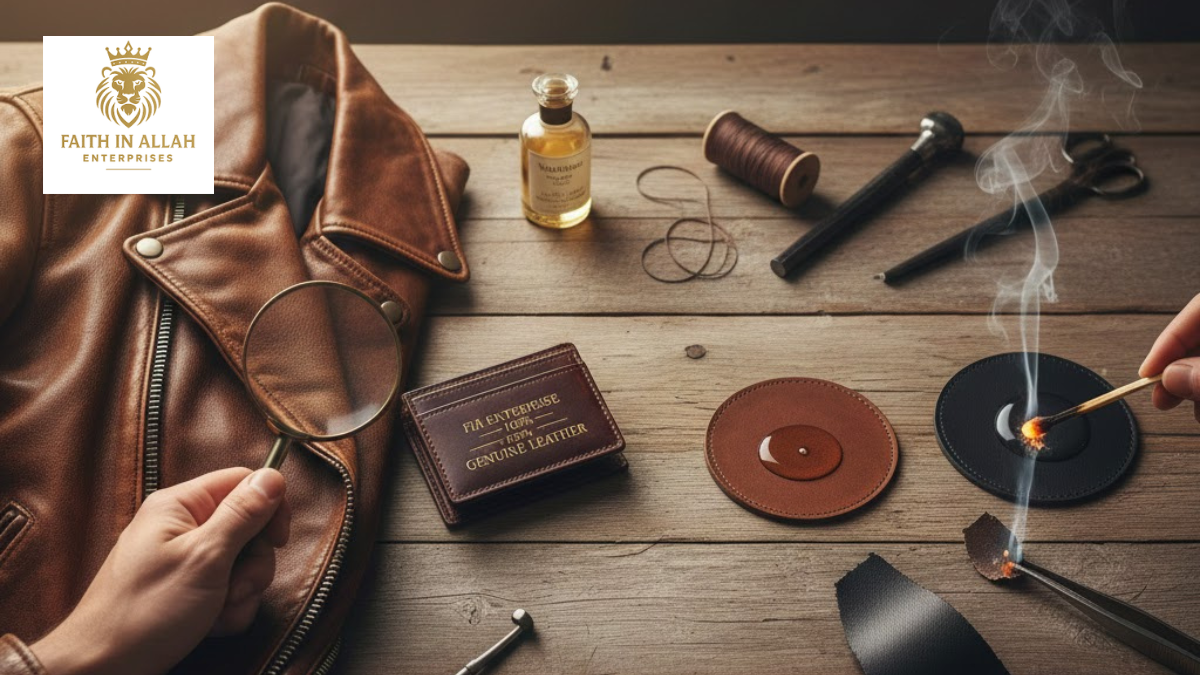
First things first, get hands on. The leather touch test is often the quickest giveaway. Genuine leather feels natural, soft, and warm to the touch. It’s not perfectly smooth like plastic; it has a bit of texture and grip. If you press your finger into it, real leather will wrinkle and stretch slightly, just like your own skin does. On the other hand, synthetic leather usually feels cold, stiff, and unnaturally smooth. It just sits there, rigid and lifeless.
Smell Test: The Distinct Aroma of Real Leather
Close your eyes and take a deep breath. Genuine leather has a rich, earthy, and unmistakably natural scent. It smells like, well, skin and nature! Fake leather, however, often smells like chemicals, plastic, or glue. If you catch a whiff that reminds you of a new shower curtain or a tyre shop, put it back on the shelf. That classic leather smell is hard to fake.
Visual Inspection: Grain, Imperfections, and Edges
Take a close look. Real leather is like a fingerprint, no two pieces are exactly alike. You want to see uneven patterns, tiny pores, and natural imperfections. If the surface looks too perfect, with a repeating pattern that looks stamped on, it’s likely synthetic. Also, check the edges. A genuine piece will have rough, fibrous edges where the hide was cut. Fake leather usually has perfect, smooth edges that look like layers of plastic glued together.
Water Absorption Test: A Simple At Home Method
Here is a quick leather authenticity test you can do safely (just maybe not in the middle of a store!). Place a tiny drop of water on the leather. Genuine leather is porous, so it will absorb the moisture after a few seconds, creating a dark spot that eventually fades. Synthetic leather is water resistant, so the droplet will just sit on top, rolling around like rain on a windscreen.
Flame Test: When and How to Use It Safely
Note: Proceed with caution! This is an extreme test, and we don’t recommend trying it on a brand new jacket you haven’t bought yet. But if you hold a flame near real leather for a few seconds, it might char slightly and smell like burnt hair, but it won’t catch fire easily. Fake leather? It will catch flame quickly, bubble up, and smell like burning plastic. Stick to the smell and touch tests first!
Common Misconceptions About Leather
The world of leather is filled with a few tricky myths that can easily trip up even the most careful shoppers. It’s time to clear the air and bust some common misconceptions. Knowing the truth will help you make smarter choices and appreciate the real value of a well made leather product. Let’s separate fact from fiction.
Is ‘Genuine Leather’ Always High Quality?
This is a big one. You see “Genuine Leather” on a tag and think, “Great, this is the good stuff!” But here’s a little industry secret: “genuine leather” is actually a specific grade of leather, and it’s not the highest quality. While it is real leather, it’s typically made from the lower layers of the hide, making it less durable than top grain or full grain leather. So, while it’s authentic, it’s not the premium standard. Don’t let the label fool you into overpaying for mid tier quality.
Can Vegan Leather Mimic Real Leather?
Vegan leather has come a long way, and some high end versions can look surprisingly convincing. However, they can’t truly replicate all the real leather characteristics. Vegan options, usually made from plastics like polyurethane (PU), lack the natural breathability, unique grain imperfections, and durability of animal hide. They don’t develop a beautiful patina over time; instead, they tend to crack and peel. So, while it can mimic the look, it can’t match the feel or lifespan of the real thing.
Does Price Always Indicate Authenticity?
In the genuine leather vs fake leather debate, you might assume a higher price tag means higher quality. Often, that’s true, but not always. Designer brands can charge a premium for synthetic materials simply because of their name. On the flip side, you might find a fantastic deal on a genuine leather item from a lesser known artisan. Price is a helpful clue, but it shouldn’t be your only one. Always rely on the touch, smell, and visual tests to be sure.
Advanced Tips for Leather Identification
Now that you’ve mastered the basics, let’s level up your expertise. If you really want to impress your friends (or just make sure you’re getting the absolute best quality), these advanced tips will help you spot the nuances between good leather and great leather. It’s all in the details!
How to Spot Full Grain vs Top Grain Leather
Not all genuine leather is created equal. The heavyweights of the leather world are “full grain” and “top grain”. Full grain is the top dog, it uses the entire grain of the hide, including all the natural imperfections and toughness. Look for tiny scars or bug bites; these are good signs! Top grain leather, on the other hand, has been sanded down to remove those marks. It looks smoother and more uniform but feels a bit thinner. Think of full grain as a rugged mountain and top grain as a manicured lawn, both are real, but one is wilder and tougher.
Identifying Vegetable Tanned Leather
You might hear leather geeks talk about “veg tan”. This refers to how the leather was preserved using natural tannins from tree bark instead of harsh chemicals. Identifying vegetable tanned leather is a treat for the senses. It usually feels stiffer at first but has a rich, woody smell that chemical tans just can’t replicate. It also tends to have deeper, more natural earth tones. If it smells like a forest rather than a factory, you’ve likely found a gem.
Recognising Leather Patina Over Time
One of the most magical things about high quality leather, especially full grain leather, is how it ages. This ageing process is called “patina”. Synthetic stuff just gets old and cracks, but real leather gets better. A leather patina is that soft sheen and darkening colour that develops where the leather is touched or worn the most. It’s like the leather is keeping a diary of your life together. If a product looks too shiny and perfect to ever change, it might not be the real deal.
FAQs
How Can I Test Leather Without Damaging It?
Please, put the lighter away! You don’t need to burn a hole in a jacket to know if it’s real. The safest leather authenticity test relies entirely on your senses. Start with the smell test; that earthy aroma is hard to fake without smelling chemical. Next, use the touch test. Press your finger into the material to see if it wrinkles naturally like skin. If you really want to try the water test, always find a hidden spot (like the inside of a strap or the underside of a cushion) so you don’t ruin the finish.
What Are the Best Tools for Leather Identification?
Believe it or not, you were born with the best tools for the job! Your eyes, nose, and fingertips are all you need to figure out how to identify genuine leather. You don’t need expensive equipment or a science lab. However, if you want to get really technical, a simple magnifying glass can be a fun helper. It lets you zoom in to look for those tiny, uneven pores that synthetic materials usually lack.
Can I Identify Leather Online Without Touching It?
Shopping online makes things a bit trickier since you can’t do a touch or smell test. But you can still be a detective! Zoom in on the high quality photos. You want to see natural grain and slight imperfections, not a pattern that repeats perfectly like wallpaper. Read the description carefully for terms like “full grain” or “top grain”. Also, check the price tag. Genuine leather is an investment, so if a “leather” bag costs the same as a sandwich, be suspicious!
Ethical and Sustainable Leather Choices
Let’s be real for a moment. When we buy something beautiful, we want to feel good about it, right? It’s not just about how the jacket looks in the mirror; it’s about knowing where it came from. Making smart choices about genuine leather isn’t just about style, it’s about supporting practices that respect both nature and craftsmanship.
The Role of Ethical Sourcing in Leather Production
You might hear terms like “fast fashion” thrown around, which usually means cheap products made quickly without much care for the environment. Ethical sourcing in leather production flips that script completely. It means the leather is a byproduct of the food industry (so nothing goes to waste) and that the tanning process uses methods that are safer for workers and the planet.
When you choose ethically sourced leather, you are voting for quality over quantity. Instead of buying a plastic based fake leather jacket that might end up in a landfill in two years, you invest in a natural material that can last a lifetime. It’s a slower, more thoughtful way to shop that reduces waste significantly.
How FIA Enterprises Supports Sustainable Practices
At FIA Enterprises, we believe that true luxury shouldn’t cost the earth. We are deeply committed to sustainable practices that honour the tradition of leatherworking. We work closely with suppliers who share our vision for responsible production, ensuring that every hide is treated with respect and processed safely.
We don’t just churn out products; we craft them. By focusing on durability and timeless designs, we encourage a “buy less, buy better” mindset. When you pick up one of our pieces, you can wear it with pride, knowing it was made with care, conscience, and a commitment to doing things the right way.
Conclusion
We’ve covered a lot of ground today! From sniffing jackets to checking for those tiny imperfections, you are now equipped with the detective skills needed to spot the real deal from the fakes. Navigating the world of leather doesn’t have to be confusing once you know what to look for.


