

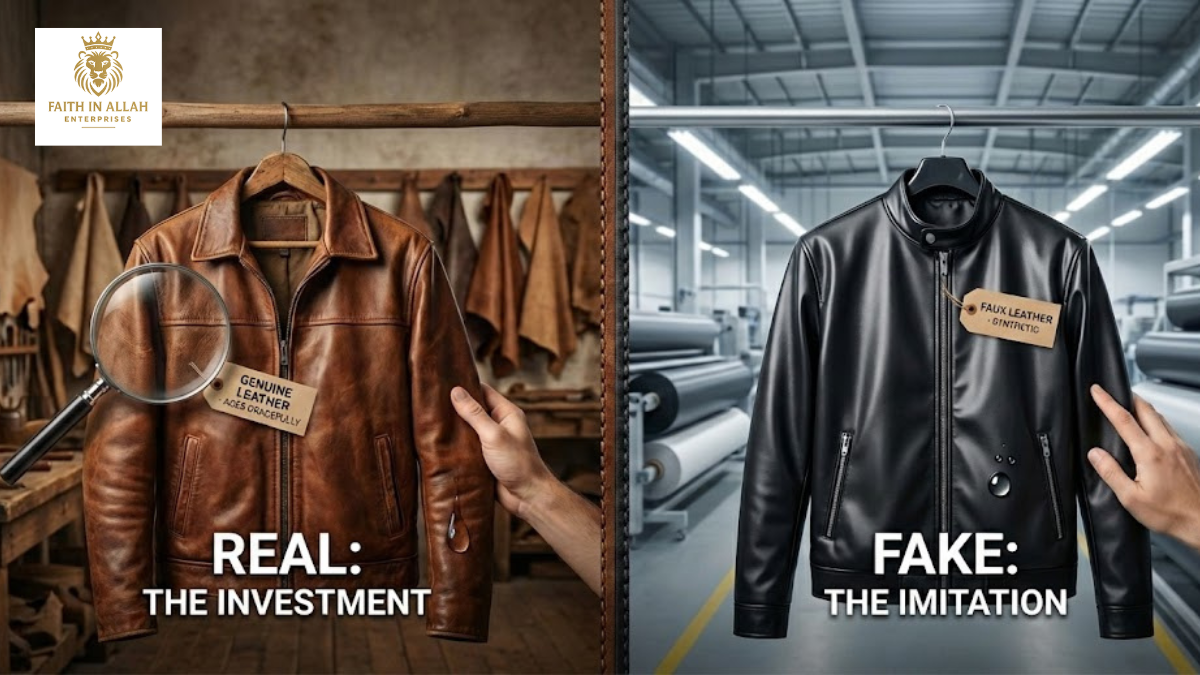
Have you ever spotted a jacket that looked amazing, only to wonder if it was the real deal or just a really good impostor? You aren’t alone. In a world full of shiny imitations, knowing how to spot fake leather is a superpower every shopper needs. After all, nobody wants to pay premium prices for plastic dressed up in a fancy costume.
Whether you are hunting for durability, that classic smell, or just serious style points, understanding the battle of real vs fake leather is crucial. A genuine leather jacket isn’t just an item of clothing; it’s an investment that moulds your shape and tells your story over time. Fake leather, while sometimes easier on the wallet, often lacks the soul and staying power of the authentic material.
Understanding Leather: Real vs Fake
Before you can tell a treasure from a knockoff, you need to know what you’re actually looking at. The core differences between real and fake leather come down to their origins. One is crafted by nature, while the other is born in a factory.
What Is Real Leather Made Of?
Real leather comes from a natural source: animal hides, most commonly from cows, sheep, or goats. These hides go through a process called tanning, which preserves them and turns them into the durable material we know and love. Because it’s an organic product, every piece is unique. A genuine leather jacket has its own character, with slight imperfections and grain patterns that tell a story. It’s tough yet breathable, and it develops more personality over time.
How Is Fake Leather Manufactured?
Fake leather, often called synthetic leather or faux leather, is a man made material. It’s typically created by applying a plastic based coating, like polyurethane (PU) or polyvinyl chloride (PVC), to a fabric backing. Think of it as a plastic shell fused onto a cloth base. While modern manufacturing has improved its appearance, it still lacks the natural qualities of real leather. It doesn’t breathe the same way, and instead of ageing gracefully, it tends to crack and peel over time, especially with frequent use.
How to Identify Real Leather
Okay, detective, it’s time to get hands on. You’re standing in the store (or staring at a screen), and you need to know: is this the real McCoy or a plastic impostor? Learning how to identify real leather is actually pretty fun once you know the tricks.
What Are the Signs of Genuine Leather?
First up, trust your nose. The leather smell test is the oldest trick in the book because it’s almost impossible to fake. Real leather has a rich, earthy scent that feels organic. Fake leather, on the other hand, often smells like chemicals or plastic, think shower curtains or new car interiors. If it smells like a laboratory, put it back.
Next, get touchy feely. Check the leather texture. Remember, genuine leather is skin. It should feel uneven, with natural imperfections, wrinkles, and grain patterns. If the surface feels suspiciously smooth or cold or looks perfectly uniform like it was stamped by a machine, you’re likely holding synthetic material.
How to Perform the Water Absorption Test
Ready for a little science experiment? If you want to be absolutely sure, try the water absorption test. Take a tiny drop of water and place it on a hidden spot of the item. Genuine leather is porous and will usually absorb the droplet after a few seconds, darkening slightly where it soaked in. Fake leather is essentially plastic, so the water will just sit on top like a puddle on a raincoat. It’s a simple way to spot the difference instantly!
Pros and Cons of Real and Fake Leather
Choosing between the two can feel like picking a favourite dessert, they both look good, but one is definitely more satisfying in the long run. Let’s break down the good, the bad, and the shiny to help you decide.
Advantages of Real Leather
There is a reason people still obsess over genuine leather centuries after we started using it. The biggest pro? Durability. A high quality leather jacket is tough as nails. It resists tears, handles weather well, and actually looks better the more you wear it. It develops a unique patina, a fancy word for that soft, worn in glow, that tells the story of your adventures. Plus, it breathes naturally, so you won’t feel like you’re wearing a sauna suit. When you buy real, you’re buying a companion for life, not just for a season.
Disadvantages of Real Leather
Of course, nothing is perfect. The main hurdle for most people is the price tag. Real leather is an investment, costing significantly more than synthetic options because of the craftsmanship involved. It also requires a little love to keep it looking fresh. You can’t just toss it in the washing machine; it needs occasional conditioning to stay soft. Lastly, for those who strictly avoid animal products for ethical reasons, this isn’t the material for you.
While fake leather might win on initial price and vegan credentials, it often loses the marathon. It tends to crack after a year or two and lacks that rich, organic feel. But if you want longevity and style that ages like fine wine, the real deal is unbeatable.
Why Real Leather Is a Better Investment
Think of a real leather jacket not as a purchase, but as an investment. While the upfront cost is higher, what you get in return is a piece that lasts for years, even decades. A fake leather jacket might look cool for a season or two, but it’s a temporary fix. A genuine leather jacket is a long term partner in style.
The Longevity of Real Leather Jackets
The number one reason to choose genuine leather is its incredible longevity. This material is naturally tough and built to withstand wear and tear. Unlike synthetic materials that can crack, peel, or tear easily, real leather is resilient. With just a little care, it can survive spills, scrapes, and years of use without losing its integrity. You might buy one or two high quality leather jackets in your entire life, whereas you could go through a dozen fake ones in the same amount of time.
How Real Leather Ages Gracefully Over Time
Here’s where the magic really happens. Real leather ages gracefully, developing a unique character called a patina. This is the soft sheen and subtle colour variation that comes from use, sunlight, and the natural oils from your skin. Instead of looking worn out, your jacket begins to tell a story. It moulds to your body, becoming more comfortable and personal over the years. Fake leather just gets old and falls apart, but genuine leather evolves and becomes even more beautiful with age.
Caring for Your Leather Jacket
You’ve invested in a quality piece, so let’s make sure it stays looking sharp. A genuine leather jacket is low maintenance, not high maintenance, but it does need a little TLC to keep that showroom shine.
How to Clean and Maintain Real Leather
Routine care is easier than you think. For day to day cleaning, simply wipe your jacket down with a soft, damp cloth to remove dust or surface dirt. Think of it like washing your face, gentle is key. Once or twice a year, treat it to a leather conditioner. This keeps the material soft and supple and prevents it from drying out or cracking.
If your jacket gets soaked in the rain, don’t panic! Just hang it up on a wide, padded hanger and let it air dry naturally at room temperature. Keeping up with simple leather care ensures your jacket stays ready for your next adventure.
Common Mistakes to Avoid When Caring for Leather
Even the best intentions can go wrong if you aren’t careful. One of the most common mistakes people make is using heat to dry their jackets. Never use a hairdryer or put real leather near a radiator; high heat sucks the natural moisture right out of the hide, leaving it stiff and brittle.
Another no-no? Throwing it in the washing machine. Harsh detergents and heavy spinning cycles are a disaster for genuine leather jackets. Lastly, avoid storing it in plastic bags. Leather needs to breathe, so always use a breathable cloth bag or just let it hang free in your closet. Treat it right, and it will return the favour for years to come.
Ethical and Sustainable Leather Choices
In a world where we are all trying to be a little kinder to the planet, asking where your clothes come from is a big deal. When it comes to leather, making smart choices matters just as much as looking good. It’s not just about style; it’s about respect for nature.
The Importance of Responsibility Sourced Leather
Many people worry that choosing leather is bad for the environment, but the truth is a bit more nuanced. Ethical leather is all about transparency and waste reduction. Responsibly sourced leather is typically a byproduct of the food industry. This means that instead of animal hides going to waste in a landfill, they are repurposed into durable, beautiful clothing.
On the flip side, many synthetic alternatives are made from plastics that never biodegrade, which can be harmful to our oceans and wildlife. Sustainable leather focuses on using natural tanning methods and ensuring that the entire process respects both the animal and the environment. When you choose quality over fast fashion, you are buying less often, which is one of the best ways to live sustainably.
How FIA Enterprises Ensures Ethical Practices
At FIA Enterprises, we take this responsibility seriously. We don’t just sell jackets; we craft legacies. We are committed to sourcing our materials with care and integrity. We ensure that every piece of genuine leather in our collection comes from trusted suppliers who follow strict ethical guidelines. We believe that true luxury shouldn’t come at the cost of our values. When you wear one of our jackets, you can feel good knowing it was made with respect for the craft and the planet.
Styling Tips for Leather Jackets
A great leather jacket is like your favourite song, it goes with everything. But knowing a few simple styling tips can take your look from good to unforgettable. The best part? Leather jackets are incredibly versatile, making them a staple piece no matter the weather.
How to Style Leather Jackets for Different Seasons
Leather isn’t just for fall. In the spring, throw a classic black leather jacket over a simple white t shirt and jeans for a timeless, cool vibe. During cooler summer evenings, it’s the perfect layer to wear over a floral dress to add a bit of edge.
When autumn arrives, pair it with a cosy sweater, dark wash jeans, and boots for the ultimate fall uniform. In winter, you can even layer it under a heavier wool coat for extra warmth and style. Its adaptability across different seasons makes it one of the most hard working items in any closet.
Pairing Leather Jackets with Accessories
The right accessories can complete your outfit. For a casual look, a simple beanie or a classic baseball cap works perfectly. If you want to dress it up, try adding a silk scarf or a statement necklace to create a contrast against the rugged leather. Don’t forget about your footwear, leather jackets look just as good with chunky combat boots as they do with sleek sneakers or elegant heels. Experiment and have fun with it.
Conclusion
We’ve covered a lot of ground together, haven’t we? From sniffing jackets in the store (no judgement here!) to understanding the science behind that distinct real leather feel, you are now equipped to separate the treasures from the trash.
Choosing between real and fake isn’t just about the price tag; it’s about deciding what kind of story you want your clothes to tell. While synthetic options might save you a few bucks today, genuine leather jackets are built for the long haul. They don’t just survive the years; they get better with them, moulding to your shape and becoming a true part of your personal style.


