

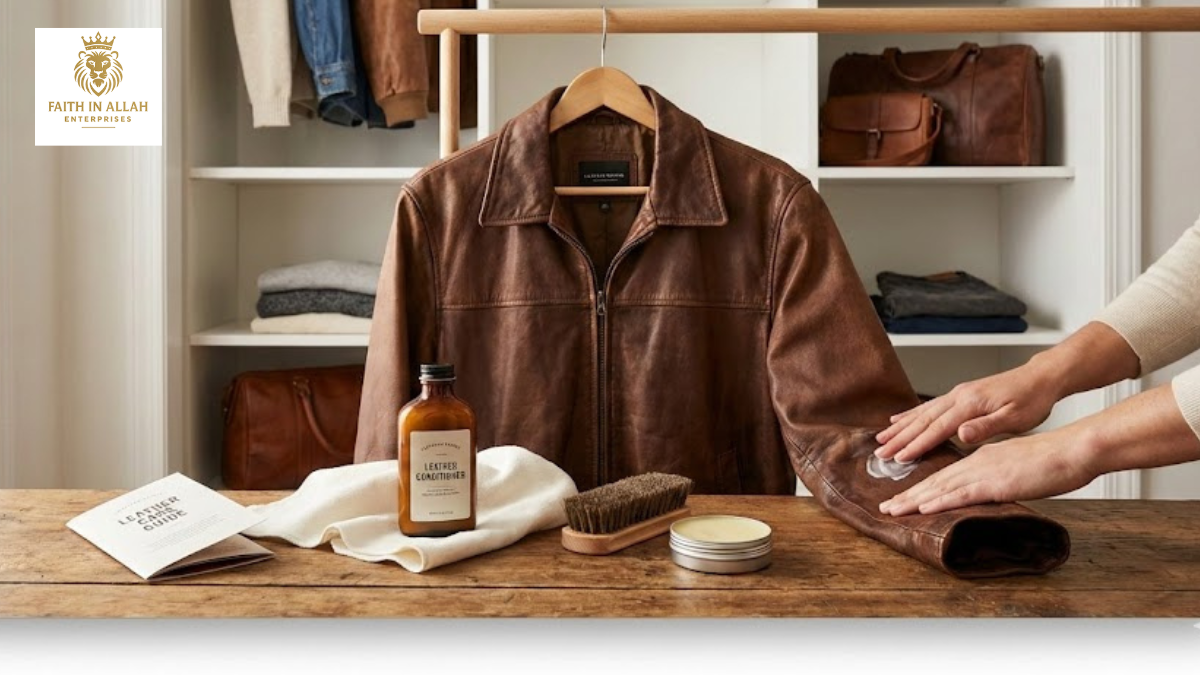
That leather jacket hanging in your closet? It’s more than just clothing, it’s an investment, a statement, and a trusted companion that gets better with age. But to ensure it lasts a lifetime, a little TLC is essential. Knowing the right leather jacket care tips can be the difference between a jacket that cracks and fades and one that stays soft, stylish, and ready for any adventure.
Wondering how to clean leather jackets without causing damage or how to maintain leather jackets so they look brand new for years? You’re in the right place. This guide will give you simple, effective steps to protect your favorite piece, keeping it in perfect shape from season to season.
Understanding Your Leather Jacket
Before you grab a cleaning cloth, pause for a second. Not all jackets are built the same! Just like you wouldn’t wash a silk shirt the same way you wash denim jeans, knowing exactly what your jacket is made of is the first rule of leather jacket care. If you treat the wrong leather with the wrong product, you might accidentally ruin your favorite piece.
Types of Leather: Which One Do You Own?
Most jackets fall into a few main categories, and spotting the difference is key. Cowhide is tough, heavy, and durable, perfect for motorcycle riders who need protection. Lambskin is incredibly soft, lightweight, and luxurious, but it is also more delicate and prone to scratches. Then there are types of leather like suede or nubuck, which have a fuzzy, velvet like finish. Knowing if your jacket is tough cowhide or delicate suede will change how you handle it.
How to Identify Genuine Leather vs. Faux Leather
Is it the real deal? Genuine leather has a distinct, earthy smell that fake stuff just can’t copy. Faux leather usually smells like plastic or chemicals. You can also tell by touching it. Real leather feels warm and flexible, while fake versions often feel cold, stiff, or too slippery. Look closely for tiny pores, too; real skin has natural imperfections, while faux materials look smooth and repetitive.
Why Different Leathers Require Different Care
Here is why this matters: leather care isn’t one size fits all. Suede hates water and needs a special brush to stay fluffy, while smooth leather loves a good conditioner to stay hydrated and shiny. If you put heavy cream on suede, you’ll ruin the texture forever. Treating your specific type correctly ensures your jacket stays awesome for years.
Cleaning Your Leather Jacket
Let’s be honest, spills happen. Whether it’s a drop of coffee or just the dust from a long road trip, your jacket is going to get dirty. But before you panic, take a deep breath. Cleaning leather jackets isn’t rocket science, but it does require a gentle touch. You can’t just scrub it like a dirty dish; you have to treat it like skin because, well, that’s exactly what it is.
Step by Step Guide to Cleaning Leather Jackets Safely
For general cleaning, simplicity is your best friend. Start by mixing a mild soap solution, think gentle baby soap, with warm water. Dip a soft, lint free cloth into the water and wring it out until it’s just damp, not dripping. Gently wipe down the surface of your jacket to remove surface dust and grime.
Once you’ve wiped it down, take a second clean, damp cloth (water only) to remove any soapy residue. Finally, dry it off with a soft towel. Never use heat like a hair dryer or radiator to speed up the process; let it air dry naturally. This basic routine is the cornerstone of good leather jacket care.
Can You Wash a Leather Jacket in a Washing Machine?
Short answer: No. Long answer: Absolutely not! Throwing your leather jacket in the washing machine is the quickest way to ruin it. The tumbling action is too rough, and soaking leather in that much water strips away its natural oils. This leaves the leather dry, stiff, and prone to cracking. Always stick to hand cleaning or professional services.
How to Remove Stains Without Damaging the Leather
Got a tough spot? To remove stains from leather jackets, you need specific tactics. For ink stains, a cotton swab dipped in rubbing alcohol can work wonders, just dab gently, don’t rub. For oil or grease, sprinkle a little baking soda or cornstarch on the spot and let it sit overnight to absorb the oil before brushing it off. Always test any method on a hidden area first to make sure it doesn’t fade the color.
Conditioning and Hydrating Leather
If cleaning your jacket is like washing your face, then conditioning it is like using a moisturizer. Just like your own skin, leather can get thirsty over time. Sun, heat, and even dry air can suck the natural oils right out, leaving it feeling stiff and looking dull. Proper conditioning is the secret to keeping your jacket soft, flexible, and ready for anything.
Why Conditioning Is Essential for Longevity
Think of conditioning as giving your jacket a drink. When leather loses its moisture, the fibers become brittle and can start to crack. Once cracks appear, they’re nearly impossible to fix. Conditioning replenishes those essential oils, keeping the leather supple and strong. This simple step in your leather care routine prevents damage before it starts, ensuring your jacket doesn’t just last but looks incredible for decades.
How Often Should You Condition Your Leather Jacket?
This is a common question, and the answer is: it depends. If you wear your jacket daily or live in a very dry or sunny climate, you should consider conditioning leather jackets every three to six months. For jackets that see less action or are stored in a moderate climate, once a year is usually enough. A good rule of thumb is to feel the leather. If it starts to feel a bit dry or stiff, it’s time for some TLC.
Best Products for Conditioning Leather (Including Eco Friendly Options)
When it comes to the best leather conditioners, look for products specifically designed for jackets, not shoes. Mink oil or neatsfoot oil are classic choices that work well. Apply a small amount with a soft cloth, rub it in gently using circular motions, and let it absorb for a few hours before wiping off any excess. For those looking for greener alternatives, there are now excellent plant based and eco friendly leather conditioners available that use natural waxes and oils to achieve the same beautiful, protective finish.
Storing Your Leather Jacket
When the warm weather hits and it’s time to put your favorite layer away for the season, you can’t just toss it in the back of the closet and forget about it. Storing leather jackets correctly is like tucking them into a comfortable bed for a long nap. If you do it right, they wake up looking refreshed; do it wrong, and they might wake up grumpy and misshapen.
Proper Storage Techniques to Prevent Damage
First rule: Ditch the flimsy wire hangers! They are the enemy. They dig into the shoulders and can permanently ruin the shape of your jacket. Instead, use a wide, padded hanger that supports the weight evenly. Also, give your jacket some personal space. Squishing it tightly between other clothes causes friction and wrinkles. Good leather jacket care means letting the leather hang freely so it can relax.
Can Leather Jackets Be Folded for Long Term Storage?
You might be tempted to fold your jacket to save space in a drawer, but please resist the urge! Folding creates sharp creases that are incredibly hard, sometimes impossible, to remove. Leather has a memory, and it will remember that fold forever. Always hang it up to keep the surface smooth and crack free.
How to Protect Leather Jackets from Mold and Humidity
Leather is a natural material, which means it needs to breathe. Never store your jacket in a plastic garment bag. Plastic traps moisture inside, creating a perfect recipe for a science experiment you definitely don’t want. To prevent mold on leather jackets, use a breathable cloth bag or even an old cotton pillowcase to keep dust off. Keep the jacket in a cool, dry place, avoid damp basements, to ensure it stays fresh until winter returns.
Repairing and Restoring Leather Jackets
Even the toughest heroes get a few scratches now and then, and your jacket is no different. Over years of adventures, it might start showing its age. The good news? You don’t have to say goodbye just yet. Repairing leather jackets can often give them a second life, keeping them in your wardrobe rotation where they belong.
How to Fix Peeling, Cracking, or Fading Leather
Is your jacket looking a little pale? To restore faded leather jackets, a high quality leather conditioner or a color restoring balm is usually the hero you need. It soaks in and brings back that rich, deep color. However, if you are trying to fix peeling leather, the situation is a bit stickier. Peeling usually happens when the finish on top starts to flake off. While there are leather filler kits available that work like putty to fill in the gaps, preventing this with regular moisturizing is always easier than fixing it later!
Can You Repair a Leather Jacket at Home?
For minor issues, absolutely! Small scuffs can often be buffed out with a soft cloth and some conditioner. If you have a tiny snag, a tiny drop of specialized leather glue might do the trick. But remember, leather isn’t fabric. You can’t just stitch it up with a needle and thread from a sewing kit because every needle hole is permanent. If you aren’t 100% confident, it is better to pause than to accidentally make it worse.
When to Seek Professional Help for Repairs
Know your limits. If you have a broken zipper, a deep tear, or a large patch of discoloration, it is time to call in the pros. A professional leather cobbler or tailor has the heavy duty tools and expertise to handle major surgery. Spending a little money on professional repair is worth it to save a high quality piece from the trash bin.
Preventative Care Tips
They say prevention is better than cure, and that is definitely true for preventative leather care. Instead of waiting for a disaster to happen, a few smart moves now can save you a headache later. Think of this as putting a shield around your jacket so it can handle whatever the world throws at it.
How to Waterproof Your Leather Jacket
Water is leather’s natural enemy. While you can’t turn your jacket into a raincoat, you can definitely boost its defenses. To waterproof leather jackets, you need a good quality water repellent spray or wax. Sprays are usually easier for suede and softer leathers, while waxes work wonders on tougher cowhide. Apply an even coat, let it dry completely, and repeat once a season. It won’t make your jacket fully waterproof, so don’t go swimming in it! but it will stop unexpected rain showers from leaving permanent water spots.
Protecting Leather from Sunlight and Heat
We all love a sunny day, but your leather jacket? Not so much. Direct sunlight acts like a bleach, fading that rich color you love. Worse, intense heat dries out the natural oils, leading to stiff, brittle leather. Never leave your jacket in the back window of a hot car or hanging next to a radiator. Always store it in a cool, shaded spot to keep the leather hydrated and vibrant.
What Are the Best Practices for Winter Leather Jacket Care?
Winter can be tough on your wardrobe. Salt from the roads, snow, and freezing temperatures are a triple threat. For winter leather jacket care, wipe off any salt stains immediately with a damp cloth, as salt eats away at the finish. Keep the leather well conditioned to prevent it from cracking in the dry, cold air. If you get caught in a snowstorm, hang your jacket on a padded hanger away from direct heat and let it air dry slowly.
FAQs
How to Remove Odors from Leather Jackets
Leather is breathable, which is great for comfort but bad when it absorbs smells like smoke, food, or mustiness. If your jacket smells a bit funky, don’t panic. To remove odors from leather jackets, start with fresh air. Hang it outside in a shaded, breezy spot for a day or two. If the smell persists, try the baking soda trick. Place the jacket in a breathable bag or pillowcase with an open box of baking soda and leave it for 24 hours. The baking soda acts like a sponge for bad smells without damaging the leather.
Can Leather Jackets Be Dyed or Re Dyed?
Absolutely! If your jacket has faded or you just want a new look, you can dye leather jackets. However, this isn’t quite as simple as tie dyeing a t shirt. Going from a lighter color to a darker one is much easier than the other way around. While there are DIY kits available, it can be messy and risky. For a flawless finish that doesn’t look patchy, it is usually safer to trust a professional who specializes in leather restoration.
How to Soften a Stiff Leather Jacket
Is your new jacket feeling a bit like armor? It happens. Leather needs time to break in. To soften leather jackets, the best method is simply to wear them! Movement warms up the fibers and helps them mold to your body. You can speed up the process by applying a high quality leather conditioner, which lubricates the fibers and makes them more flexible. Gently massaging the jacket with your hands while watching TV helps too, think of it as a massage for your coat!
Unique Insights from FIA Enterprises
When you choose a jacket, you’re not just buying an item of clothing, you’re investing in a piece of art that tells a story. At FIA Enterprises, we pour our hearts into every stitch and seam, ensuring that your story is one of lasting style and quality. Understanding the heart behind our craft can help you appreciate and care for your jacket even more.
Why FIA Enterprises Jackets Are Built to Last
It all starts with the materials. We hand select only the finest genuine leathers, known for their durability and beautiful aging process. Each of our FIA Enterprises jackets is handcrafted by skilled artisans who take pride in their work. This meticulous attention to detail means stronger seams, a better fit, and a jacket that doesn’t just look good on day one but for years to come. We build our jackets to be companions for life, designed to withstand trends and time.
Exclusive Care Tips for High End Leather and Fur Jackets
Our collection often features luxurious combinations of leather and real fur, which require a special touch. When it comes to care for fur jackets, brushing is key. Use a specialized fur brush to gently detangle the hairs and remove any dust or debris. Never use chemical cleaners on the fur. If the fur gets wet, shake it out and hang it to dry naturally, far from any heat source. For our high end leather jackets, a premium, pH balanced conditioner is your best friend to maintain that supple, luxurious feel. Treat these special pieces with a little extra attention, and they will reward you with unparalleled elegance.
Conclusion
And there you have it, your complete roadmap to keeping your leather jacket looking spectacular. We’ve covered everything from understanding the difference between cowhide and suede to the golden rule of never (ever!) using a washing machine. You now know that leather jacket care isn’t just a chore; it’s the secret ingredient that turns a simple garment into a lifelong companion.


