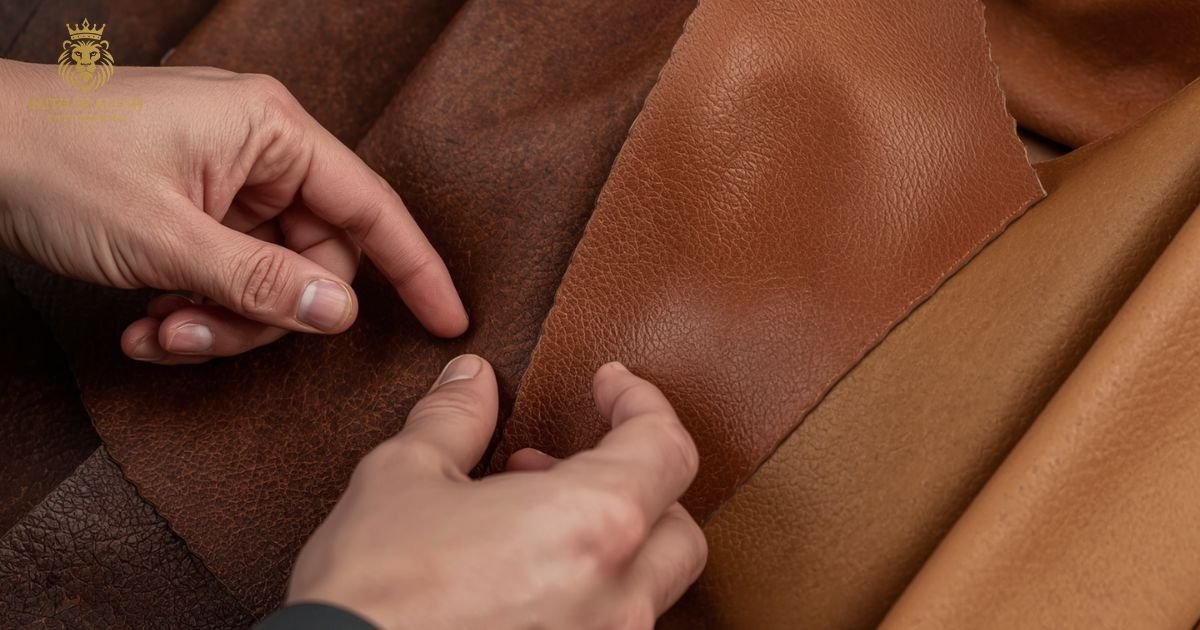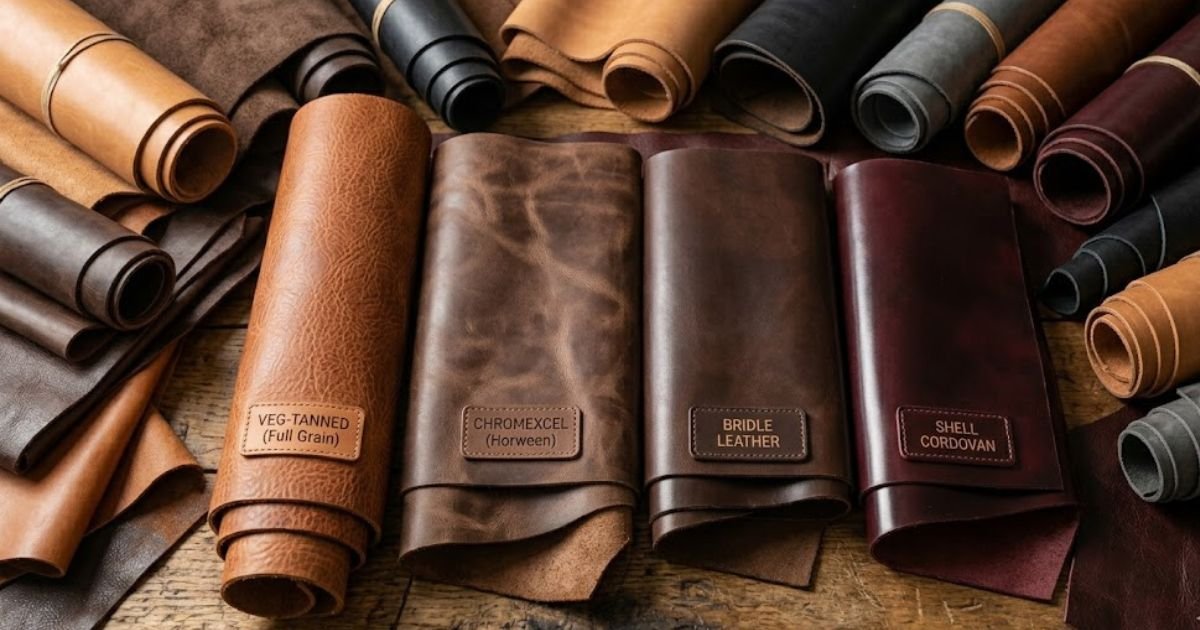
Choosing the best leather for making wallets is important for durability, appearance, and long-term performance. Wallets are used daily, so the leather must be strong enough to withstand wear while maintaining its look over time. Popular choices include full-grain leather, top-grain leather, and vegetable-tanned leather, each offering unique benefits.
Why Leather Choice Makes or Breaks Your Wallet
Picture this. You spend three weekends cutting, stitching, and finishing a bifold wallet. The edges are clean, the saddle stitching is perfect, the design is exactly what you imagined.
Then six months later, the leather starts peeling. The card slots crack. The whole thing loses its shape.
That’s not a skill problem. That’s a material problem. And it happens to beginner leatherworkers constantly not because they didn’t try hard enough, but because they grabbed the cheapest or most available leather without understanding what they were buying.
The right leather makes every step of the process easier, the final product stronger, and the finished wallet genuinely impressive. So let’s fix that from the ground up.
The 5 Leather Types Used for Wallets Ranked
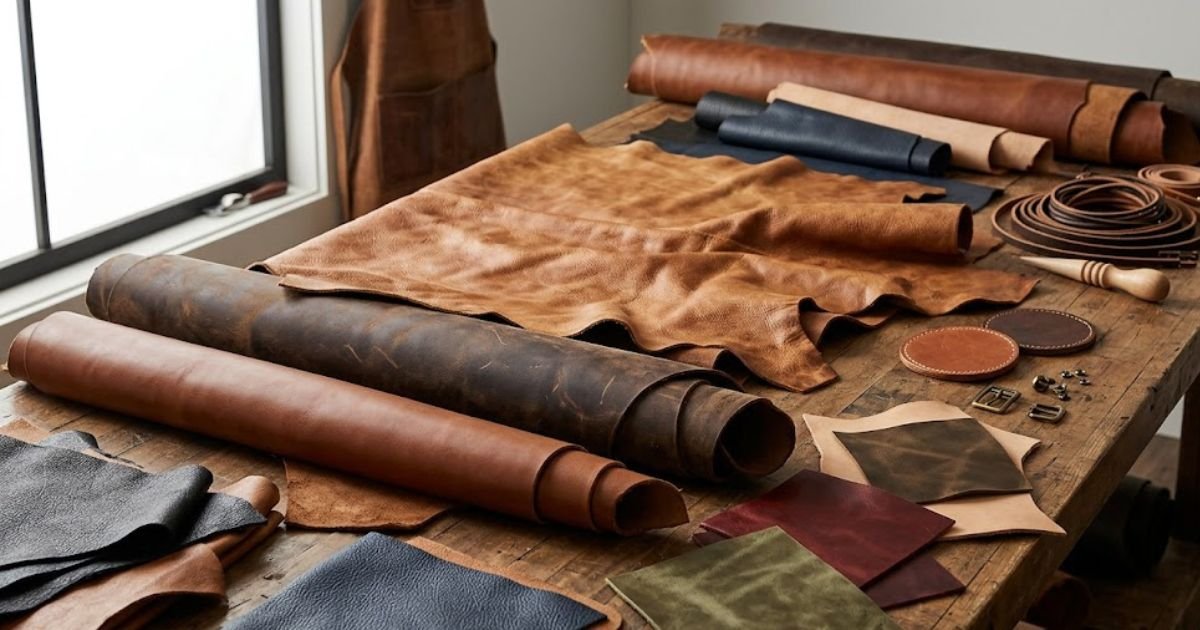
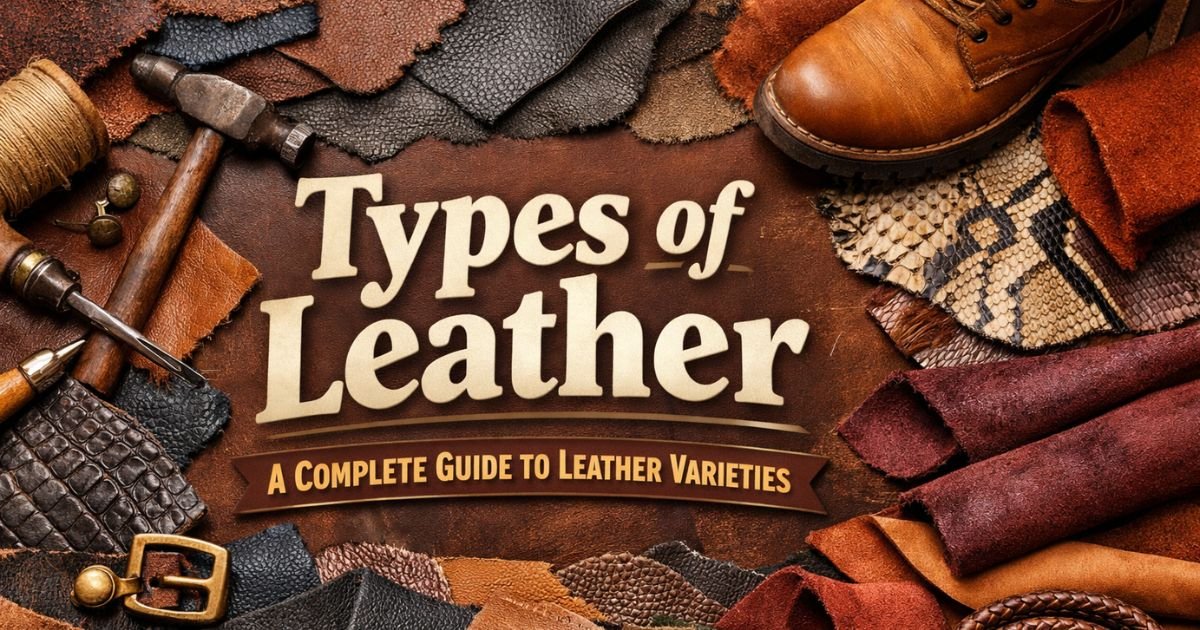
Not all leather is created equal. In fact, the leather industry is full of misleading terms designed to make low-quality material sound premium. Here’s the honest ranking, from best to worst.
1. Full-Grain Leather The Gold Standard
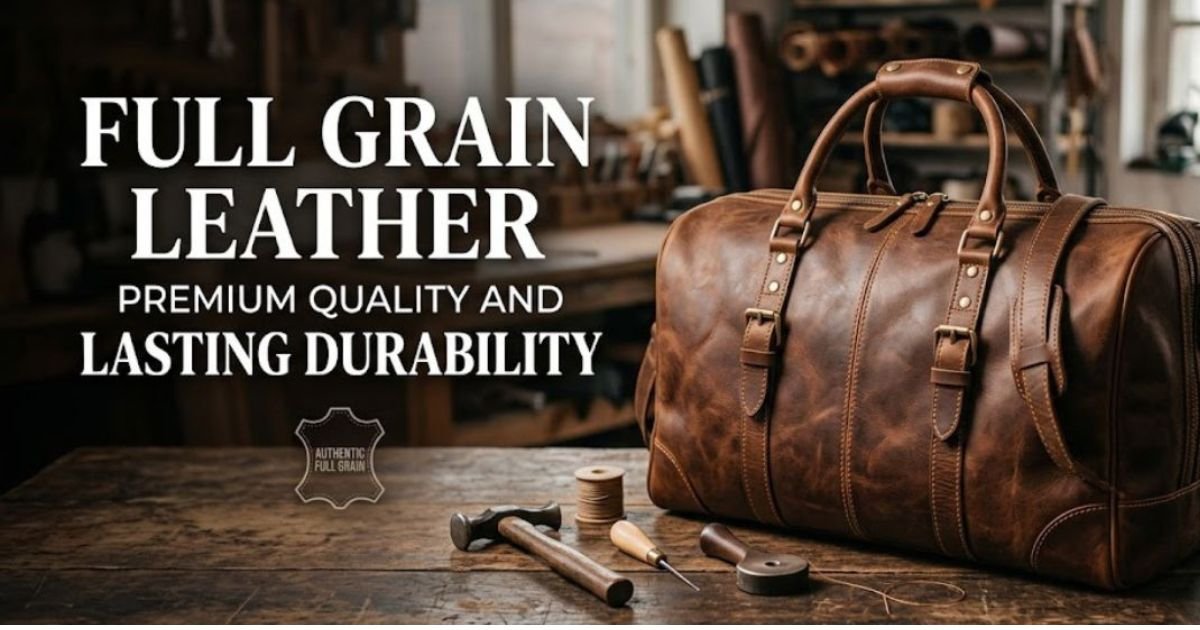
Full-grain leather is the strongest, most durable leather you can buy. It comes from the outermost layer of the hide the part that was literally the animal’s skin which means it has the tightest fiber structure of any leather type.
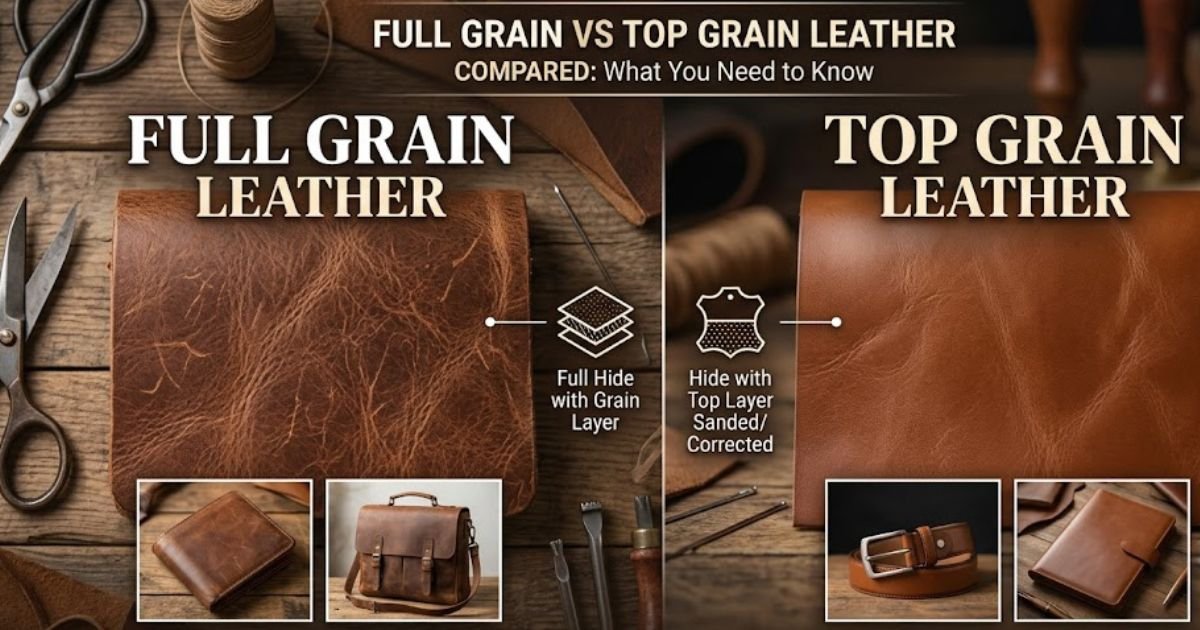
Because it’s never sanded, buffed, or corrected, full-grain leather keeps all of its natural markings. Small scars, subtle texture variations, tiny imperfections they’re all still there. And that’s exactly what makes it special. Those “flaws” become characters over time.
Most importantly, full-grain leather develops a patina a gorgeous darkening and deepening of color that happens through natural oils, sunlight, and use. A full-grain leather wallet after five years of daily carry looks dramatically better than the day you made it. Nothing else does that quite the same way.
2. Top-Grain Leather Smooth, Workable, but a Step Down
Top-grain leather is the second layer of the hide. It’s been sanded and buffed to remove surface imperfections, giving it a smooth, uniform appearance that many people actually prefer visually.
It’s more pliable than full-grain leather, which makes it easier to work with especially for complex wallet designs with lots of folds. But that sanding process weakens the fiber structure, making it less durable over time.
Top-grain is a solid choice for slim card wallets and minimalist designs where flexibility matters more than raw toughness. Just don’t expect it to age the same way full-grain does.
3. Genuine Leather Not What You Think It Is
Here’s the truth the industry doesn’t want you to know: “genuine leather” is actually the lowest usable grade of real leather. It’s not a mark of quality it’s a warning sign.
After manufacturers cut away the layers needed for full-grain and top-grain leather, the leftover fibrous material is bonded and processed into what gets labeled “genuine leather.” It’s a real animal hide, technically. But it’s heavily coated, poorly structured, and won’t last.
A wallet made from genuine leather might look decent in the store. Give it a year of daily use and you’ll see the coating crack, the edges fray, and the whole thing fall apart. Avoid it for any project you care about.
4. Nubuck Leather Beautiful but Fragile
Nubuck is top-grain leather that’s been sanded on the grain side to create a soft, velvety texture. Luxury brands love it because it looks incredibly refined. Premium shoe brands use it constantly.
For wallets? It’s risky. Nubuck scratches easily, doesn’t hold its finish well under daily pocket friction, and is harder to maintain. It’s a beautiful material just not a practical one for something you sit on every day.
5. Suede Style Over Substance
Suede comes from the underside of the hide, giving it that signature soft, brushed texture. It looks great. It feels incredible. And it is absolutely not built for wallet making.
Suede absorbs moisture, stains easily, and has almost no structural integrity compared to full-grain leather. It might work as a lining material inside a wallet, but using it for the main body is asking for trouble.
Veg-Tan vs. Chrome-Tan Which Tanning Method Wins for Wallets?
The leather grade tells you which layer of the hide you’re working with. The tanning method tells you how it was processed and this is just as important for wallet making.
There are two main methods: vegetable tanning and chrome tanning. They produce dramatically different results.
| Property | Veg-Tan | Chrome-Tan | Winner |
| Workability for beginners | Firm, holds shape | Soft, more forgiving | Chrome-Tan |
| Patina & aging | Rich, stunning patina | Minimal aging | Veg-Tan |
| Tooling & stamping | Excellent | Poor | Veg-Tan |
| Edge finishing | Burnishes beautifully | Harder to burnish | Veg-Tan |
| Flexibility out of the box | Stiffer | Soft immediately | Chrome-Tan |
| Eco-friendliness | More sustainable | Uses heavy metals | Veg-Tan |
| Price point | Higher | Lower | Chrome-Tan |
| Drying time after wet molding | Slow (hours) | Fast | Chrome-Tan |
| Best for | Tooled, structured wallets | Slim, soft everyday wallets | Depends on project |
When to Choose Veg-Tan Leather for Your Wallet
Choose veg-tan if you want your wallet to age beautifully, hold its structure, and develop character over years. It’s also the only choice if you plan to stamp, carve, or tool the leather. Veg-tan leather can be wet-molded, burnished at the edges without any product, and responds incredibly well to conditioning oils and waxes.
The tradeoff? It starts stiff. A brand-new veg-tan wallet will feel rigid for the first few weeks. But that’s not a bug it’s a feature. It breaks in to your specific carry habits, molding gently to the cards you use, the way you fold it, the pocket it lives in.
When Chrome-Tan Makes More Sense
Chrome-tanned leather is your friend when you want a slim, soft wallet that feels broken-in immediately. It’s more consistent in thickness, easier to skive thin, and dramatically more flexible right out of the box.
If you’re making a minimalist card wallet where thinness is everything, chrome-tan is often the better technical choice. Horween’s Chromexcel is arguably the most beloved chrome-tan leather in the craft world used by premium wallet brands and independent makers alike.
What Thickness of Leather Should You Use for a Wallet?
This is the question that trips up almost every beginner. And here’s the honest answer: there is no single right thickness for an entire wallet. Different parts of the wallet need different weights of leather.
| Wallet Component | Recommended Weight | Thickness | Pro Tip |
| Outer shell / body | 3–4 oz | 1.2–1.6 mm | Go thinner if you plan to add a lining |
| Card slots / pockets | 2–3 oz | 0.8–1.2 mm | Anything thicker makes cards hard to insert |
| Interior bill divider | 1.5–2 oz | 0.6–0.8 mm | This should be your thinnest piece |
| Lining leather | 1–2 oz | 0.4–0.8 mm | Chrome-tan suede works beautifully here |
| Coin pocket panel | 2–3 oz | 0.8–1.2 mm | Needs flexibility but some structure |
What Happens If Your Leather Is Too Thick?
Your wallet ends up looking like a brick. Card slots become impossible to use, the fold is stiff and awkward, and the whole wallet sits three inches out of your pocket. Thickness is the most common beginner mistake and it’s entirely avoidable by matching the right weight to the right component.
What Happens If Your Leather Is Too Thin?
The wallet loses structure. Edges don’t hold their shape after burnishing. Card slots stretch and deform over time. Thin leather on the outer shell also tends to crease and wrinkle unevenly, which looks sloppy even on an otherwise well-made wallet.
The Best Leather Brands and Tanneries for Wallet Making
Now you know what type and thickness to look for. Here’s exactly where to get it ranked by quality and maker reputation.
Horween Leather The American Benchmark
Horween Leather Company in Chicago is widely considered the finest tannery in the United States and arguably one of the best in the world. Family-owned since 1905, they produce several leather lines that are beloved in the wallet-making community:
- Chromexcel: Chrome-tanned pull-up leather with a beautiful waxy finish. Soft, rich, and fast to develop character. Ideal for slim wallets and card holders.
- Dublin: A natural, firm veg-tan option. Excellent for structured bifold wallets. Takes patina exceptionally well.
- Essex: Similar to Dublin but with a slightly more refined finish. Great for cleaner, more minimal designs.
Horween leather isn’t cheap. But when you’re putting 10+ hours into a handmade wallet, the material cost is the least significant variable.
Hermann Oak The Veg-Tan King
Hermann Oak from St. Louis, Missouri, is the consensus choice for vegetable-tanned leather among serious leatherworkers. It’s consistent, tight-grained, and responds beautifully to tooling, stamping, and edge burnishing.
If you want to stamp or carve a design into your wallet, Hermann Oak is the leather to reach for, without question. It wet-molds predictably, dries evenly, and burns to a mirror-like edge with nothing more than a wooden slicker and some Gum Tragacanth.
Wickett & Craig The Quiet Favorite
Based in Pennsylvania, Wickett & Craig produces some of the most consistent, well-tempered veg-tan leather available. It’s slightly more flexible than Hermann Oak right out of the tannery, which many makers actually prefer for wallet bodies just firm enough to hold structure, just soft enough to work comfortably.
It’s underrated. Ask any leatherworker who’s tried it, and you’ll get the same answer: “Why didn’t I switch to this sooner?”
Where to Buy Wallet Leather Online
- Springfield Leather Company Best selection of Hermann Oak and exotic leathers; excellent customer service
- Rocky Mountain Leather Supply Premium Horween stock, consistently well-cut and labeled
- Weaver Leather Supply Great for Hermann Oak veg-tan and leathercraft kits; ideal for beginners
- Tandy Leather Most accessible option with retail stores across the US; quality varies but good for starting out
- Horween.com Direct from the source, though minimum orders apply
Expert Insight What Experienced Leatherworkers Actually Use
Spend any time in communities like Reddit’s r/leathercraft or on leatherworking YouTube, and a clear consensus emerges fast.
Beginners who try to start with thin, soft chrome-tan leather often struggle not because chrome-tan is bad, but because it’s slippery, less forgiving of cutting errors, and harder to stitch neatly without a stitching pony. Most experienced makers recommend starting with a firm, natural veg-tan precisely because it stays where you put it.
Chuck Dorsett Weaver Leather Supply’s resident expert and one of the most trusted voices in American leathercraft consistently recommends Hermann Oak veg-tan for first wallet projects, pairing it with a basic flat chisel set and Gum Tragacanth for edge finishing.
The mistake most beginners make isn’t choosing the wrong tanning method or the wrong brand. It’s buying leather that’s too thick for card slots. A 4 oz piece of leather feels substantial and impressive in the hand. But when you’re trying to stack four of those pieces into a single bifold, you end up with a wallet the size of a small novel.
Start at 2–3 oz for interior components. Work your way up from there as you understand how each weight behaves.
Best Leather for Each Wallet Style A Quick Reference
| Wallet Style | Best Leather | Tanning | Oz Weight | Why It Works |
| Classic Bifold | Full-grain cowhide | Veg-tan | 3–4 oz body, 2 oz slots | Structure + patina potential |
| Slim Card Wallet | Top-grain cowhide | Chrome-tan | 1.5–2 oz | Stays thin under card pressure |
| Trifold Wallet | Top-grain or full-grain | Veg-tan or Chrome | 2–3 oz | Needs flexibility at fold points |
| Money Clip Wallet | Full-grain calfskin | Chrome-tan | 1.5–2 oz | Soft, elegant, takes less bulk |
| Travel / Passport Wallet | Full-grain cowhide | Veg-tan | 3–4 oz | Durability for heavy daily use |
| Coin Pocket Wallet | Full-grain cowhide | Veg-tan | 2–3 oz | Pocket panel needs flexibility |
Is Full-Grain Leather Worth the Price for a Handmade Wallet?
Yes and the math actually proves it. A quality full-grain leather wallet, properly made and occasionally conditioned, will last 10 to 20 years with daily use. That works out to pennies per day in material cost.
Compare that to a genuine leather wallet that needs replacing every 12–18 months. You spend less upfront and far more over time.
The real value of full-grain leather isn’t just durability, though. It’s the emotional experience of using something that gets better over time. The patina, the way it conforms to your carry habits, the stories it accumulates that’s impossible to replicate with lower-grade material.
If you’re going to spend the time making a wallet by hand, give it the leather it deserves.
Conclusion
The best leather for making wallets depends on your preferences for durability, texture, and style. Full-grain leather is widely considered the premium choice because of its strength and ability to develop a beautiful patina. Investing in high-quality leather ensures a wallet that looks great and lasts for years.
FAQs
What is the best leather for making wallets for beginners?
Hermann Oak natural veg-tan leather at 2–3 oz weight is the community’s top pick for beginners. It’s firm enough to hold its shape during cutting and stitching, responds well to edge burnishing, and is widely available through Weaver Leather Supply and Springfield Leather.
How thick should leather be for a bifold wallet?
The outer body of a bifold wallet should use 3–4 oz leather (approximately 1.2–1.6 mm thick). Card slot panels should be lighter 2–3 oz at most to ensure cards slide in and out easily without forcing the wallet to bulk out.
What oz leather is best for wallet card slots?
2–3 oz leather is ideal for card slots thin enough that stacked panels don’t create excessive bulk, but sturdy enough to hold their shape after repeated use. Going above 3 oz on card slot panels is one of the most common beginner mistakes.
Is veg-tan or chrome-tan leather better for wallets?
It depends on the wallet style and your priorities. Veg-tan wins for structured wallets, tooled designs, and patina development. Chrome-tan wins for slim wallets, immediate softness, and quick projects. Most experienced makers use veg-tan for bifolds and chrome-tan for minimalist card wallets.
Does a leather wallet develop a patina over time?
Full-grain and top-grain vegetable-tanned leathers develop a patina chrome-tanned leathers largely do not. Patina is caused by natural oils from your hands, exposure to light, and the gradual compression of leather fibers. Veg-tan leather, particularly from Horween or Hermann Oak, develops the most dramatic and beautiful patina over time.
Can I use genuine leather to make a wallet?
Technically yes, but it isn’t recommended. Genuine leather is the lowest usable grade of real leather and is heavily processed with coatings that crack and peel over time. A wallet made from genuine leather will show significant wear within 12–18 months of daily carry. Full-grain or top-grain leather is always the better investment.