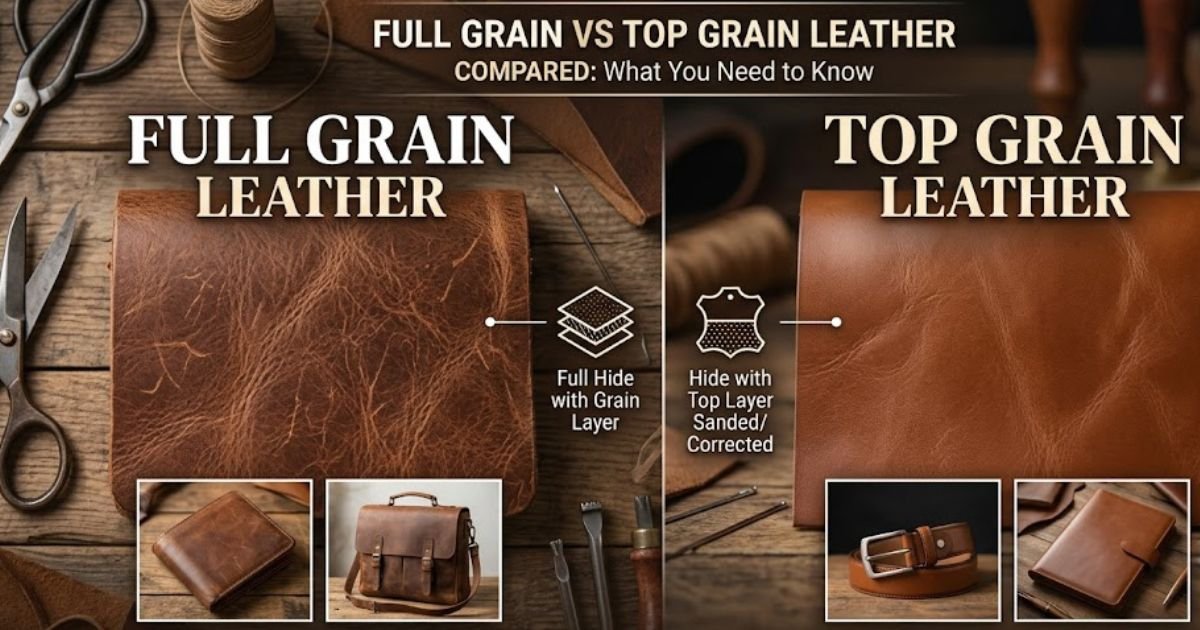
Full grain leather and top grain leather are two of the highest-quality leather types available. Full grain leather retains the natural grain and imperfections of the hide, making it highly durable and capable of developing a rich patina over time. Top grain leather is sanded and refined to create a smoother appearance while still offering excellent durability and quality. Understanding the differences between these leather types can help you choose the best option for your needs.
What Is Full Grain Leather?
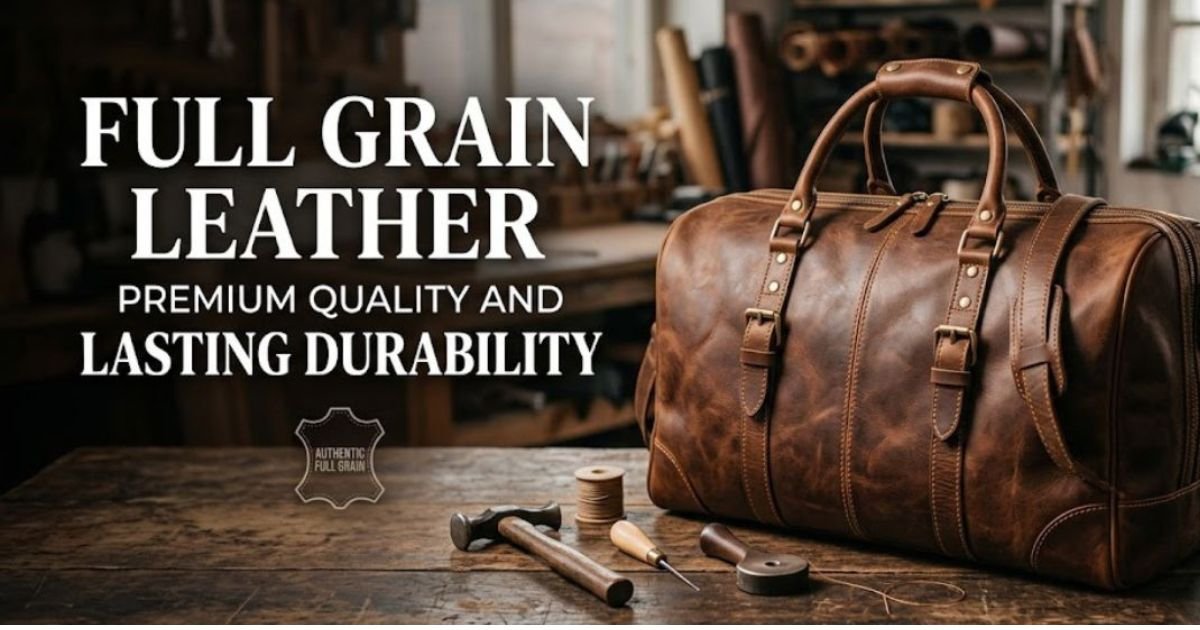
Full grain leather is cut from the top layer of the hide and left entirely unaltered after tanning. No sanding, no buffing, no corrective coating. The natural grain pattern including any scars, insect bites, or rancher’s brands remains exactly as it appeared when the animal was alive.
According to The Leather Guy, “Full Grain leather means that the original grain of the leather has not been altered in any way.” If the surface texture has been changed at all through embossing, sanding, or coating the leather is reclassified as corrected grain leather, not full grain.
That intact surface layer is the densest, most tightly woven part of the hide. Saddleback Leather notes that full grain leather is “about 10% heavier because of its density and twice as strong as other leather of the same thickness that had the grain shaved off.” That density is also what makes full grain leather naturally water-resistant and uniquely capable of developing a rich patina over time.
The trade-off: manufacturers must cut around every scar and blemish, which means more material waste. That drives the price up.
What Is Top Grain Leather?

Top grain leather starts from the same part of the hide as full grain, but the tannery lightly sands or buffs the surface to remove natural imperfections. The result is a smoother, more uniform appearance that many buyers find visually appealing.
As Saddleback Leather explains, top grain leather is “still pretty good leather but a lot of the toughness has been removed.” Because the densest fibers sit right at the surface, even shallow sanding reduces the leather’s overall strength and water resistance. Less material is wasted in production; fewer cuts are needed to avoid blemishes which keeps costs lower.
Top grain leather is widely used across the leather goods industry. Most mid-range bags, wallets, and furniture labeled simply as “leather” are made from top grain. It’s durable enough for everyday use; it just ages differently and won’t outlast full grain under heavy conditions.
A common point of confusion: The Leather Guy notes that technically, any leather that retains its original top layer (and hasn’t been split into suede) qualifies as “top grain.” This means a piece of leather can be both top grain and full grain simultaneously if it’s unaltered, it’s full grain; if it retains the top layer regardless of surface treatment, it’s top grain. The distinction that matters most to buyers is whether the surface has been corrected.
Full Grain vs Top Grain Leather: Side-by-Side Comparison
| Feature | Full Grain Leather | Top Grain Leather |
| Surface treatment | None natural grain intact | Lightly sanded to remove blemishes |
| Durability | Highest densest fiber structure | Good, but reduced by surface sanding |
| Water resistance | Excellent | Moderate |
| Appearance | Natural, may include scars or marks | Uniform, consistent surface |
| Patina development | Rich patina over time | Develops some patina, less pronounced |
| Price | Higher | More affordable |
| Best for | Bags, boots, long-lasting goods | Furniture, everyday accessories |
| Leather grades below | Top grain, genuine, bonded | Genuine, bonded |
Pros and Cons of Full Grain Leather
Pros
- Maximum durability densest, strongest fiber structure of any leather grade
- Natural water resistance without additional treatment
- Develops a beautiful, unique patina that deepens with age and use
- Longer lifespan a well-maintained full grain leather bag can outlast its owner
- Each piece is unique due to natural markings
Cons
- Higher price point due to material waste during production
- Natural blemishes and marks are visible not ideal for buyers who want a flawless surface
- Heavier than corrected alternatives (though many consider this a sign of quality)
Pros and Cons of Top Grain Leather
Pros
- More affordable than full grain, with broad availability across price points
- Smooth, blemish-free surface that appeals to buyers who want a clean aesthetic
- Still durable enough for years of regular use
- Easier to source in consistent colors and textures
Cons
- Reduced strength and water resistance compared to full grain
- Patina development is less pronounced ages differently over time
- More susceptible to cracking and drying out without regular conditioning
- Surface coating can peel or wear unevenly with heavy use
Which Leather Is Better for Bags?
For bags especially briefcases, backpacks, and everyday carry items full grain leather is the stronger choice if longevity is the priority. The dense fiber structure resists abrasion, handles stress at seams and handles better, and develops a patina that makes each bag look distinctly worn-in rather than worn-out.
Saddleback Leather, which builds its briefcases and backpacks exclusively from full grain leather, puts it plainly: top grain leather “will not age as gracefully nor develop as good looking of a patina” as full grain.
That said, top grain leather bags are a reasonable middle ground for buyers who want real leather without the full grain price tag. They’ll hold up well under light to moderate daily use, particularly if the bag isn’t exposed to rain or heavy physical stress on a regular basis.
Choose full grain if: you carry your bag daily, work outdoors, or want a bag that improves visually over years of use.
Choose top grain if: appearance consistency matters more than maximum durability, or budget is a constraint.
Which Leather Is Better for Boots?
Footwear is one of the clearest use cases favoring full grain leather. Boots face constant flexing, exposure to moisture, mud, and temperature changes conditions that accelerate wear on corrected leathers.
Full grain leather’s natural water resistance and structural density mean it holds up better in wet environments and resists cracking over time. According to Saddleback Leather, almost all quality boots are made with leather that retains its structural integrity and full grain sets the highest standard for that.
For dress boots or shoes worn primarily indoors or in dry conditions, top grain leather performs adequately and can look more polished out of the box. For work boots, hiking boots, or any footwear that regularly encounters the elements, full grain is worth the investment.
Choose full grain if: you need boots for outdoor work, hiking, or frequent wet-weather use.
Choose top grain if: you’re buying dress shoes or boots for occasional, dry-condition wear.
Which Leather Is Better for Furniture?
Furniture is where top grain leather becomes a genuinely competitive option and in some contexts, the more practical choice.
A sofa requires multiple large hides. Using full grain leather across an entire piece of furniture significantly increases the cost, and the natural blemishes that make a bag look characterful can be harder to accept across a large sofa surface. Top grain leather offers a cleaner, more uniform appearance that suits interior design contexts well.
Saddleback Leather notes that most leather furniture is chrome-tanned, which resists moisture and temperature changes better than vegetable-tanned alternatives important for furniture that may sit near windows or in rooms with temperature fluctuations.
If budget allows and you want furniture that genuinely ages beautifully, full grain is the premium choice. For most households, however, top grain leather furniture strikes the right balance between durability, appearance, and cost.
Choose full grain if: you’re investing in a long-term statement piece and want the leather to develop character over decades.
Choose top grain if: you want a clean, consistent look across a large surface without the premium price.
How to Choose Based on Budget
Leather grade directly affects price but the relationship isn’t always transparent on a retail tag.
Saddleback Leather offers a useful rule of thumb: if a leather sofa costs under $2,000 or a leather briefcase is priced suspiciously low, the leather grade is likely not full grain. The cost of cutting around natural blemishes, using high-quality tanning materials, and producing genuinely dense leather has a floor that cheap prices simply can’t meet.
- Under $100 (wallets, small accessories): Most products at this price point use genuine or bonded leather, not top or full grain. A top grain wallet in this range exists but is the exception.
- $100–$300 (bags, belts, mid-range accessories): Top grain leather is standard here. Full grain is rare but possible from direct-to-consumer brands.
- $300–$700+ (quality bags, boots): Full grain leather becomes more accessible. This is where the investment begins to pay off in longevity.
- $1,000+ (furniture, premium goods): Full grain leather upholstery and high-end footwear fall here. Durability over a 10–20 year lifespan often justifies the premium.
One practical tip from Saddleback Leather: the number of seams on a leather product is a quality signal. Fewer seams indicate larger, higher-quality pieces of hide were used. A wallet made from a single outer piece of leather is better than one stitched together from scraps.
How to Tell Full Grain from Top Grain at a Glance
You don’t need to be a leather expert to spot the difference. A few quick checks help:
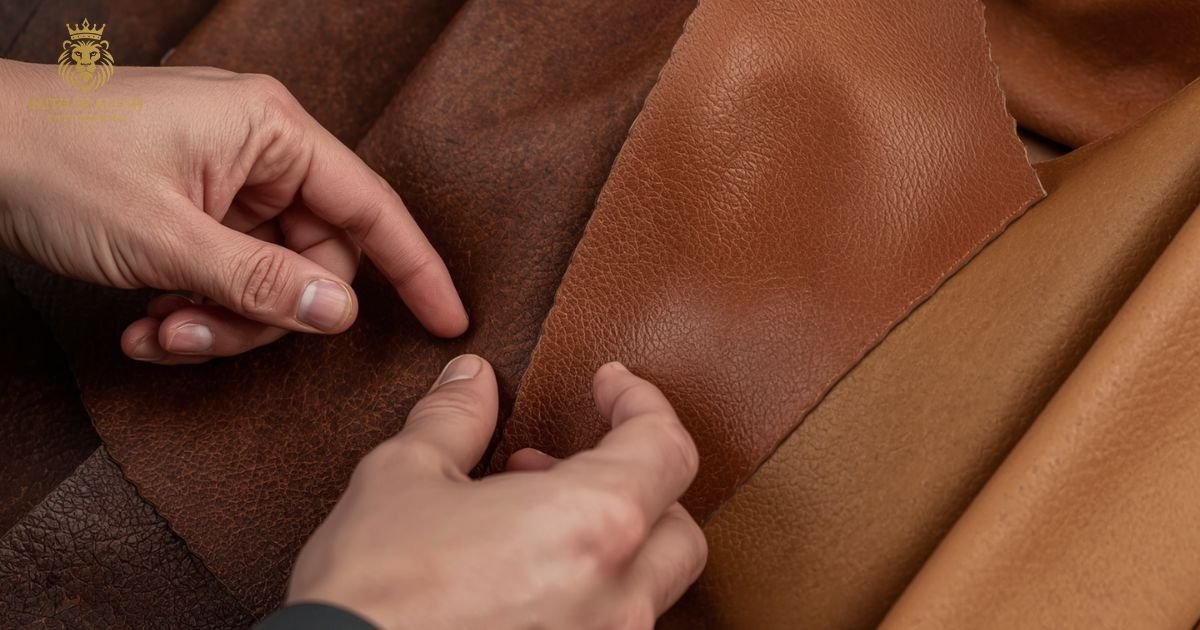
- Look for natural markings. Small scars, healed cuts, or subtle variations in texture suggest full grain leather. A perfectly uniform, blemish-free surface almost always indicates the grain was corrected.
- Check the price. As noted by Saddleback Leather, unusually low prices for “full grain” products are a red flag. Quality leather has a cost floor.
- Examine the edges. On cut leather edges, full grain leather shows dense, tightly packed fibers. Corrected or genuine leather often looks more fibrous or papery.
- Feel the weight. Full grain leather is measurably heavier, roughly 10% denser than top grain of the same thickness.
- Read the label carefully. “Made with full grain leather” can legally mean only a portion of the product uses full grain. Look for products described as made from full grain leather throughout.
How to Care for Full Grain vs Top Grain Leather
Both grades benefit from regular conditioning, but the routines differ slightly.
Full grain leather needs less frequent conditioning because its natural oils are better preserved. Apply a quality leather conditioner two to four times per year, depending on use and climate. Avoid soaking it in water while full grain is water-resistant, prolonged saturation can still cause damage. Allow it to dry naturally if it gets wet, away from direct heat.
Top grain leather is more prone to drying out because the corrective sanding process disrupts the hide’s natural moisture balance. Condition it more frequently every two to three months for daily-use items. A leather protector spray adds an extra layer of water resistance that top grain leather lacks on its own.
Both grades benefit from storage in cool, dry conditions away from direct sunlight, which accelerates fading in dyed leathers.
The Bottom Line Full Grain vs Top Grain Leather
Full grain leather is the highest quality grade available. It’s stronger, more water-resistant, and develops a patina that improves with age qualities that make it worth the premium for bags, boots, and investment-grade goods you intend to keep for years or decades.
Top grain leather is a legitimate, durable option that suits buyers who want a clean, consistent look or who are working within a tighter budget. It performs well for furniture, everyday accessories, and dress footwear where heavy-duty conditions aren’t a factor.
The key is knowing what you’re buying. Check for natural blemishes (a sign of full grain), examine the number of seams, and treat price as a quality signal. A well-chosen leather good at either grade will outlast almost any synthetic alternative.
Conclusion
Both full grain leather and top grain leather are premium materials, but they serve different purposes. Full grain leather is ideal for those seeking maximum durability and a natural look, while top grain leather offers a smoother finish and greater stain resistance. The right choice depends on your preferences, budget, and intended use.
FAQs
Is full grain leather always better than top grain leather?
Full grain leather is the stronger, more durable grade in most use cases. However, “better” depends on context. For furniture where a blemish-free surface matters and budget is a factor, top grain leather is often the more practical choice. For bags, boots, and items subject to daily wear and weather exposure, full grain leather consistently outperforms top grain over time.
What is the main difference between full grain and top grain leather?
The key difference is surface treatment. Full grain leather retains the hide’s complete outer surface natural markings included making it the densest and strongest grade. Top grain leather has the outer surface lightly sanded to remove blemishes, which creates a more uniform appearance but reduces the structural density, water resistance, and long-term durability of the leather.
Can a piece of leather be both full grain and top grain at the same time?
Yes. According to The Leather Guy, any leather that retains its original top layer (and hasn’t been split into suede) technically qualifies as top grain. If that same leather has also had its surface left completely unaltered, it’s full grain as well. The distinction that matters most in a buying context is whether the surface was corrected if it was, it’s no longer full grain.
How long does full grain leather last compared to top grain?
With proper care, full grain leather goods can last several decades. Saddleback Leather builds its products specifically for multi-decade use, citing the material’s density and natural water resistance as key factors. Top grain leather goods, under the same conditions, typically show wear faster particularly cracking or surface peeling because the corrective sanding process removes the hide’s most protective outer fibers.
Is top grain leather real leather?
Yes, top grain leather is genuine animal hide and should not be confused with bonded leather or synthetic alternatives. It occupies the second-highest tier in the leather quality hierarchy, below full grain but above genuine (split) leather and bonded leather. Products made from top grain leather are real leather products.
Which leather is best for a bag that will be used every day?
Full grain leather is the better choice for a daily-use bag. Its denser fiber structure handles the repeated stress of daily loading, unloading, and movement better than top grain. It’s also more water-resistant, which matters for commuters and travelers. The natural patina that develops over years of use makes full grain bags look better with age rather than worse.
Does top grain leather develop a patina?
Top grain leather can develop some patina over time, but the effect is less pronounced than with full grain. Because the outermost fiber layer has been sanded away, top grain leather doesn’t absorb oils and develop the same depth of color change that full grain does. The aging process for top grain leather tends to show more as surface wear than as the rich, darkening patina that full grain is known for.