Identifying leather quality is essential when purchasing leather products such as bags, wallets, belts, shoes, and furniture. High-quality leather is more durable, comfortable, and attractive over time. By examining factors such as texture, smell, grain pattern, flexibility, and craftsmanship, buyers can distinguish genuine premium leather from lower-grade or synthetic alternatives. Understanding these characteristics helps ensure you get the best value for your investment.
What Does “Leather Quality” Actually Mean?
“Quality” gets thrown around a lot. But it actually points to three different things that people often mix up.
Quality depends on the grade of leather, the tanning process used, and the finish applied on top. A leather can have a great grade but a heavy, plasticky finish that ruins the feel. So you need to read all three.
Let’s start with the grades, since that’s where most confusion lives.
The Grade Ladder, Explained Simply
There are four main leather grades you’ll see while shopping. Here’s the plain-English version.
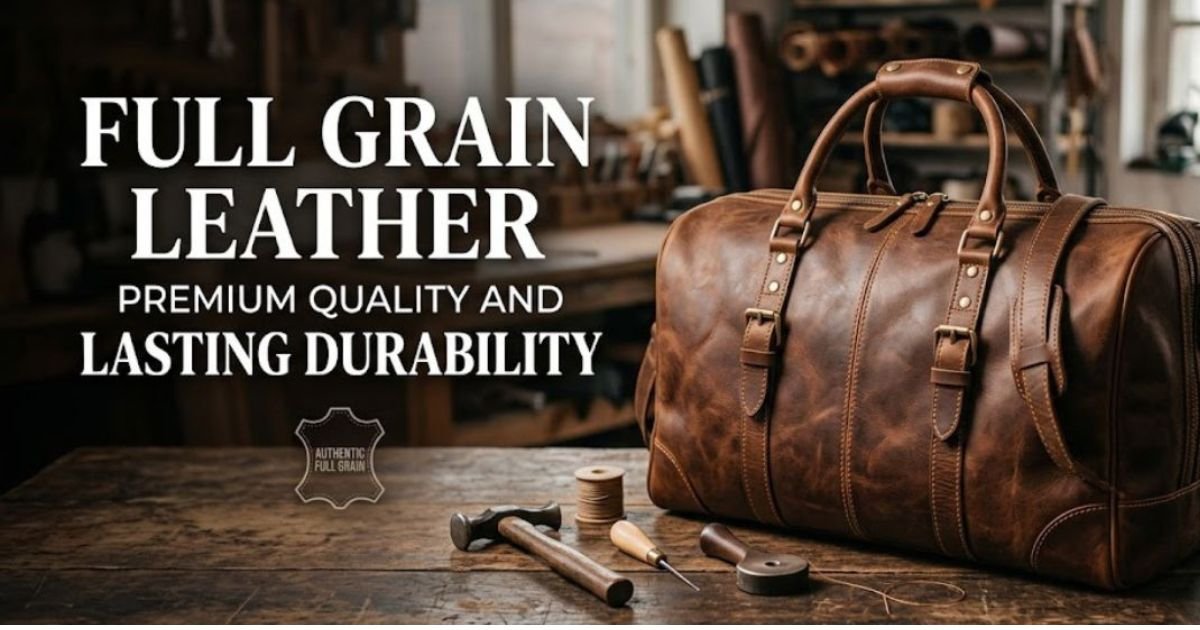
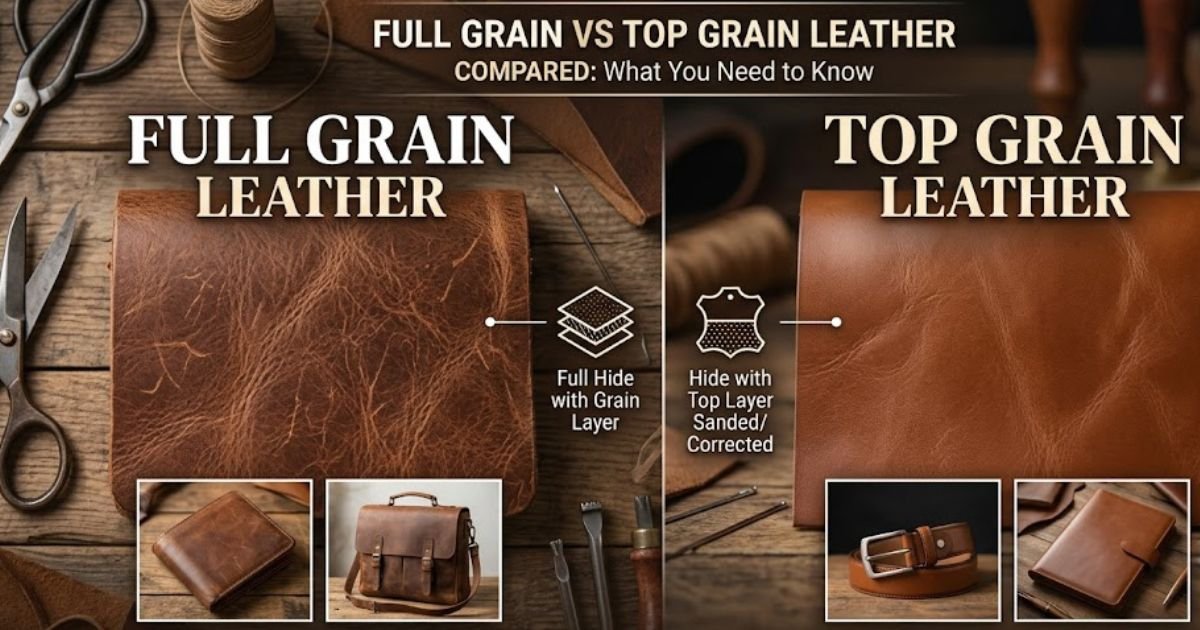
- Full grain leather: The top layer of the hide, untouched. Strongest and most durable. Ages beautifully.
- Top grain leather: The top layer is lightly sanded to remove flaws. Smoother, slightly less tough.
- Genuine leather (split/corrected): Lower layers of the hide, often heavily treated. Real, but middling.
- Bonded leather: Leather scraps glued together. The weakest of the bunch.
Quality vs Type vs Finish
Think of it like coffee. The grade is the bean. The tanning is the roast. The finish is whatever syrup gets poured on top. A premium bean drowned in fake flavoring isn’t premium anymore.
Here’s how the grades stack up at a glance.
| Grade | What it is | Durability | Typical use |
| Full grain | Top hide layer, natural | Excellent (decades) | Boots, premium bags, saddles |
| Top grain | Sanded top layer | Very good (10–20 yrs) | Handbags, jackets, wallets |
| Genuine/split | Lower hide layers | Fair (2–5 yrs) | Budget goods, furniture sides |
| Bonded | Glued scraps | Poor (often peels) | Cheap accessories, fast fashion |
Mini-summary: Higher up the ladder means stronger, longer-lasting leather—but always check the finish before you trust the grade.
Next, let’s separate the real stuff from the fakes.
Buy Now: Luxury Brown Leather Bucket Bag
How Can You Tell Real Leather From Fake?
This is the question most people ask. So here’s an evaluator’s walk-through you can repeat anywhere in a store, at a market, or unboxing an online order.
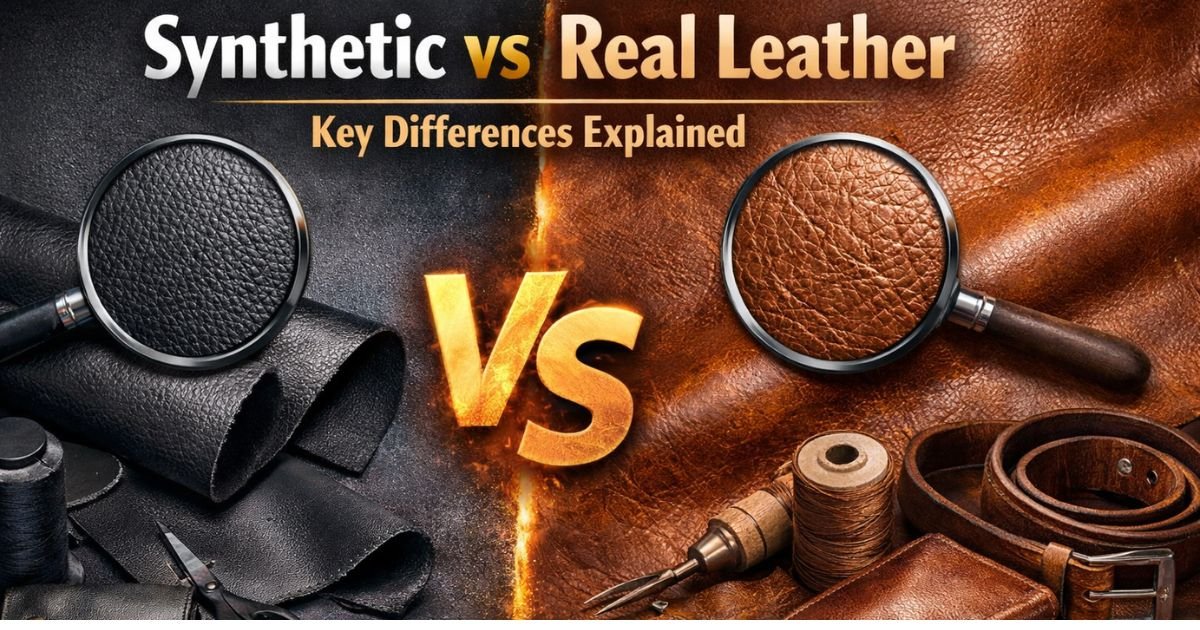
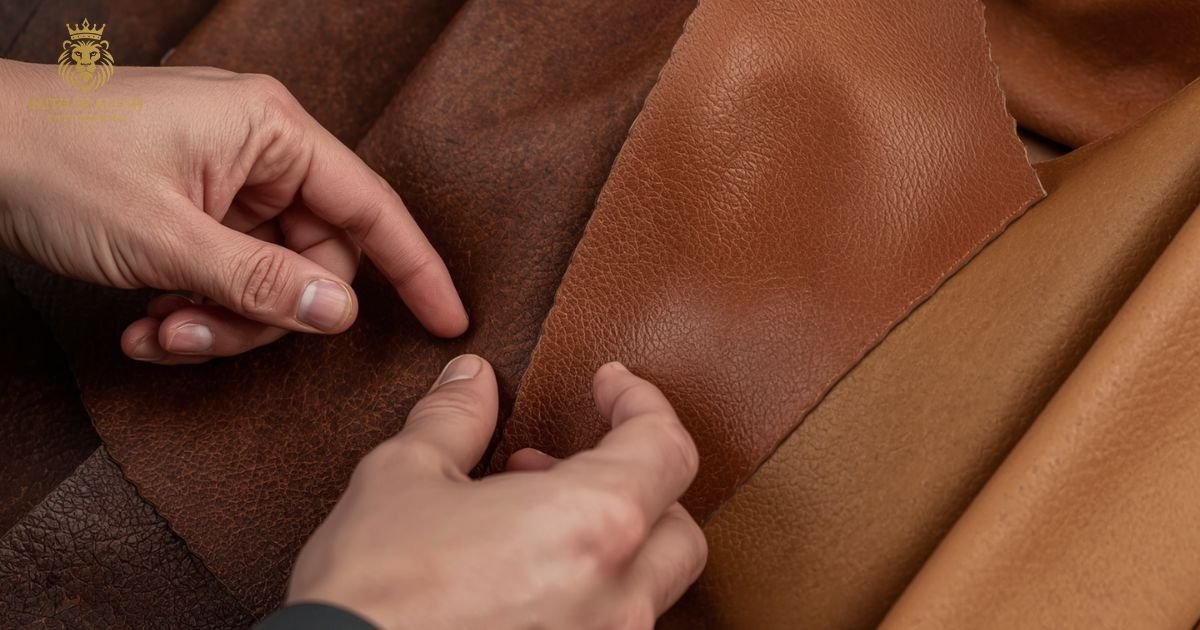
- Look. Scan for natural grain variation and visible pores. Real leather is never perfectly uniform. Fake leather repeats the same pattern over and over.
- Touch. Feel for warmth and a little give. Genuine leather warms to your hand. Synthetics stay cold and slick.
- Smell. Take a sniff. Real leather has that earthy leather smell. A chemical or plastic odor is a red flag.
- Bend. Fold a corner gently. Quality leather forms soft wrinkles, then springs back. Fakes stay creased or feel stiff.
- Inspect the edges. Real edge finish shows fibers or a smooth burnish. Cheap fakes reveal a fabric or rubbery layer.
Run these five steps and you’ll already be ahead of most shoppers. This sequence is your reliable method for how to tell real leather from fake.
The Leather Quality Checklist
Want something you can screenshot and bring shopping? Here’s your leather quality checklist. Tick these off before you pay.
- Grain looks natural and uneven
- Smell is earthy, not chemical
- Weight feels substantial for its size
- Flexibility is soft with a quick bounce-back
- Edge finish shows fibers or a clean burnish
- Backing is fuzzy and fibrous, not fabric or foam
- Stitching is tight and even, with no loose threads
- Label clearly states the grade
If most boxes get a check, you’re holding something worth your money. If half of them fail, walk away.
Buy Now: White Leather Coat
How to Assess Edge Finish and Backing
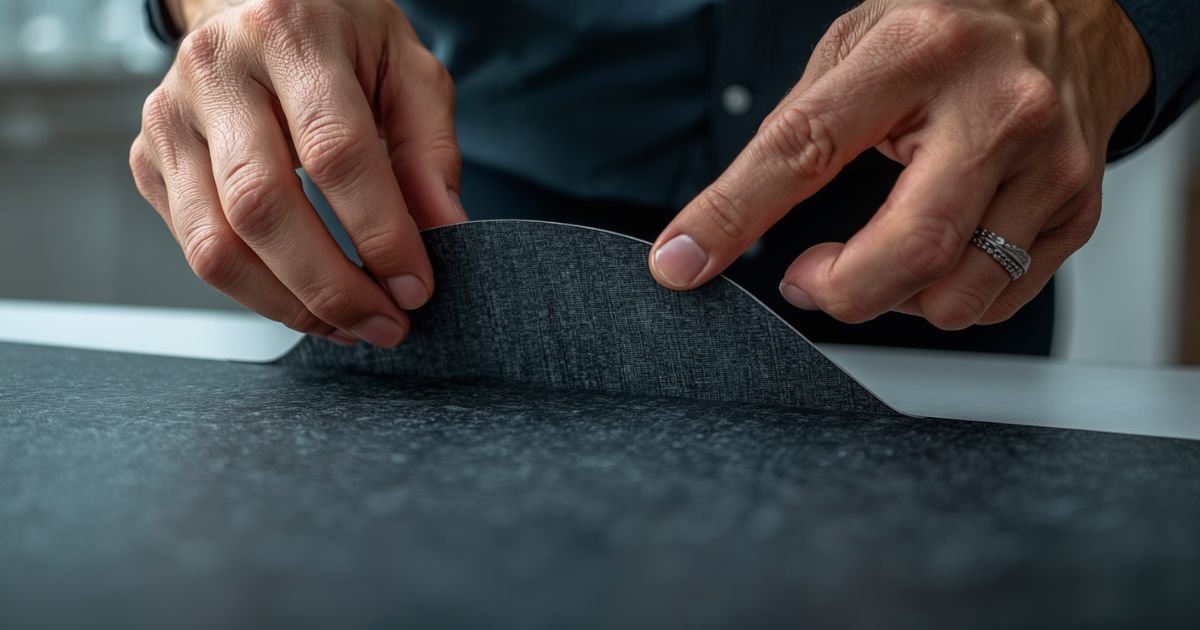
Most shoppers stare at the front of a product. The pros flip it over and study the edges. That’s where corners get cut literally.
Reading the Edges
Edges are hard to fake well, so they reveal a lot. Here’s how to read them.
- Burnished edges (smooth, polished, sealed) signal skilled craftsmanship.
- Raw edges showing tight fibers are common on quality full grain leather.
- Painted edges can be fine but watch for cracking or a thick, plastic coating.
- Peeling or rubbery edges scream bonded or fake leather.
Checking the Backing
Now flip it. The backing is the underside of the material, and it’s brutally honest.
- A suede-like, fibrous back means you’re likely holding real hide. Good sign.
- A woven fabric back usually means a synthetic coating sits on top.
- A foam or smooth plastic back points to bonded or faux leather.
| Feature | High-quality sign | Low-quality warning |
| Edges | Burnished or raw fibers | Peeling, rubbery, plastic |
| Backing | Fuzzy, suede-like | Fabric, foam, or plastic |
| Coating | Thin, breathable | Thick, glossy, sealed |
Mini-summary: When the front looks great but you’re unsure, the edges and backing settle the debate.
Common Leather Mislabels and Marketing Tricks
Labels are designed to sell, not to educate. Here’s how to decode the most common ones so you don’t get fooled.
- “Genuine leather” sounds premium but actually sits low on the grade ladder. It’s real leather, just not great leather.
- “Bonded leather” means glued scraps. It often peels within a couple of years.
- “PU leather” / “vegan leather” is plastic-based fake leather. Not bad for some uses, but it’s not an animal hide.
- “Man-made materials” is code for fully synthetic.
- Missing or vague tags usually hide something. Honest brands brag about top grain leather or full grain when they use it.
According to consumer guidance from the U.S. Federal Trade Commission, products that aren’t real leather must disclose their true material—so a missing or fuzzy label is a genuine warning sign.
Real-World Shopping Mistakes to Avoid
Even smart shoppers slip up. I’ve watched friends make all five of these. Don’t be them.
- Judging by shine alone. A glossy surface often hides a cheap base under heavy finish.
- Trusting “leather” without checking the back. Always flip it over.
- Skipping the smell test. Your nose catches and fakes your eyes.
- Assuming high price equals high grade. Sometimes you’re paying for a logo.
- Ignoring stitching and edges. Sloppy seams reveal a rushed, low-cost build.
Does Price Always Signal Leather Quality?
Short answer: not always. Price is a useful clue, but it lies more often than you’d think.
Sometimes a high price reflects real value—skilled tanning, a better hide, or solid construction. Other times you’re simply funding a brand’s marketing budget. So learn when the number means something.
| Scenario | Price reliable? | What to check instead |
| Full grain + skilled tanning | Yes | Grain, edges, backing |
| Exotic or specialty hide | Usually | Stitching, finish honesty |
| Fashion logo premium | No | Actual grade on the label |
| “Designer” fast fashion | Rarely | Backing and edge finish |
Mini-summary: Let price start the conversation. Let the leather grades, edges, and backing finish it.
Evaluator’s Note What I Check First
After years of handling leather goods, I’ve learned to trust my hands more than the price tag. When I pick up a product, I do three things before anything else.
First, I run a thumb across the surface and feel for that warm, slightly uneven grain. Second, I bend a corner to watch how it creases and recovers. Third and this is the one most people skip I flip it over and check the backing.
I’ll never forget a wallet I bought early on. It looked premium, felt soft, and cost a small fortune. Six months later, the edge finish started peeling like sunburned skin. The lesson stuck: the surface can charm you, but the edges and back tell the truth.
The most underrated tell? Patina. Real leather develops a rich, glowing patina over years of use, getting better as it ages. Synthetics just crack, flake, and quit. If a seller promises their leather will “look brand new forever,” that’s a hint it isn’t really hidden at all.
Buy Now: Cognac Suede Trucker Jacket for Men
Conclusion
Learning how to identify leather quality can help you make smarter purchasing decisions and avoid low-quality products. By paying attention to the leather’s appearance, feel, durability, and construction, you can confidently choose products that offer long-lasting performance and timeless style.
FAQs
What is the highest quality leather?
Full grain leather is the highest quality. It uses the top, untouched layer of the hide, so it’s the strongest and most durable. With care, it can last decades and develops a beautiful patina over time.
Is “genuine leather” good quality?
“Genuine leather” is real, but it sits low on the grade ladder. It’s made from lower hide layers and is often heavily treated. It’s fine for budget buys, but it’s not a sign of premium quality.
How do you check leather quality quickly in a store?
Run three fast tests: smell it for an earthy scent, bend it to see how it creases and recovers, and inspect the edges and backing. If the smell is chemical or the edges peel, it’s likely fake leather.
Does real leather always smell like leather?
Mostly, yes real leather has a rich, earthy aroma that’s hard to fake. But heavy finishes or coatings can mute the smell. If you catch a strong plastic or chemical odor instead, be cautious.
Why is full grain leather more expensive?
It uses the strongest top layer of the hide, which is rarer and harder to work with. It also requires skilled tanning and ages into a desirable patina. You’re paying for durability that can last a lifetime.