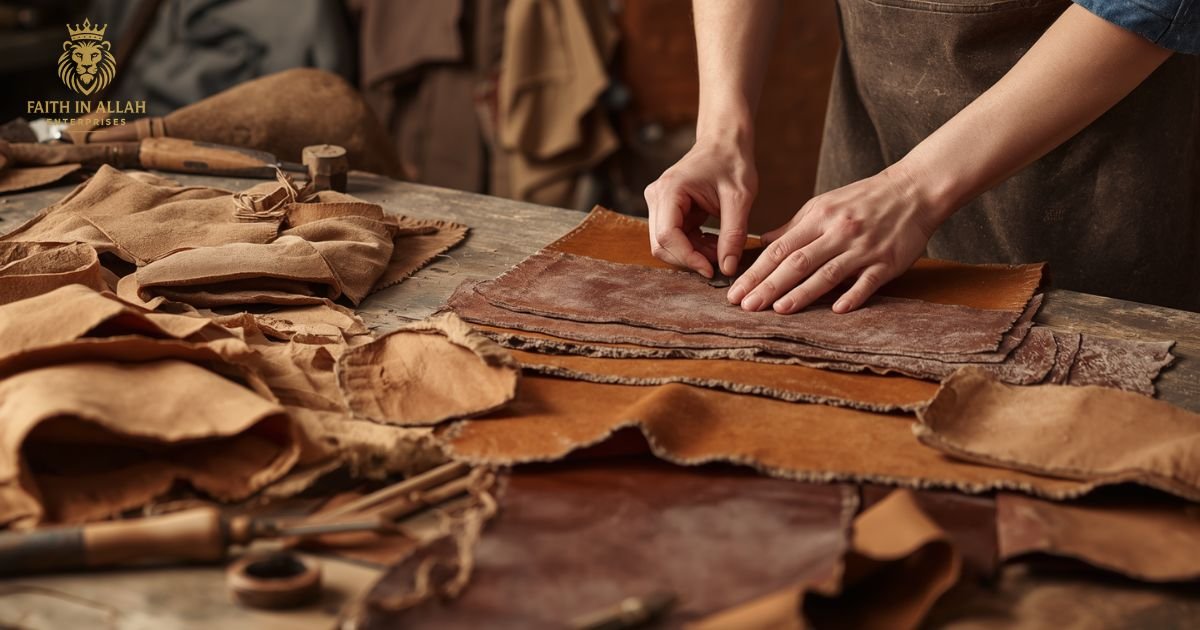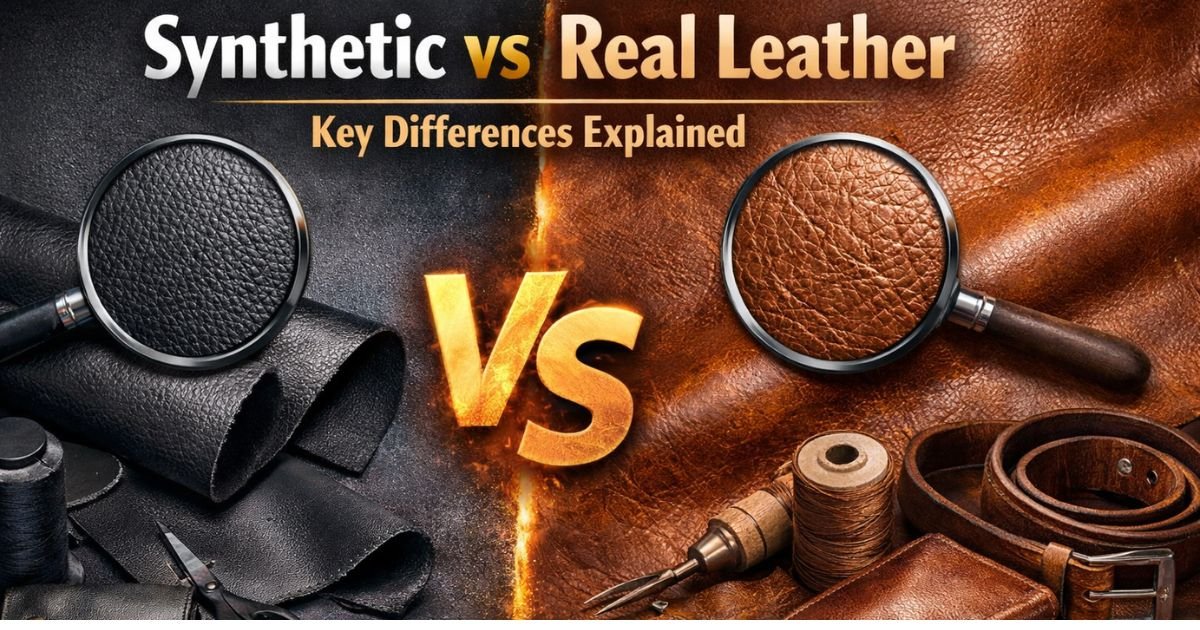
Synthetic and real leather are two popular materials used in furniture, clothing, footwear, bags, and accessories. Real leather is made from animal hides and is valued for its durability, natural texture, and ability to develop character over time. Synthetic leather, often made from polyurethane (PU) or polyvinyl chloride (PVC), is designed to mimic the appearance of genuine leather while offering a more affordable and animal-free alternative. Understanding the differences between these materials can help buyers choose the option that best fits their needs, budget, and preferences.
Synthetic vs Real Leather at a Glance
Before we dig deep, here’s the fast comparison. Skim this table and you’ll already understand the big differences.
| Feature | Real Leather | Synthetic Leather | Winner |
| Cost | Higher upfront | Budget-friendly | Synthetic |
| Durability | Lasts decades with care | Wears out in a few years | Real |
| Maintenance | Needs conditioning | Wipe clean, no fuss | Synthetic |
| Breathability | Highly breathable | Less breathable | Real |
| Water resistance | Absorbs water, can stain | Water-resistant | Synthetic |
| Aging | Develops a rich patina | Tends to peel or crack | Real |
| Vegan-friendly | No | Yes | Synthetic |
Real leather takes the crown for long-term value and feel. Synthetic leather wins for cost, convenience, and ethics. Keep that scorecard in mind as we break down each point.
What Is the Difference Between Synthetic and Real Leather?
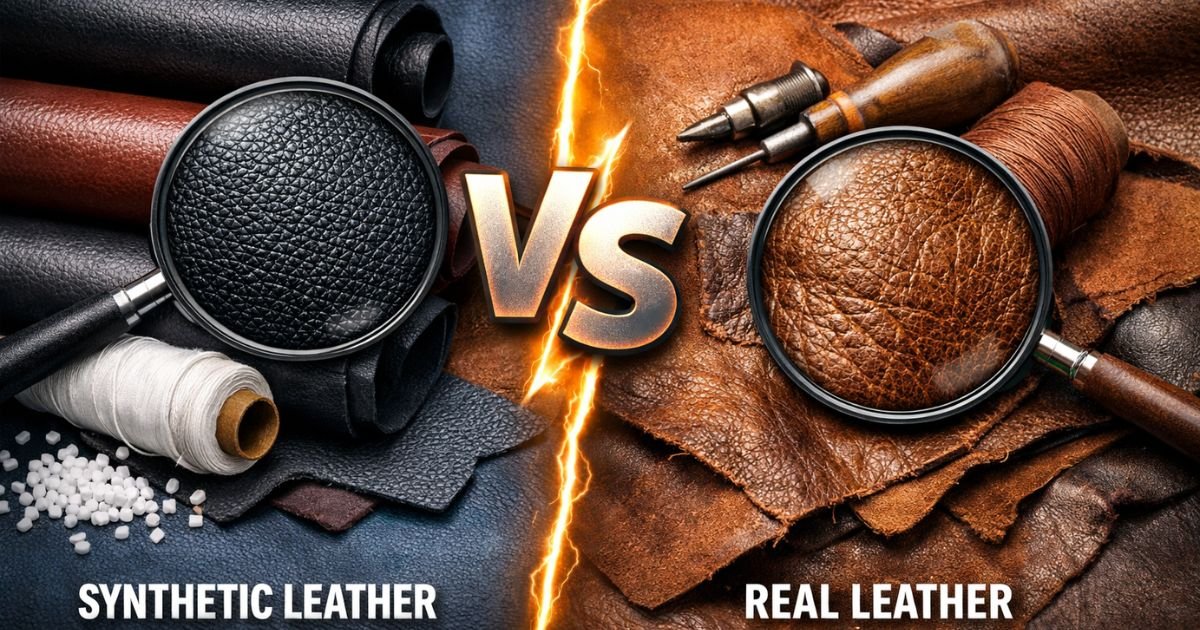
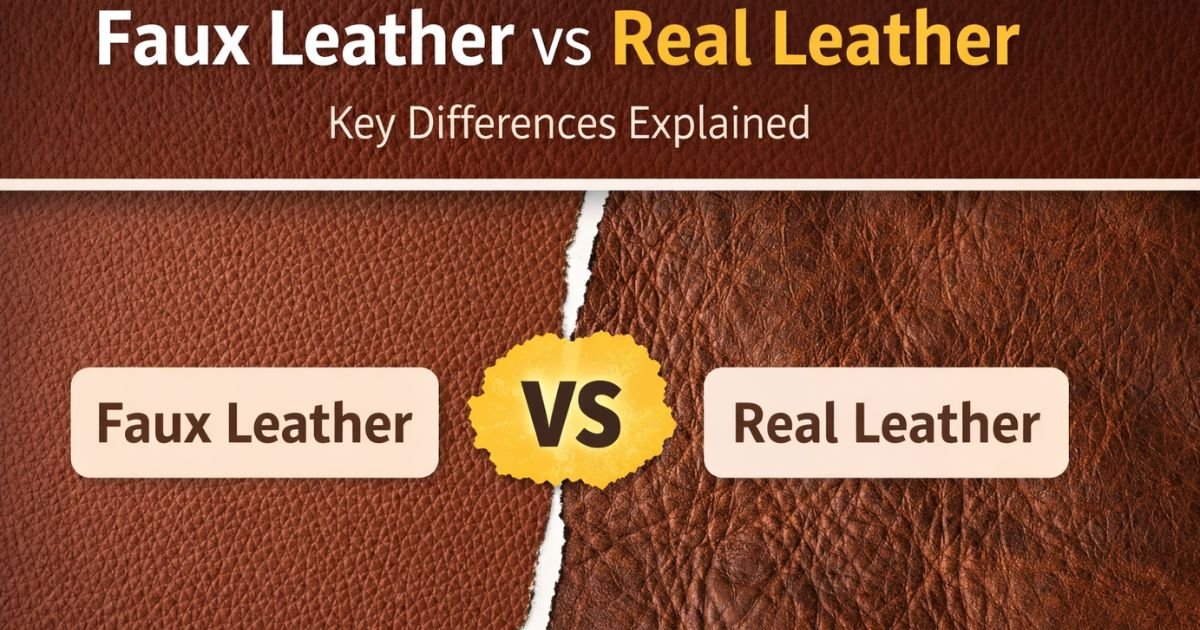
The core difference is simple. Real leather comes from animals. Synthetic leather comes from plastic. Everything else flows from that one fact.
Let’s define each one clearly so you know what you’re really buying.
What real leather is
Real leather (also called genuine leather) is made from animal hide, usually cowhide or buffalo hide. The raw skin goes through a process called tanning, which preserves it and turns it into a soft, strong material.
Because it’s natural, real leather has a grain. That’s the surface texture full of tiny pores, wrinkles, and small imperfections. Those “flaws” are actually proof it’s the real thing. The hide breathes, flexes, and softens the more you use it.
What synthetic leather is
Synthetic leather is man-made and built from plastic. Most of it uses one of three bases:
- PU (polyurethane): Softer, more flexible, and a bit more breathable
- PVC (polyvinyl chloride): Tougher and more water-resistant, but stiffer
- Microfiber leather: A higher-quality synthetic with a more realistic feel
Makers coat a fabric backing with these plastics, then stamp a fake grain on top. The result looks like leather from a distance, which is why synthetic leather is so popular for upholstery, shoes, and bags.
When people compare synthetic leather vs genuine leather, this plastic-versus-hide split is the heart of it all.
Which Is Better Real Leather or Synthetic Leather?
Neither one is “better” for everyone. The right pick depends on what matters to you. Let’s look at where each material truly shines.
Where real leather wins
- Lifespan: A well-cared-for leather bag can last 20 years or more. Many people pass leather goods down to their kids.
- Patina: Over time, real leather darkens and develops a soft glow called a patina. It looks better with age, not worse.
- Comfort: It breathes, so it stays cooler in summer and adjusts to your body. Think of a broken-in baseball glove that fits like a second skin.
- Premium feel: That rich smell and supple touch are hard to fake.
Where synthetic leather wins
- Price: It often costs half as much, or less. A faux leather couch might run $600 while a real one runs $2,000.
- Easy care: Spilled coffee? Just wipe it off. No special conditioner needed.
- Vegan and cruelty-free: No animal products at all, which matters to many shoppers.
- Consistency: Every panel looks the same, with no natural blemishes.
So when you weigh real leather vs faux leather, think in terms of priorities, not absolutes. Ask yourself: do I value long-term quality, or upfront savings and convenience?
Which approach matches your situation? If you replace items often and like trying new styles, synthetic makes sense. If you buy fewer things and want them to last, real leather is your friend.
Buy Now: White Mink Fur Coat
How to Choose Based on Your Budget and Use
Still unsure? Follow this simple four-step framework. It turns a fuzzy decision into a clear one.
Step 1 Set your budget range
Decide what you can comfortably spend. Real leather costs more today but can save money over years. Synthetic costs less now but may need replacing sooner.
Step 2 Match material to product type
Some items take more abuse than others. A daily-use work boot has different needs than a decorative throw pillow. We’ll cover product-by-product advice in the next section.
Step 3 Weigh maintenance you’ll actually do
Be honest with yourself. Real leather needs cleaning and conditioning a couple of times a year. If you know you won’t do that, synthetic might serve you better.
Step 4 Factor in ethics and sustainability
If avoiding animal products is important, synthetic wins on that front. But remember, most synthetic leather is plastic-based and doesn’t break down easily. Real leather lasts longer and is biodegradable when ethically sourced. Neither is perfect, so choose the trade-off you can live with.
Synthetic vs Real Leather by Product Type
Here’s where most guides stop short. The right material changes depending on what you’re buying. Let’s go product by product.
Best choice for shoes and boots
For shoes you’ll wear hard, real leather usually wins. It breathes, molds to your feet, and resists daily wear. Synthetic shoes feel hotter and can crack at the flex points within a year or two.
| Use case | Better pick | Why |
| Daily work boots | Real leather | Breathes, lasts, molds to feet |
| Fashion sneakers | Synthetic | Cheaper, easy to swap with trends |
Best choice for sofas and furniture
This one depends on your household. Got kids or pets? Synthetic leather is the smart call. It wipes clean and shrugs off spills. Want a couch that becomes a family heirloom? Real leather ages into something gorgeous.
Best choice for car seats and auto interiors
Many carmakers now use high-grade synthetic leather because it handles sun, heat, and spills well. It’s also easier to clean after road trips. Real leather feels more luxurious but needs conditioning to avoid cracking in hot climates.
Best choice for handbags, wallets, and jackets
For pieces you want to keep for years, real leather is worth it. A leather wallet softens and gains character over time. For trendy bags you’ll switch out next season, synthetic saves you money without guilt.
This product-level view is exactly what most leather comparisons miss. Knowing where each material belongs saves you from costly mistakes.
Cost vs Value Is Real Leather Worth the Extra Money?
The sticker price tells only half the story. To know if real leather is worth the extra cost, you have to look at the full lifespan.
Upfront price vs lifetime cost
Synthetic leather is cheaper to buy. But because it wears out faster, you may replace it two or three times before a single real leather item gives up. Let’s run the numbers on a sofa.
| Year | Real Leather Sofa | Synthetic Leather Sofa |
| Year 0 (purchase) | $2,000 | $700 |
| Year 5 | Still going strong | Showing peeling, may need replacing |
| Year 6 (replace synthetic) | $0 | +$700 = $1,400 total |
| Year 10 | Still in use | +$700 = $2,100 total |
Over a decade, the “cheaper” sofa can cost as much as or more than the real one. Plus you deal with the hassle of shopping again.
When synthetic is the smarter spend
Cost isn’t everything, though. Synthetic is the smarter buy when:
- You move often and don’t want to haul heavy furniture
- Your style changes with the seasons
- You have messy kids or pets and need easy cleanup
- Money is tight right now and you need a working item today
Honest verdict: real leather usually wins on long-term value, but synthetic wins when flexibility and low cost matter more than longevity.
Buy Now: Shearling Leather Coat: Women’s Handmade Lambskin Winter Trench
How to Tell Real Leather From Synthetic Before You Buy
Want to spot the difference in seconds? Here’s how to tell real leather from faux leather using your own senses. Run through this checklist next time you shop.
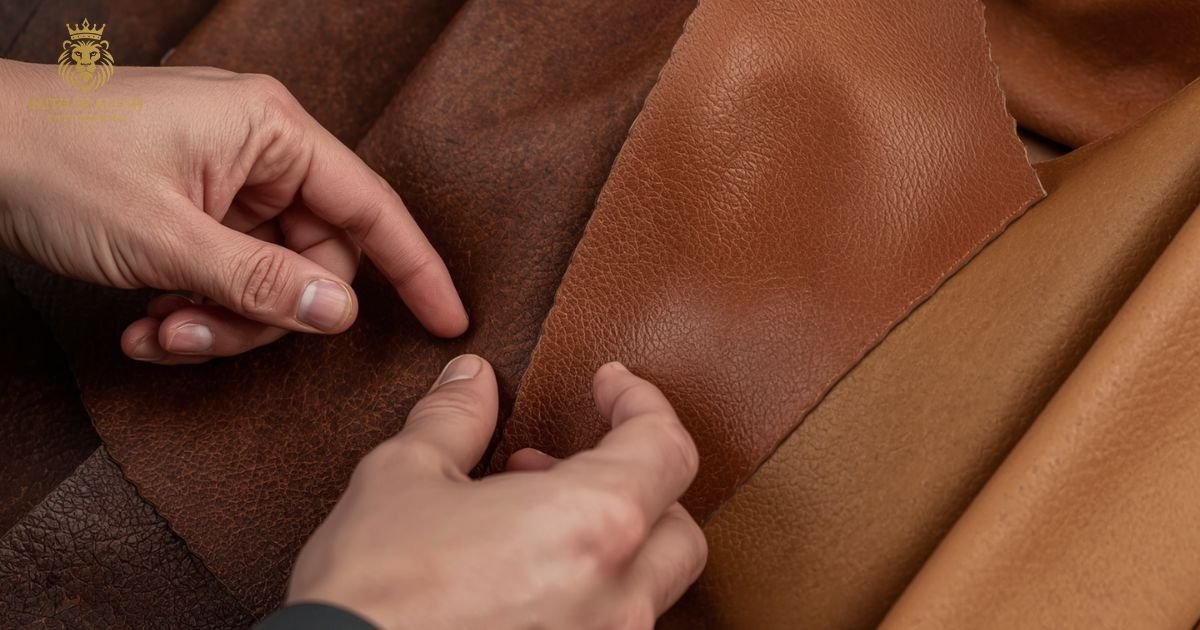
- The touch test. Real leather feels warm, soft, and slightly uneven. Synthetic feels cool, smooth, and a little plasticky.
- The press test. Push your finger into the surface. Real leather wrinkles and stretches like skin. Synthetic just dents and springs back evenly.
- The smell test. Real leather has a rich, earthy scent. Synthetic smells faintly of plastic or chemicals.
- The edge test. Look at the cut edges. Real leather edges are rough and fibrous. Synthetic edges look clean and may show a fabric backing.
- The grain test. Real grain is random and full of tiny flaws. A perfectly repeating pattern means it’s machine-made.
Reading labels (genuine vs bonded vs PU)
Labels can trick you, so read carefully:
- “Genuine leather” means real, but often a lower grade.
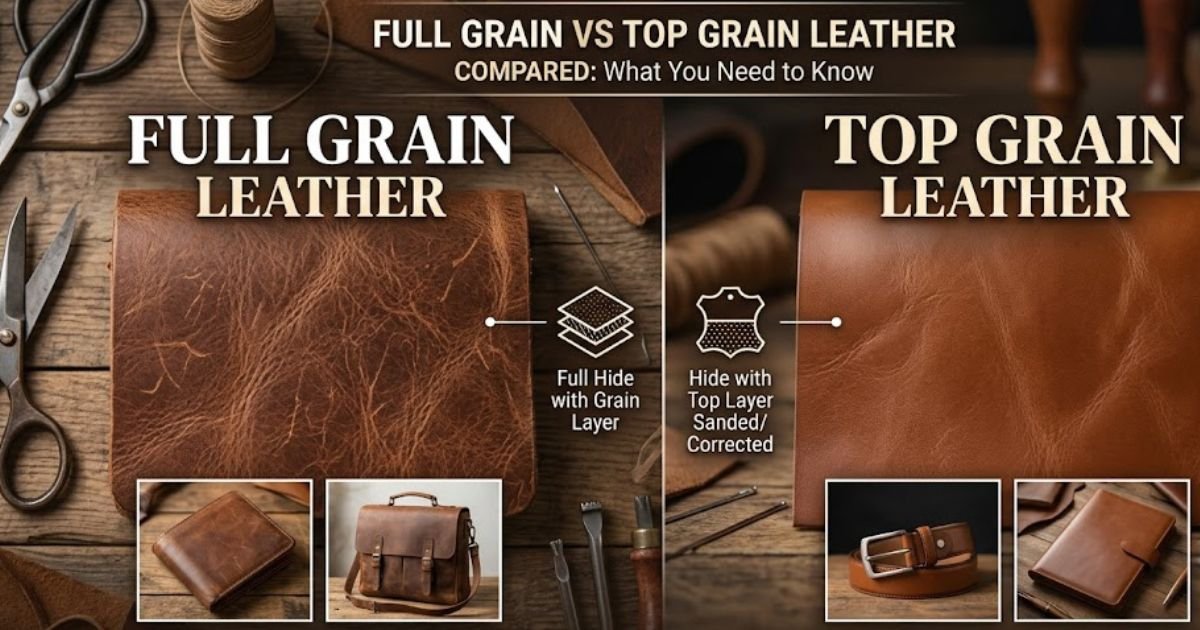
- “Full-grain” or “top-grain” means higher-quality real leather.
- “Bonded leather” is leather scraps glued together. It’s part real, but it peels like synthetic.
- “PU leather” is fully synthetic, no matter how nice it sounds.
A quick tip: if the price seems too good for “real leather,” it’s probably bonded or synthetic.
Field Test A Material Expert’s Hands-On Evaluation
Let me share what a real-world test looks like, because numbers only go so far. I carried two wallets for twelve straight months: one full-grain real leather, one PU synthetic. Same pocket, same daily abuse, same weather.
Here’s what I watched happen:
- The synthetic wallet looked perfect for about four months. Then the corners started to flake. By month nine, the coating peeled along the fold, exposing the gray fabric underneath. It still worked, but it looked tired.
- The real leather wallet scuffed early and I worried I’d ruined it. But the scuffs blended into a warm, glossy patina. By month twelve, it looked richer than the day I bought it.
This lines up with what material scientists and the leather trade have long observed: real leather’s fibers flex and recover, while synthetic coatings eventually crack under repeated bending. That’s the honest reason synthetic leather tends to peel or crack while real leather softens.
My practical verdict? For something you handle every day, real leather rewards you over time. For something you’ll replace anyway, synthetic does the job just fine.
Common Mistakes Buyers Make
Even smart shoppers fall into these traps. Dodge them and you’ll buy better:
- Thinking “genuine leather” means top quality. It only means it’s real, often a budget grade.
- Overpaying for bonded leather. It’s mostly glue and scraps, and it peels fast.
- Ignoring the maintenance you’ll actually do. Real leather needs care. If you won’t give it, you’ll be disappointed.
- Judging by looks alone. Many synthetics look great in the store but fade quickly. Always do the touch and smell tests.
Care and Maintenance Comparison
How you care for each material is night and day. Here’s the simple version.
How to clean and condition real leather
- Wipe with a soft, dry cloth to remove dust.
- For dirt, use a slightly damp cloth and mild soap.
- Let it air dry away from direct heat.
- Apply a leather conditioner two to three times a year to keep it from drying and cracking.
How to maintain synthetic leather
- Wipe with a damp cloth and a drop of mild soap.
- Dry it off with a clean towel.
- Skip the conditioner. Synthetic doesn’t need it.
- Keep it out of harsh sun, which speeds up cracking.
| Task | Real Leather | Synthetic Leather |
| Routine cleaning | Damp cloth + mild soap | Damp cloth + mild soap |
| Conditioning | Needed 2–3x a year | Not needed |
| Sun protection | Helpful | Important |
| Effort level | Moderate | Very low |
If low effort is your goal, synthetic clearly wins here. If you don’t mind a little ritual, real leather pays you back with longevity.
Conclusion
The choice between synthetic and real leather depends on factors such as durability, appearance, maintenance, cost, and personal values. Real leather offers long-lasting quality and a natural look, while synthetic leather provides affordability and easier maintenance. By comparing their strengths and limitations, consumers can make informed purchasing decisions for furniture, fashion, and everyday products.
FAQs
What lasts longer, synthetic or real leather?
Real leather lasts far longer, often decades with proper care. Synthetic leather usually wears out in three to five years, especially with heavy daily use. The gap is the single biggest reason real leather costs more upfront.
Is synthetic leather waterproof?
Synthetic leather is water-resistant, not fully waterproof. It handles spills and light rain better than real leather, which absorbs water and can stain. Still, soaking either material for long periods can cause damage.
Does synthetic leather peel or crack over time?
Yes. The plastic coating on synthetic leather flexes and dries out, so it tends to peel or crack at high-use spots like folds and corners. Real leather resists this and instead softens and develops a patina.
Is real leather more breathable than synthetic?
Yes, real leather is far more breathable because the natural hide has tiny pores. That’s why a real leather jacket feels cooler and more comfortable, while synthetic can feel hot or sticky against your skin.
Is synthetic leather vegan and cruelty-free?
Most synthetic leather is vegan, since it’s made from plastics like PU or PVC instead of animal hide. It’s a popular choice for shoppers avoiding animal products. Just note that being plastic-based brings its own environmental trade-offs.
Which is more eco-friendly, faux or real leather?
It’s a tie with caveats. Faux leather avoids animal use but is plastic-based and doesn’t biodegrade easily. Ethically sourced real leather lasts much longer and breaks down naturally, but it requires animals and tanning chemicals.