Genuine leather is a type of real leather made from animal hides that have been processed and treated for use in products such as bags, wallets, shoes, belts, and furniture. Although it is real leather, genuine leather is generally considered lower in quality than full-grain and top-grain leather. It offers a balance between affordability, durability, and appearance, making it a popular choice for many leather goods.
What Does Genuine Leather Actually Mean?
So what is genuine leather, really? In plain terms, it’s leather made from real animal hide that has been processed and finished into a usable material.
But here’s the twist that trips everyone up. The word “genuine” wears two hats. It tells you the product is real leather, not plastic. Yet it also names a specific grade sitting near the bottom of the quality scale.
That little “genuine leather” stamp on a tag? It’s often a clever bit of marketing. Brands know the word sounds fancy, even when the material is middle-of-the-road.
Myth: Genuine = best.
Fact: Genuine = real, but mid-tier.
Now that you know what it means, let’s see exactly where it ranks against the rest.
The Leather Quality Hierarchy Explained
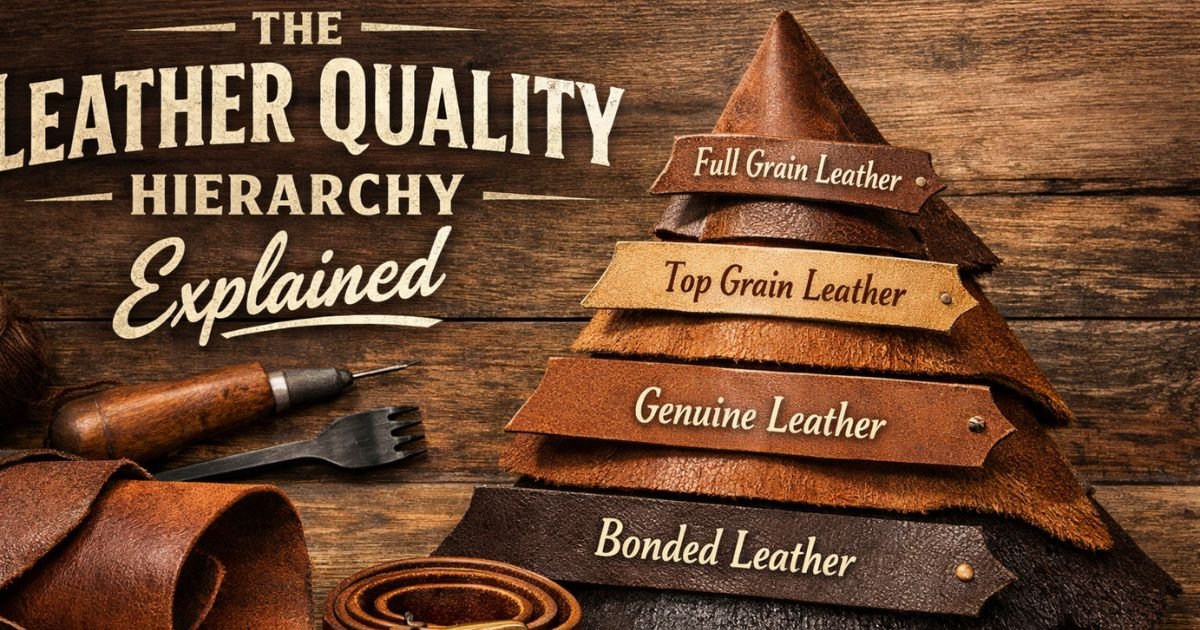
Leather isn’t one thing. It comes in grades, like cuts of steak. Some are prime. Some are scraps glued together. The table below shows the full ladder so you can judge quality in a glance.
| Grade | What It Is | Quality | Durability | Typical Use |
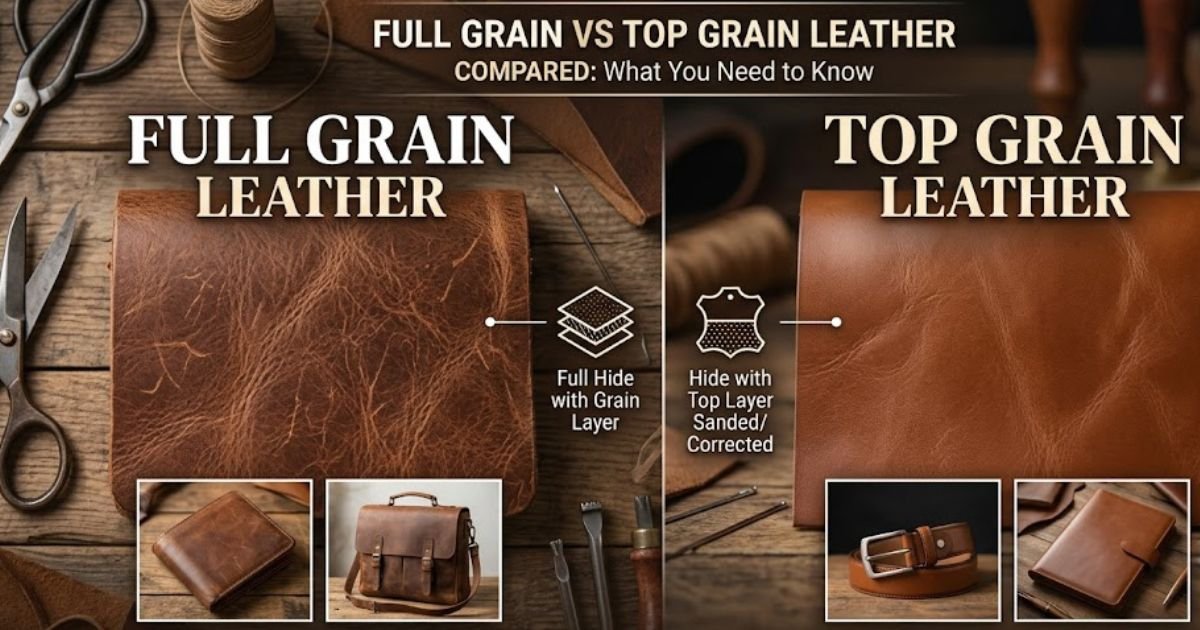
| Full grain leather | The top, untouched layer of the hide | Highest | Lasts decades | Luxury bags, boots, saddles |
| Top grain leather | Top layer lightly sanded and smoothed | High | Very durable | Premium wallets, jackets |
| Corrected grain leather | Sanded and coated to hide flaws | Medium | Good | Mid-range furniture, shoes |
| Genuine leather | Lower layers, heavily processed | Lower-mid | Decent | Budget belts, wallets, accessories |
| Split leather | The bottom flesh layer | Low | Weaker | Suede, cheap goods |
| Bonded leather | Scraps shredded and glued together | Lowest | Peels fast | Very cheap furniture, binders |
See how quality drops as you read down? That’s the whole story in one table.
Where Genuine Leather Falls on the Ladder
Genuine leather sits in the lower-middle of the pack. It’s real, it’s usable, but it’s no champion.
Here’s why. After the prized full grain and top grain layers get split off the hide, the leftover layers get processed into genuine leather. It’s built from what’s left after the best parts are claimed.
What Are Corrected Grain and Split Leather?
Two grades cause extra confusion, so let’s make them simple.
- Corrected grain leather has its surface sanded down to erase scars and blemishes, then gets a coating stamped with a fake grain pattern. It looks neat, but the natural character is gone.
- Split leather is the soft lower flesh layer of the hide. It’s the raw material behind most suede, that fuzzy, velvety texture you know from shoes and jackets.
Grade explains quality. But how does a raw hide actually become the leather in your hands?
Buy Now: Men’s Long Leather Wallet – Genuine Leather, Zip Coin Pocket
How Is Genuine Leather Made?
The journey from animal hide to finished product follows a clear path. Here’s how it works, step by step:
- Start with the raw hide. A cow’s hide arrives at the tannery, thick and full of natural layers.
- Split the layers. Machines slice the hide into layers. The top goes to premium grades. The lower layers head toward genuine leather.
- Tan the hide. This stops it from rotting. Chrome tanning is fast and affordable. Vegetable tanning is slower, greener, and prized for premium goods.
- Finish the surface. The leather gets dyed, treated, and softened so it’s ready to use.
- Emboss or coat it. A grain pattern is often pressed on top to give it a uniform, polished look.
Here’s the key point: the layer of hide used decides the final grade. Top layer means top quality. Lower layers mean genuine or split leather. Simple as that.
Knowing how it’s made gives you an edge. Now let’s spot the real thing in the wild.
How Can You Tell if Leather Is Genuine?
Want to know how to identify genuine leather without a lab? Good news your own senses are surprisingly powerful. You can run these checks in seconds, right in the store.
The 5 Quick Authenticity Tests
- The smell test. Real leather smells earthy, rich, and natural. Fakes smell like plastic or chemicals. This is the fastest tell of all.
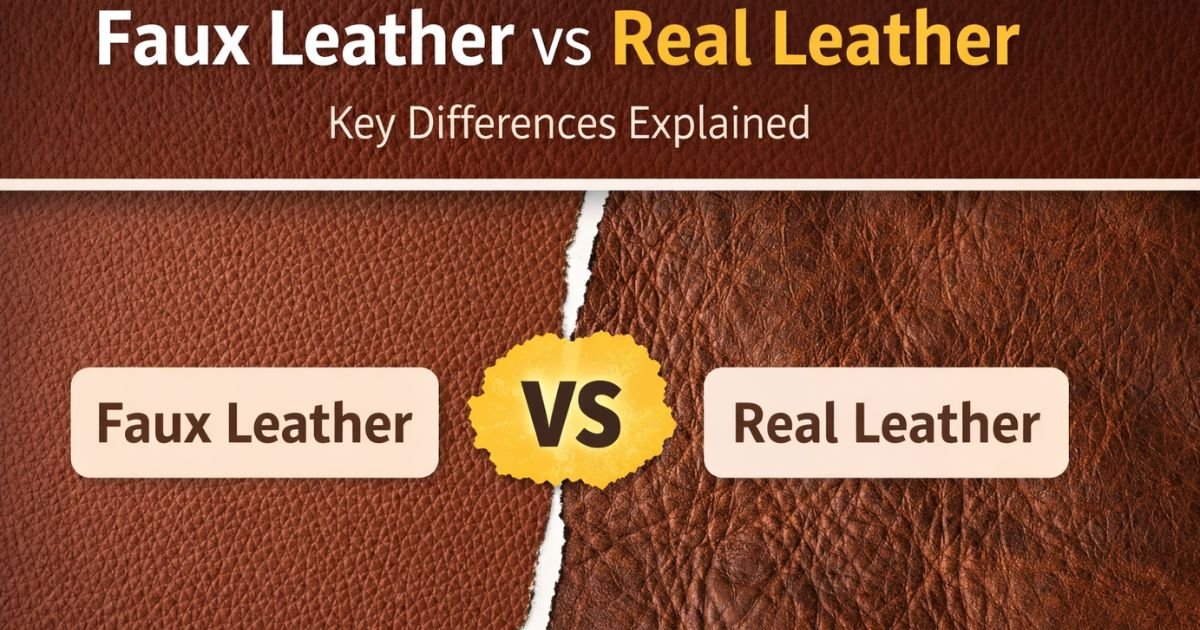
- Check the grain. Genuine leather has slight irregularities and imperfections. A flawless, repeating pattern usually screams fake.
- The water-drop test. Real leather slowly absorbs a small drop of water. Synthetic surfaces let it bead and roll right off.
- Inspect the edges. Real leather edges look slightly rough and fibrous. Fake leather edges often look like clean-cut fabric or plastic.
- The bend-and-wrinkle test. Bend the material. Real leather wrinkles and creases naturally, like skin. Fakes stay stiff or fold oddly.
Why does genuine leather smell the way it does? Because it comes from real animal hide treated with natural tanning agents. That earthy scent is the tanning process talking something plastic simply can’t fake.
Signs You’re Looking at Fake or Synthetic Leather
Watch for these red flags:
- A perfectly uniform grain with zero natural variation
- A chemical or plastic smell
- A peeling or flaking surface, especially at corners
- Edges that look like fabric, not fiber
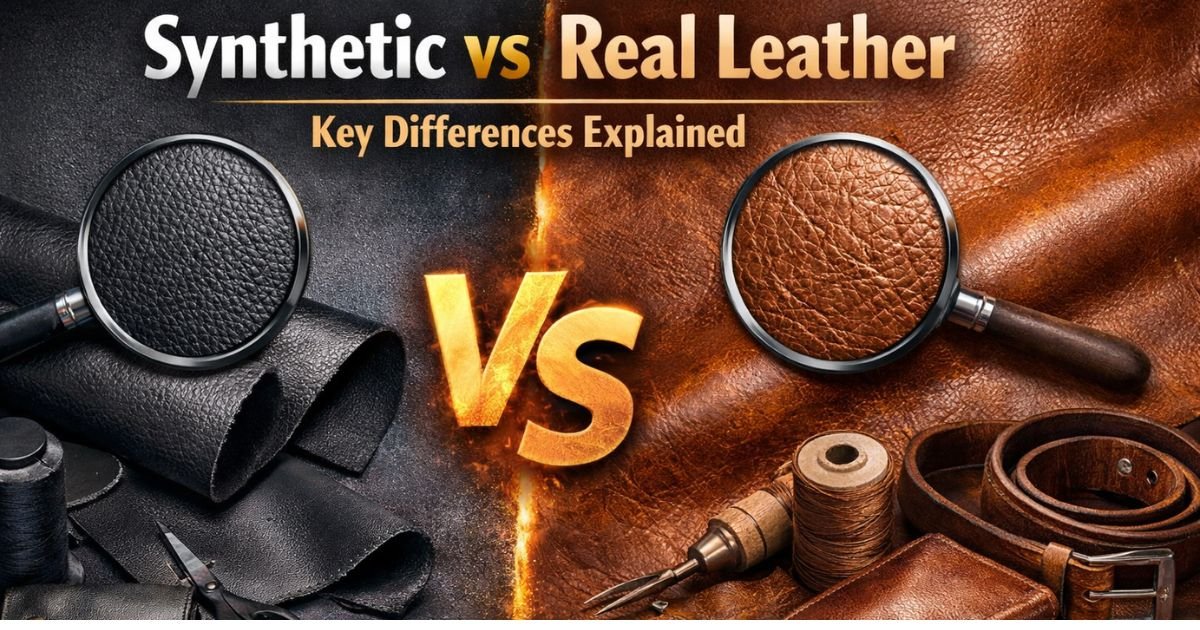
You’ll often see fakes labeled as faux leather, vegan leather, synthetic leather, or PU leather. These are man-made materials, not animal hide. Some are decent. None of them are real leather.
Once you can spot it, the next big question is simple: how long will it actually last?
Buy Now: Mens Oversized Lambskin Shearling Jacket
How Long Does Genuine Leather Last and Does It Peel?
Here’s the honest answer. Genuine leather can last 5 to 10 years or more with good care. That’s solid, though full grain leather can stretch well beyond that, sometimes for generations.
Now, does genuine leather peel? Let’s be straight with you:
- Coated and corrected finishes can peel over time, especially if neglected.
- Bonded leather peels the fastest because it’s basically glued scraps.
- True genuine leather holds up reasonably well, but it’s not bulletproof.
There’s one beautiful trait real leather has that fakes never will: patina. That’s the rich, warm sheen leather develops as it ages. Real leather grows more handsome with time. Fakes just crack, flake, and fall apart.
How long your leather survives depends heavily on one thing how you treat it.
How to Care for Genuine Leather
Good care can double the life of your leather. The routine is easy. Here’s all you need to do:
- Clean it gently. Wipe away dirt with a soft, slightly damp cloth.
- Condition it. Apply a leather conditioner every few months to keep it supple and prevent cracking.
- Dry it naturally. If it gets wet, let it air dry away from heat. Never blast it with a hairdryer.
- Store it right. Keep it in a cool, dry spot. Use a dust bag for bags and shoes.
- Avoid heat and soaking. Direct sunlight and full water dunks are leather’s worst enemies.
Quick question people always ask: is genuine leather waterproof? No. It’s water-resistant, not waterproof. A few raindrops are fine. A swim is not.
Care matters a lot. But so does understanding what you’re paying for in the first place.
Why Is Genuine Leather Cheaper Than Full Grain?
The price gap comes down to two things: the layer of hide and the amount of processing.
Genuine leather is made from the lower, leftover layers after the premium top is removed. Then it gets heavily processed, coated, and embossed to look presentable. Lower raw material plus more processing equals a lower price.
Here’s what your money is really buying with genuine leather:
- A real leather product, not plastic
- A mid-tier material that’s decent but not premium
- A budget-friendly price that fits everyday use
So is genuine leather worth it? Yes if your budget is tight and you want real leather without the premium cost. It’s an honest middle-ground choice. Just don’t expect full grain magic at a genuine leather price.
These insights come from years of hands-on experience. Let me share what working with leather actually teaches you.
From the Workshop A Leather Expert’s Take
After handling countless hides and finished goods, I can tell you the fastest way to judge leather isn’t the look. It’s the smell. Press it to your nose. Real leather greets you with that warm, earthy scent every single time. Fakes give you a chemical whiff that no marketing stamp can hide.
Trust matters in this trade, which is why industry bodies like the Leather Working Group exist. They audit tanneries for environmental and quality standards, and reputable brands proudly mention them. When a maker references that kind of certification, it’s a quiet sign they care about doing things right.
Here are two insider tips most shoppers never hear:
- Always check the edges first. Brands spend money making the surface look great, but the edges reveal the truth fast. Fibrous, slightly rough edges mean real. Clean plastic-like edges mean fake.
- Read the exact grade, not the buzzword. A tag that proudly says “full grain” or “top grain” is telling you something specific. A vague “genuine leather” stamp is often hiding a lower grade behind a flattering word.
Let’s lock in everything you’ve learned.
Conclusion
Genuine leather is a real leather material that provides durability and a classic look at a more affordable price than premium leather types. While it may not be as strong or long-lasting as full-grain or top-grain leather, it remains a practical option for everyday products. Understanding the differences between leather grades can help you make a smarter purchasing decision.
FAQs
Is genuine leather real leather?
Yes, genuine leather is real leather made from actual animal hide. However, it sits at a lower grade than full grain or top grain leather, so it’s authentic but not top quality.
What is genuine leather made of?
Genuine leather is made from animal hide, usually cowhide. It comes from the lower or split layers of the hide that remain after the premium full grain and top grain layers are removed.
Is genuine leather good quality?
Genuine leather is decent, mid-range quality. It’s durable enough for everyday items like belts and wallets, but it ranks below full grain and top grain leather in strength, beauty, and lifespan.
What’s the difference between genuine leather and full grain?
Full grain uses the strong, untouched top layer of the hide and lasts for decades. Genuine leather uses lower, heavily processed layers, making it cheaper, thinner, and shorter-lived by comparison.
Why does genuine leather smell?
Genuine leather smells earthy and natural because it’s made from real animal hide treated with tanning agents. Fake leather smells like plastic or chemicals, which is why the smell test is so reliable.
Is genuine leather better than faux leather?
Genuine leather is usually more durable and ages more gracefully than faux leather, developing a beautiful patina over time. Faux leather is cheaper and animal-free, but it tends to crack and peel much faster.