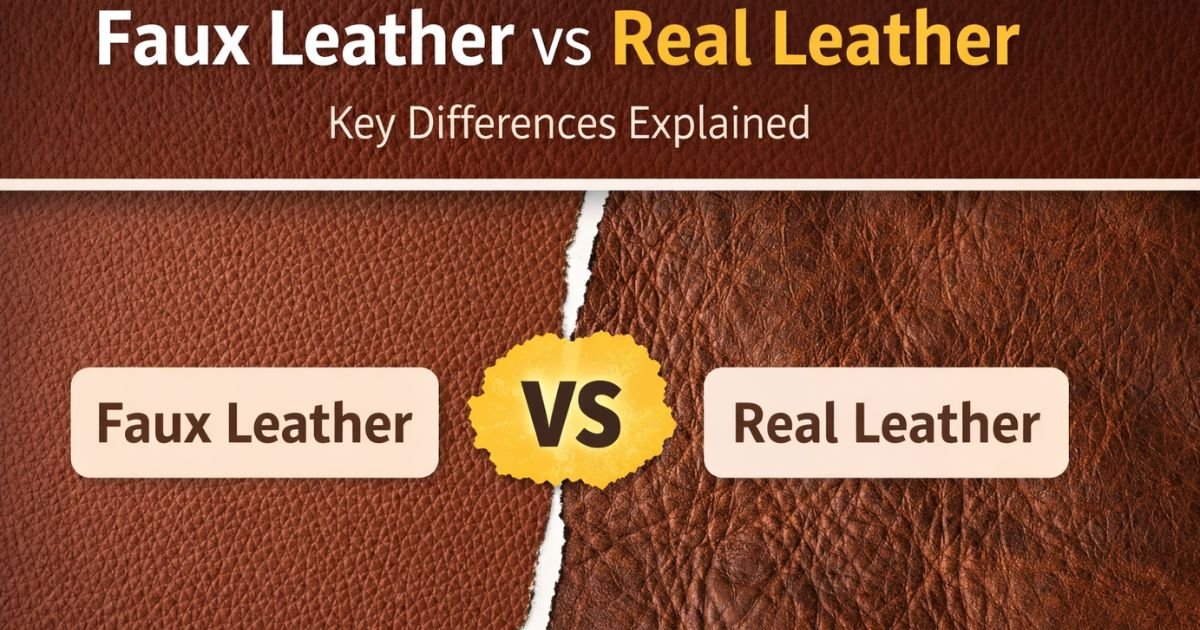
Faux leather vs real leather is a common comparison for buyers looking for the best material for clothing, furniture, bags, and accessories. Faux leather is a synthetic material designed to mimic the appearance of genuine leather, while real leather is made from animal hides and offers natural durability, texture, and longevity.
What Is Faux Leather And What Is It Actually Made Of?
Faux leather goes by many names. Pleather, leatherette, vegan leather, synthetic leather, PU leather they all point to the same basic idea: a man-made material engineered to look like the real thing, without using animal hide.
At its core, most faux leather is a fabric base (usually polyester) coated with a layer of plastic polymer either polyurethane (PU) or polyvinyl chloride (PVC). That plastic coating is what gives it the leather-like appearance and smooth texture.
It’s machine-made, which means every inch looks identical. No natural markings, no grain variation, no imperfections. Just a uniform, repeating surface pattern pressed in by a factory roller.
PU Leather vs PVC Leather What’s the Difference?
Not all faux leather is created equal. The two main types behave quite differently:
- PU leather (polyurethane): Softer, more flexible, and the better-quality option. It’s also 100% vegan. Most modern faux leather sofas, jackets, and bags use PU. It breathes slightly better than PVC and tends to last longer.
- PVC leather (polyvinyl chloride): Stiffer, cheaper to produce, and less breathable. It’s more water-resistant but contains chlorine in its chemistry raising environmental and health concerns during manufacturing.
When you see budget furniture or fashion items labeled “leather-look,” there’s a good chance it’s PVC.
Is Vegan Leather the Same as Faux Leather?
Essentially, yes. Vegan leather is a marketing term for faux leather specifically designed to appeal to buyers who don’t want animal products. Most vegan leather is PU-based, making it 100% animal-free.
But here’s where it gets complicated: just because something is vegan doesn’t automatically make it eco-friendly. More on that shortly.
What Is Real Leather And Why Does the Grade Matter?
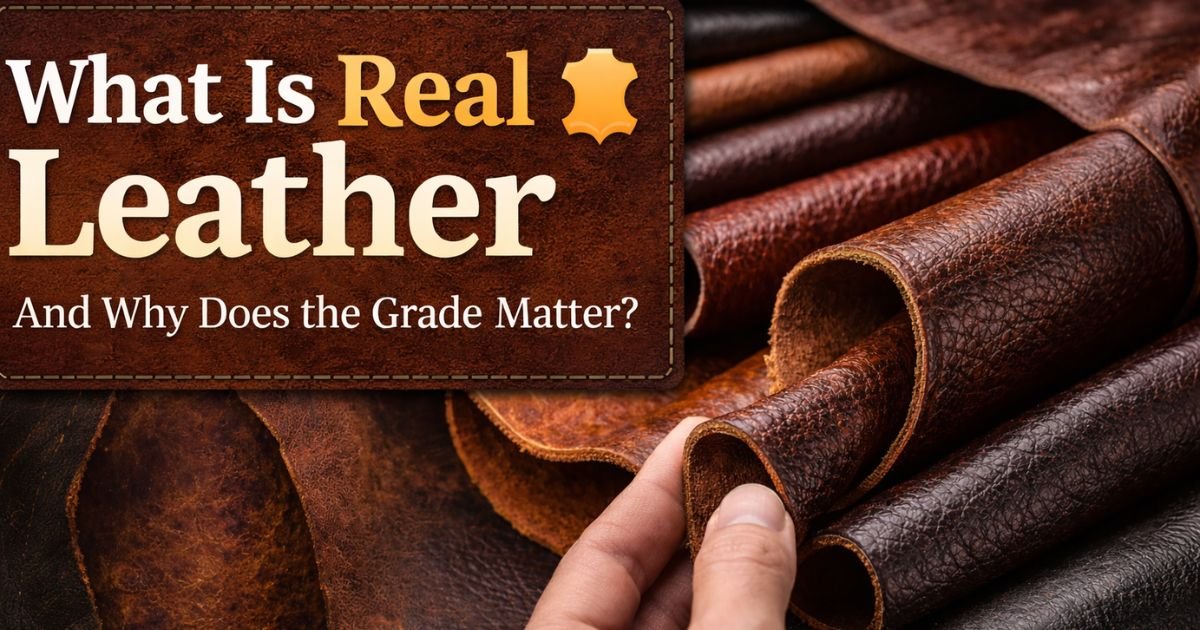
Real leather is made from animal hide that has been tanned, treated, and processed into a durable material. Most of it comes from cattle raised primarily for beef and dairy meaning the hide is a byproduct, not the primary reason the animal was raised.
The quality of real leather varies enormously depending on which layer of the hide was used and how it was processed. Here’s the hierarchy you need to know:
Real Leather Grades Best to Worst:
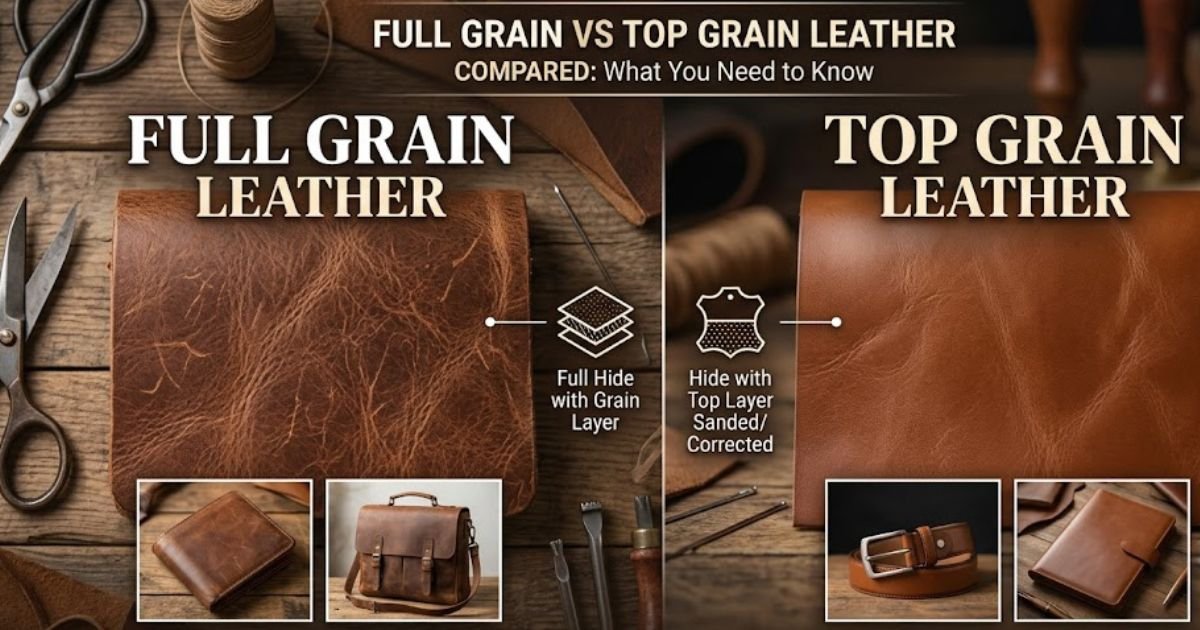
- Full-grain leather The top layer of the hide, with all natural markings intact. The strongest, most durable, most breathable grade. Ages into a rich patina. This is what heirloom-quality goods are made from.
- Top-grain leather The top layer, lightly sanded to remove surface imperfections. Slightly less durable than full-grain but still excellent quality. Used in most premium bags and jackets.
- Genuine leather Sounds impressive, but it’s actually a low grade. Made from the inner layers of the hide after the top layers have been removed. Thinner, weaker, and less durable. Lasts a few years at most.
- Bonded leather The bottom of the barrel. Made from leftover leather scraps and fibers ground up, mixed with polyurethane, and pressed onto a paper backing. Only 10–20% actual leather. Peels and flakes within a few years. Avoid it.
Here’s the dirty secret the furniture industry doesn’t advertise: when a sofa is labeled simply “genuine leather,” you’re often getting the lowest real-leather grade not the premium product the name implies.
Buy Now: Cognac Suede Trucker Jacket for Men
Faux Leather vs Real Leather The 6 Key Differences That Actually Matter
1. Durability Which One Actually Lasts?
This is where the gap is enormous.
Real leather, when properly cared for, can last 20 to 50 years. A well-made full-grain leather jacket doesn’t just survive decades of wear it looks better because of it. The surface develops a patina: a rich, deepening character that no factory can replicate. Cowboys, bikers, and craftspeople have known this for centuries.
Faux leather averages 3 to 7 years before it starts visibly degrading. The PU coating begins to crack, peel, and flake especially at high-friction points like armrests, seat cushions, and collar edges. Once it starts peeling, there’s no real fix.
The difference isn’t even close.
2. Cost Upfront Price vs Long-Term Value
Faux leather wins the upfront battle. Hands down.
A faux leather sofa typically runs $300–$800. A comparable real leather sofa made with top-grain or full-grain hide costs $1,200–$4,000 or more.
That gap feels huge in the store. But run the numbers over time:
| Faux Leather Sofa | Real Leather Sofa | |
| Purchase Price | $600 | $2,500 |
| Lifespan | 5 years | 25 years |
| Cost Per Year | $120/year | $100/year |
| Replacements Needed (25 yrs) | 5 sofas | 1 sofa |
| Total 25-Year Cost | $3,000 | $2,500 |
Over a 25-year period, real leather is actually cheaper. Not to mention the hassle of replacing a sofa five times.
This math flips the entire “faux leather is more affordable” argument on its head.
3. Appearance & Feel Can You Really Tell the Difference?
In a showroom with perfect lighting, high-quality PU leather can fool most people. The technology has gotten genuinely good.
But spend a few years with both, and the difference becomes undeniable.
Real leather has a surface that shifts and evolves. Run your fingers across it and you’ll feel subtle grain variation natural wrinkles, pores, faint scars from the animal’s life. It’s warm to the touch. It wears and bends like skin. Over years, it deepens in color and develops a unique character that’s entirely its own.
Faux leather has a surface that stays the same until it doesn’t. The texture is uniform, machine-perfect, and slightly cold to the touch. It looks fine for a few years. Then the plastic coating begins to separate from the base fabric, and the peeling begins.
There’s also the smell. Real leather has that unmistakable earthy, organic scent. Faux leather smells like a new shower curtain.
4. Breathability & Comfort Especially in Summer Heat
This is the difference nobody talks about until they’ve spent a sweaty August afternoon on a faux leather sofa.
Real leather is a natural material with microscopic pores. It breathes. Your body heat and moisture pass through rather than getting trapped. In summer it feels cooler; in winter it warms with your body. It’s why leather has been used in clothing and seating for thousands of years it works with your body, not against it.
Faux leather is essentially a plastic film. It doesn’t breathe at all. Sit on it in warm weather and you’ll feel that clammy, sticky sensation almost immediately. For a jacket, this means sweat with no escape. For a sofa, this means standing up to a visible imprint of where you’ve been sitting.
If you live in Texas, Florida, Arizona, or anywhere else with serious heat breathability is a dealbreaker, and real leather wins decisively.
5. Maintenance & Care What Each One Actually Needs
The maintenance story is where faux leather fights back.
Real Leather Care:
- Condition with a quality leather conditioner twice a year to prevent drying and cracking
- Wipe spills immediately leather absorbs liquids quickly
- Keep away from direct sunlight to prevent fading
- Use a damp cloth for regular cleaning
- Avoid harsh chemical cleaners they strip the natural oils
Faux Leather Care:
- Wipe clean with a damp cloth done
- No conditioning needed
- More stain-resistant than real leather
- Easier to clean after pet accidents, food spills, or kids’ messes
- Avoid sharp objects scratches are permanent and visible
If you want something genuinely low-maintenance for a busy household, faux leather is the practical winner. Real leather rewards care; faux leather just requires a cloth.
6. Environmental Impact The Greenwashing Truth Nobody Talks About
Here’s where things get genuinely complicated and where most content gets it wrong.
The popular narrative is simple: real leather = bad for animals and the planet. Vegan leather = ethical and eco-friendly. But that narrative has some serious holes in it.
The case against faux leather’s eco credentials:
- Most faux leather is made from PVC or PU both petroleum-based plastics
- PVC production releases toxic chemicals including dioxins
- Faux leather products don’t biodegrade they sit in landfill for hundreds of years
- Because faux leather wears out faster, you buy more of it compounding the environmental cost
- The Higg Materials Sustainability Index has repeatedly ranked synthetic leather worse than animal leather on several environmental metrics
The honest case for real leather:
- The vast majority of hides come from cattle already raised for beef and dairy the leather industry uses a byproduct that would otherwise go to waste
- Leather is biodegradable
- A well-made leather product that lasts 50 years has a far smaller total environmental footprint than five synthetic replacements
This doesn’t mean real leather is perfect. The tanning process particularly chrome tanning uses heavy chemicals and significant water. Poorly managed tanneries are a real environmental problem.
The cleanest option in 2026? New-generation plant-based leathers like Piñatex (made from pineapple leaf fibers), Mylo (mushroom-based mycelium leather), and Desserto (cactus leather) are emerging as genuinely sustainable alternatives. They’re not yet mainstream, but they’re worth watching.
How to Tell Real Leather from Faux Leather 6 Tests Anyone Can Do
Shopping in a store and not sure what you’re looking at? Run these tests:
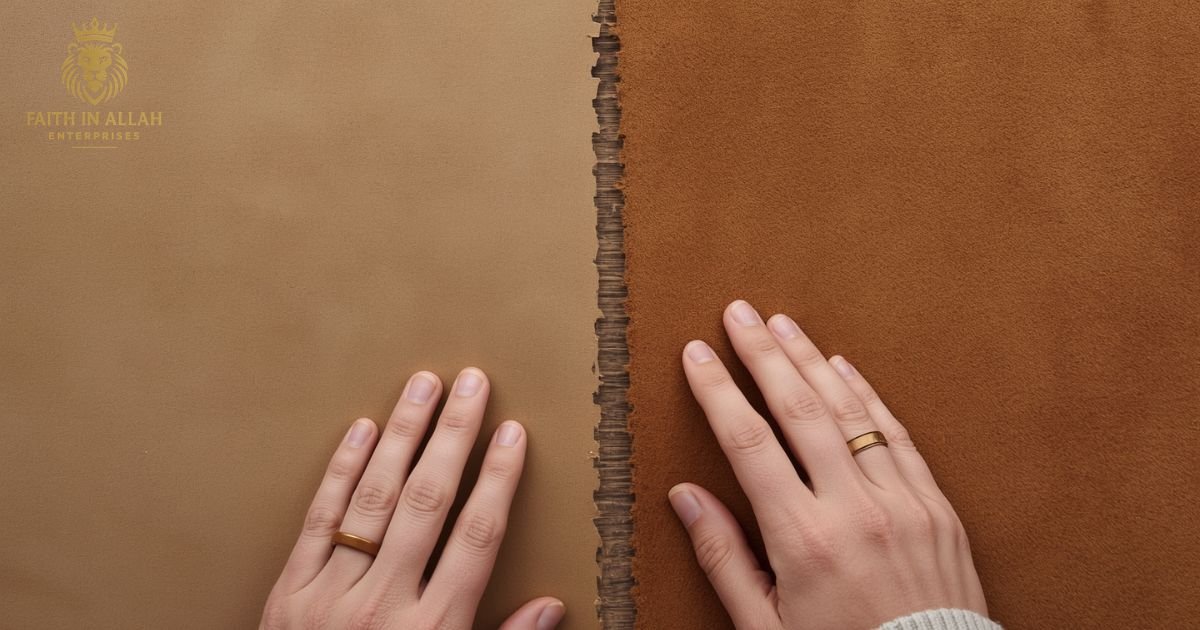
- The Touch Test Run your fingers across the surface. Real leather feels subtly uneven, warm, and slightly textured. Faux leather feels uniform, slightly cool, and plasticky.
- The Edge Test Look at the cut edges of the material. Real leather has rough, fibrous edges like fabric. Faux leather has clean, perfectly smooth edges it’s been cut from a plastic sheet.
- The Smell Test Bring it close and take a genuine sniff. Real leather has an earthy, organic smell that’s unmistakable. Faux leather smells like plastic or chemicals.
- The Press Test Push your fingertip firmly into the surface. Real leather stretches and wrinkles slightly, like skin does. Faux leather simply depresses and springs back unchanged.
- The Water Drop Test Place a tiny drop of water on the surface. Real leather slowly absorbs it (darken slightly). Faux leather beads the water up it’s waterproof because it’s plastic.
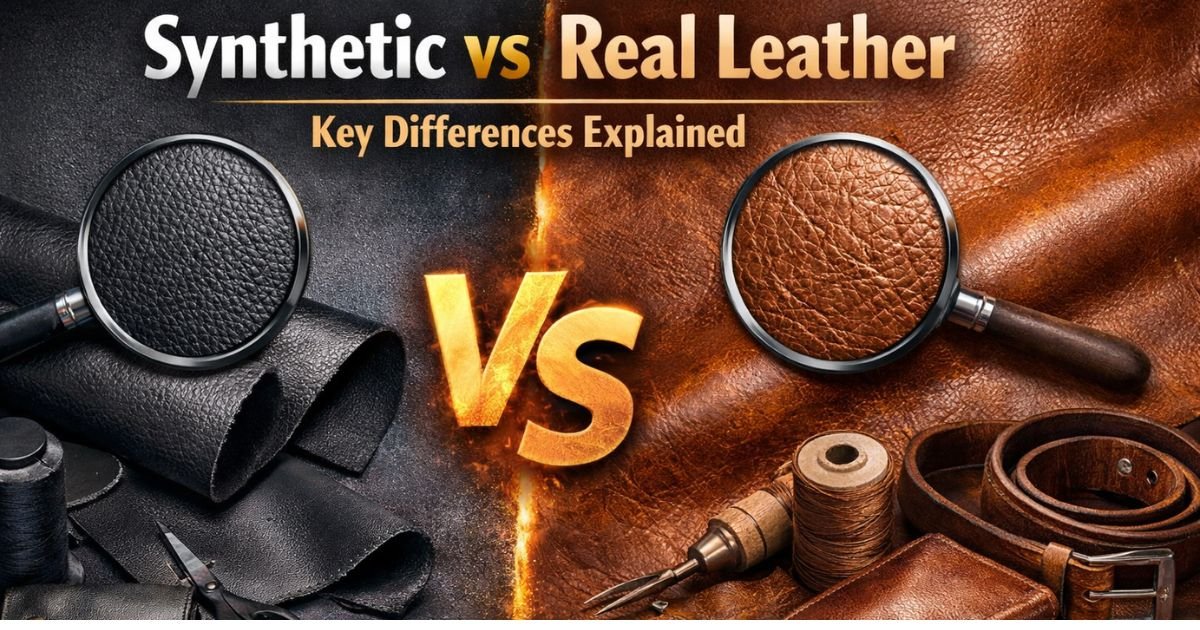
- The Pore Pattern Test Look closely under a light. Real leather has an irregular, random pore pattern nature doesn’t repeat. Faux leather has a perfectly uniform, repeating pore pattern stamped by a machine.
Master these six tests and you’ll never be fooled in a showroom again.
Buy Now: Calfskin Hair Leather Coat
Which Is Better for YOUR Situation? A Use-Case Breakdown
There’s no single right answer. The best choice depends entirely on your life.
Is Faux Leather Good for Sofas?
For families with young kids or messy pets, high-quality faux leather (PU) is a smart, practical choice. It cleans up easily, costs less if it gets destroyed, and holds its look for 5–7 years of heavy use. Just avoid bonded leather at all costs it will peel within two years under daily family use.
If you’re furnishing a living room for the long term and want something that genuinely improves with age, invest in top-grain real leather. It’s a 20-year decision, not a 5-year one.
Is Real Leather Worth It for Jackets?
For a jacket you plan to wear for a decade or more yes, unequivocally. A quality full-grain or top-grain leather jacket from a brand like Schott NYC, Belstaff, or Buffalo Jackson will outlast five faux leather alternatives. It will also develop a unique patina that tells your story.
For a fashion-forward jacket you’ll wear for one or two seasons, high-grade PU leather is perfectly reasonable. The quality has genuinely improved to the point where it can be hard to distinguish at first glance.
What About Leather Furniture If You Have Pets or Kids?
Dogs and cats are hard on any material. Here’s the honest breakdown:
| Scenario | Best Choice | Why |
| Dogs on the sofa | Full-grain real leather | Develops character from scratches; doesn’t peel |
| Cats with claws | High-grade PU faux | Cheaper to replace than scratch-damaged real leather |
| Toddlers + spills | PU faux leather | Wipe-clean surface, stress-free ownership |
| Multi-pet household | Real leather (full-grain) | Scratch-resistant surface won’t delaminate like faux |
Expert Insight What Leather Craftspeople Actually Say
Spend time around people who work with leather every day and a few truths become crystal clear.
Real leather professionals will tell you: the biggest mistake buyers make is confusing “genuine leather” with quality. That label is the industry’s least impressive grade yet it sounds like a premium credential. Always ask specifically for full-grain or top-grain.
The second thing they’ll tell you: bonded leather is the industry’s dirty secret. It peels, flakes, and falls apart within years of regular use. It looks like leather, it’s sold at leather prices, and it behaves like wet cardboard. Avoid it.
From a craftsperson’s perspective, the difference between faux and real isn’t just material it’s philosophy. Real leather rewards investment, care, and patience. Faux leather rewards convenience and speed. Neither is wrong. But you should know which one you’re choosing.
Industry bodies like the Leather Working Group now certify tanneries on environmental performance, chemical management, and energy efficiency meaning ethically sourced real leather is increasingly traceable and verifiable. That matters if sustainability is part of your decision.
Conclusion
Choosing between faux leather and real leather depends on your budget, preferences, and intended use. Faux leather is affordable, easy to maintain, and animal-friendly, while real leather provides superior durability, a premium feel, and a unique appearance that improves with age.
FAQs
Is faux leather as good as real leather?
For some uses, absolutely. High-quality PU faux leather is easy to clean, animal-free, and looks great for several years. But it doesn’t match real leather on durability, breathability, or long-term value. Real leather lasts decades; faux leather lasts years.
Why does faux leather peel and crack over time?
Faux leather is made by bonding a plastic coating to a fabric base. Over time especially with heat, friction, and UV exposure that bond weakens and the plastic layer separates from the backing. Once it starts peeling, it can’t be fully repaired.
How long does a faux leather sofa last?
A well-made PU leather sofa typically lasts 5–7 years with normal use. Cheaper versions, especially bonded leather, may begin peeling within 2–3 years. Real leather sofas, properly maintained, routinely last 20–30 years.
Is vegan leather actually eco-friendly?
Not necessarily and this is one of the biggest misconceptions in the market. Most vegan leather is made from PVC or PU, both petroleum-based plastics that don’t biodegrade. Real leather, sourced as a byproduct of the beef industry, is actually biodegradable. The greenest option in 2026 is plant-based leather like Piñatex or Mylo but it’s still limited in availability.
What is the best type of leather for a sofa?
For longevity and luxury, top-grain or full-grain real leather is the best sofa material available. For budget-conscious buyers or households with young children, high-grade PU faux leather is the practical alternative. Avoid bonded leather entirely it will not hold up to regular use.
Can faux leather be repaired if it peels?
Minor surface scratches on faux leather can be masked with leather repair kits or matching paint pens. But once the plastic coating begins delaminating from the base, there’s no durable long-term fix. It’s a sign the material has reached the end of its lifespan.
Is real leather worth the extra cost?
For most buyers who plan to use an item daily for 10+ years yes. The cost-per-year math typically favors real leather over time. A $2,500 full-grain leather sofa used for 25 years costs $100 per year. A $600 faux leather sofa replaced every 5 years costs $120 per year and comes with the inconvenience of five replacement purchases.