Understanding leather types and grades is essential when buying leather products. Leather comes in various forms, including full-grain, top-grain, genuine, split, and bonded leather. Each type offers different levels of durability, appearance, and quality. Knowing these differences helps consumers choose the best leather for their specific needs and budget.
What Are Leather Types and Grades, Really?
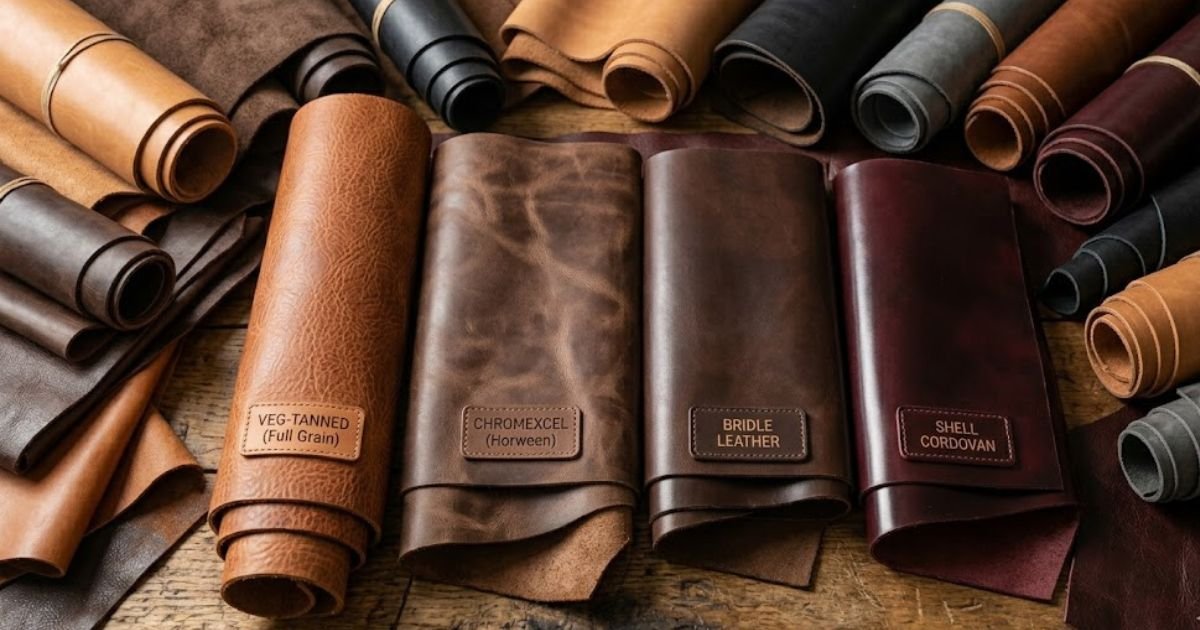
Leather types and grades describe two different things that work together. “Type” usually refers to the tanning method or finish like vegetable-tanned or chrome-tanned. “Grade” refers to which layer of the hide was used and how much it was altered.
Think of an animal hide like a slice of bread. The crust is the toughest, most flavorful part that’s your full-grain layer. The soft middle is weaker and needs help to hold its shape that’s closer to genuine or bonded leather.
Once you understand this one idea, every confusing leather label on every tag suddenly makes sense.
Buy Now: Cognac Suede Trucker Jacket for Men
The 4 Leather Grades, Ranked From Best to Worst
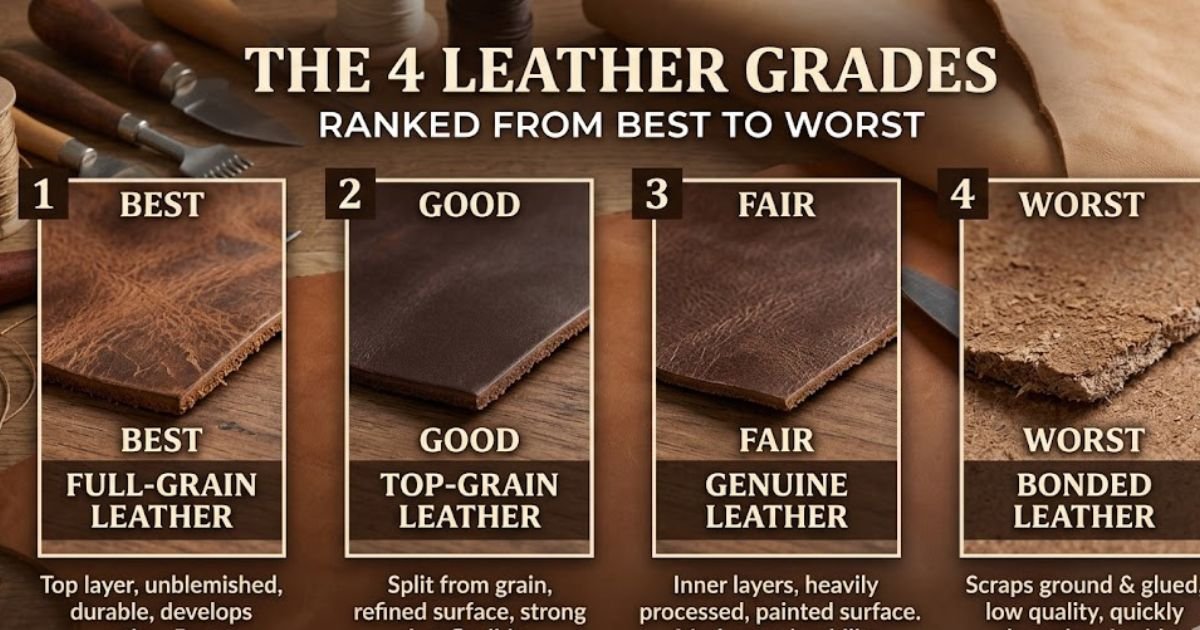
Here’s the hierarchy that every leather product falls into, ranked by quality, durability, and how much the original hide has been altered.
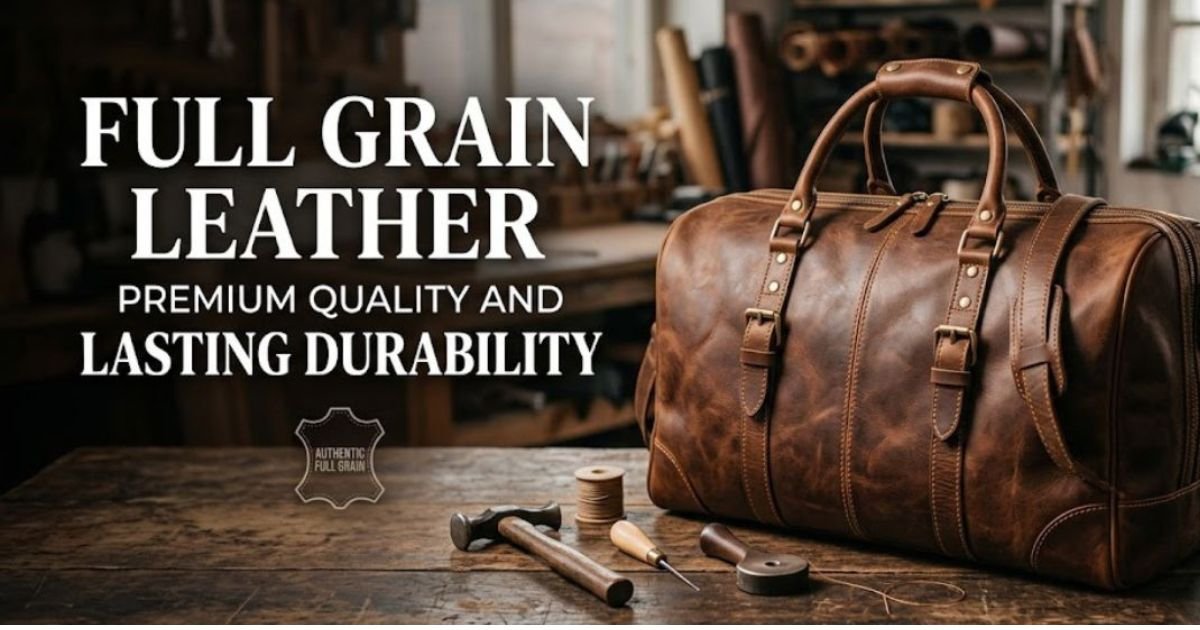
- Full-grain leather uses the entire top layer of the hide, including natural grain and texture. Nothing is sanded off. This is the strongest, longest-lasting grade, and it’s the only one that develops a rich patina over time.
- Top-grain leather the top layer is lightly sanded and refinished for a smoother, more uniform look. It’s thinner and more flexible than full-grain, which is why it’s the go-to choice for luxury handbags and car interiors.
- Genuine leather despite the reassuring name, this is actually a lower grade. It’s made from leftover layers, often coated and embossed to fake a “real leather” look. It’s still a real animal hide, but it won’t survive heavy daily use.
- Bonded leather at the bottom of the barrel. Scraps and fibers are shredded, then glued together with a polyurethane binder and stamped with a fake grain pattern. It looks convincing on day one and starts peeling within a year or two.
There’s also a fifth category worth knowing: corrected-grain leather. Tanneries sand away surface imperfections like scars and insect bites, then stamp on an artificial grain. It’s technically a step above genuine leather, but it’s still missing the natural texture that makes full-grain so special.
Full-Grain vs Top-Grain Leather: What’s the Real Difference?
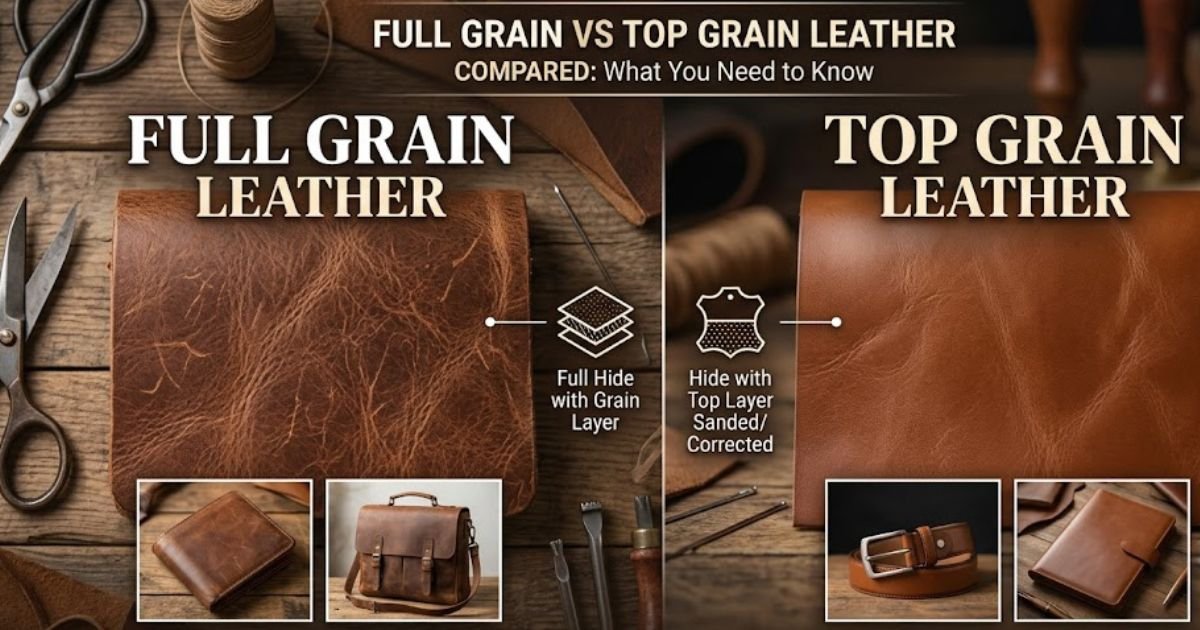
This is the comparison most shoppers actually need, because both grades show up on premium products and the price gap can be huge.
| Feature | Full-Grain | Top-Grain |
| Hide layer used | Entire outer layer, unaltered | Top layer, lightly sanded |
| Surface | Natural grain, markings visible | Smooth, uniform finish |
| Durability | 20–40+ years | 10–20 years |
| Develops patina | Yes, beautifully | Minimal |
| Best for | Boots, belts, heirloom bags | Handbags, car seats, jackets |
| Price range | Highest | High |
Here’s a real-world example. A full-grain leather wallet might cost $80 instead of $30 — but if it lasts 25 years instead of 3, you’re actually saving money. That’s the part the price tag doesn’t tell you.
Is Genuine Leather Real Leather? (Yes, But…)
Yes, genuine leather is technically real animal hide but “genuine” is one of the most misleading words in retail. It’s not a compliment. It’s the industry’s official term for the third-best grade.
Manufacturers use the lower, weaker layers of the hide, then coat and stamp them to look like full-grain. It’s why a “genuine leather” couch can start peeling and cracking after just two or three years of regular use.
If you’ve ever owned a leather jacket that flaked off in little pieces, you already know exactly what genuine leather can do.
Is Bonded Leather Real Leather?
Technically, yes bonded leather contains real leather fibers, usually 10% to 20% of the material. The rest is scrap, fillers, and a polyurethane binder pressed into sheets.
Practically speaking, treat it like a leather impersonator. It mimics the look for a season or two, then starts bubbling, peeling, and cracking. If your budget furniture started looking rough fast, bonded leather is usually the reason why.
Leather Tanning Methods: Vegetable-Tanned vs Chrome-Tanned
Grade tells you which part of the hide you’re getting. The tanning method tells you how that hide was treated to become usable leather and it changes everything about how the leather feels, ages, and holds up.
Vegetable-Tanned Leather
This is the traditional method, using natural tannins from tree bark and plants like quebracho and wattle. It takes weeks to complete, but the payoff is leather that ages into a deep, rich patina and holds its shape beautifully. Brands like Hermann Oak in the USA are known for this old-school craftsmanship.
Chrome-Tanned Leather
Roughly 90% of leather worldwide is chrome-tanned, using chromium salts to speed up the process from weeks to about a day. It produces softer, more water-resistant leather at a lower cost which is why most mass-market bags and shoes use it.
Neither method is “wrong.” Vegetable-tanned wins on character and longevity. Chrome-tanned wins on softness, color variety, and affordability.
Leather Finishes: Aniline, Semi-Aniline, and Pigmented
Once leather is tanned, it gets a finish and this is the layer most buying guides skip entirely, even though it explains why two “full-grain” products can feel totally different.
- Aniline leather dyed with a transparent color and left mostly untouched. You can still see the hide’s natural markings. It’s soft, breathable, and gorgeous but it stains and scratches easily.
- Semi-aniline leather gets a light protective coating on top of the dye. It keeps most of the natural look while adding real stain resistance, which is why it’s popular for furniture.
- Pigmented leather coated with a heavier, opaque finish. It’s the toughest, most scratch-resistant option, but it loses the natural texture and breathability that make leather special in the first place.
Suede, Nubuck, and Other Leather Textures Explained
Suede and nubuck constantly get confused, so let’s clear it up once and for all.
Suede comes from the underside of the hide the soft, fuzzy split layer. It’s thinner, less durable, and prone to water damage.
Nubuck comes from the top grain, lightly sanded to create a similar velvety feel. Because it uses the stronger top layer, nubuck is noticeably tougher than suede even though they look almost identical on a shelf.
Other common textures worth knowing: nappa leather (extra soft, used in luxury jackets and car interiors), pebbled leather (textured surface that hides scratches, common in handbags), and patent leather (glossy, plastic-coated finish popular in dress shoes).
Which Leather Grade Should You Actually Buy?
This is where most guides stop short. Knowing the grades is one thing knowing what to buy for your actual life is another.
- Wallets and belts full-grain or top-grain. These get handled daily, so durability matters more than anything.
- Handbags top-grain or pebbled full-grain. You want structure and scratch resistance without sacrificing too much quality.
- Furniture and couches semi-aniline or pigmented top-grain. Stain resistance becomes critical with kids, pets, and daily lounging.
- Jackets nappa or aniline full-grain for softness and comfort against the body.
- Car seats pigmented leather or high-quality leather alternatives, since they face sun, spills, and temperature swings.
- Boots full-grain, vegetable-tanned if possible. You want a material that molds to your foot and ages well with wear.
How to Tell Real Leather Quality in the Store
You don’t need a lab to spot good leather. Here’s the checklist experienced buyers actually use:
- Check the smell. Real leather has a rich, earthy scent. A strong chemical or plastic smell usually signals bonded or heavily coated leather.
- Look for natural imperfections. Full-grain leather shows small scars, wrinkles, or pores. A perfectly uniform surface usually means it’s corrected-grain or fake.
- Press it gently. Real leather indents slightly and slowly returns to shape. Bonded leather often feels stiff or springs back instantly like plastic.
- Check the edges. Cut edges on real leather look fibrous. Bonded or faux leather edges look smooth and uniform, almost like cardboard.
- Read the label closely. “Full-grain” or “top-grain” should be stated outright. If a tag just says “leather” or “genuine leather” with no other detail, assume it’s a lower grade.
Sustainable and Vegan Leather Where Do They Fit?
More buyers are asking a fair question: is there a leather option that’s better for the planet?
Vegetable-tanned leather is generally the most eco-friendly traditional option, since it skips chromium salts in favor of plant tannins. On the synthetic side, vegan leather (often made from polyurethane or newer plant-based materials like cactus or mushroom fiber) avoids animal hide entirely, but typically doesn’t match the durability or patina of full-grain leather.
Neither option is “better” across the board; it depends on whether your priority is longevity, ethics, or environmental footprint.
Conclusion
Leather types and grades play a major role in determining the quality, longevity, and value of leather products. Full-grain leather is generally considered the highest quality, while other grades provide more affordable alternatives. By learning about leather classifications, you can make informed purchasing decisions and select products that meet your expectations.
FAQs
What are the 4 grades of leather?
The four main grades are full-grain, top-grain, genuine, and bonded leather, ranked from highest to lowest quality. Full-grain uses the entire natural hide, while bonded leather is made from glued-together scraps.
What is the highest quality leather?
Full-grain leather is the highest quality grade available. It uses the complete outer layer of the hide without sanding or correcting, which gives it superior strength and a natural aging patina.
How long does full-grain leather last?
Full-grain leather typically lasts 20 to 40 years with proper care, sometimes longer. Its dense fiber structure resists tearing far better than lower grades.
Is genuine leather real leather?
Yes, genuine leather is made from real animal hide, but it’s actually one of the lower-quality grades. It uses the weaker layers of the hide and typically lasts only 2 to 5 years.
What is the difference between suede and nubuck?
Suede comes from the softer underside of the hide, making it thinner and less durable. Nubuck comes from the tougher top-grain layer, lightly sanded for a similar velvety texture but with much better durability.