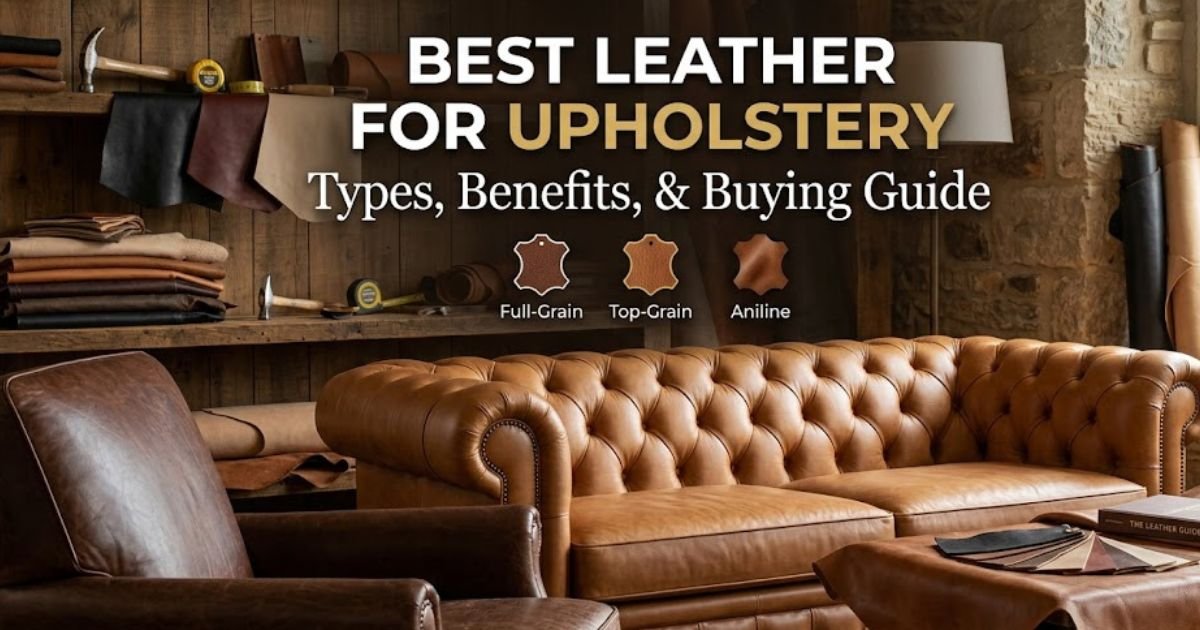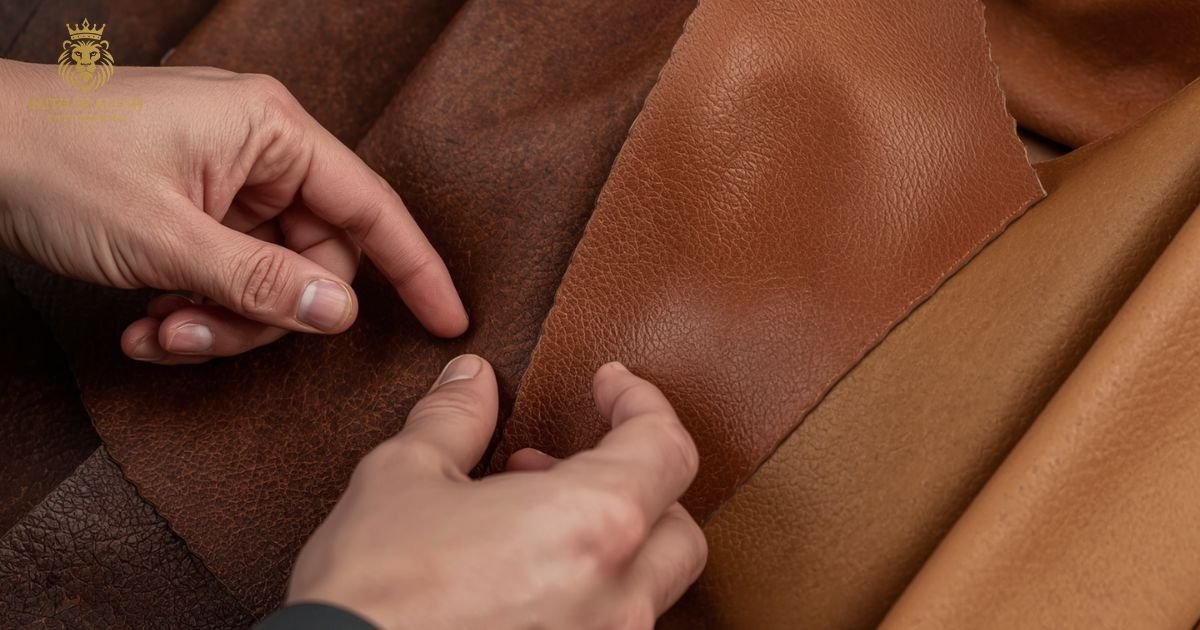
Leather is a durable and versatile material used in clothing, footwear, furniture, bags, and accessories. Understanding the different types of leather can help you choose the right product based on quality, appearance, durability, and budget. From premium full-grain leather to affordable bonded leather, each type has unique characteristics and uses.
What Is Leather and How Is It Made?
Leather is animal skin (called hide) that’s been treated so it won’t rot. Left alone, a raw hide dries out, stiffens, and falls apart. The treatment that saves it is called tanning.
Think of tanning as the difference between a fresh apple and a dried apple slice. One spoils in days. The other lasts for months. Tanning does the same thing for hide it locks in durability and turns skin into a material that can last decades.
This all happens in a tannery, where the real magic begins.
From Raw Hide to Finished Leather
There are two main tanning methods you’ll hear about:
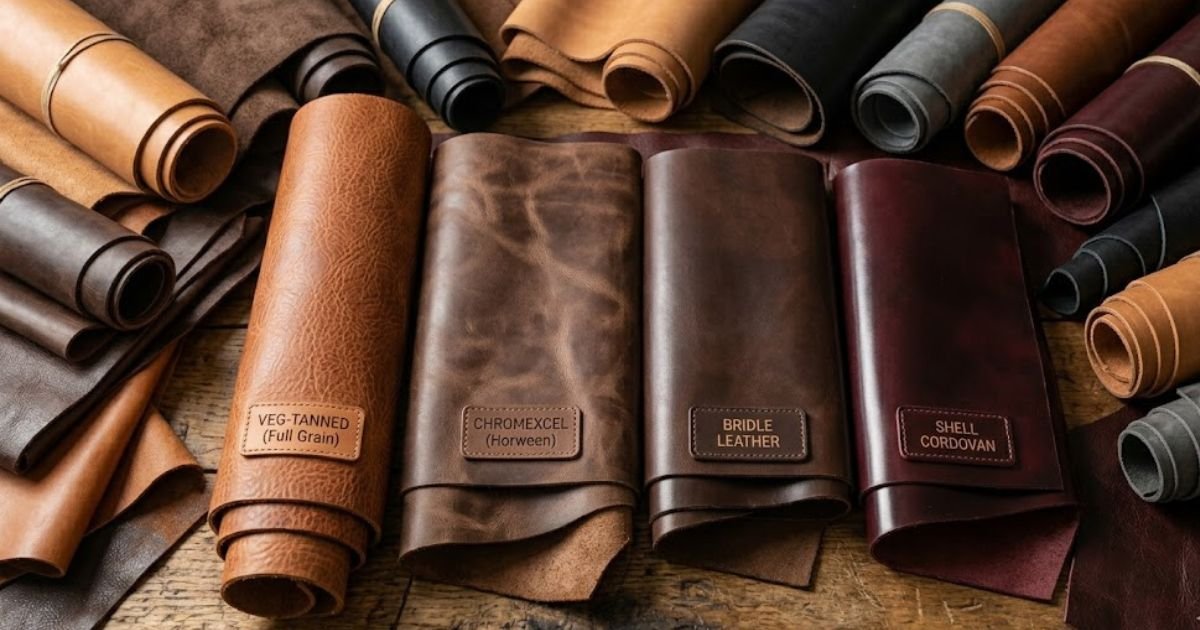
- Vegetable-tanned leather uses natural plant materials. It’s slower, eco-friendlier, and develops a gorgeous patina (a soft sheen that builds with age).
- Chrome-tanned leather uses chemicals. It’s faster, cheaper, softer, and more water-resistant which is why most leather goods use it.
Neither is “bad.” They’re just built for different jobs.
The Four Ways Leather Is Classified
When you shop for leather, every piece can be sorted by four things:
- Grade which layer of the hide was used
- Animal source cow, buffalo, lamb, goat, and beyond
- Finish the surface look and feel
- Tanning method vegetable or chrome
Get these four straight, and you can read any leather product like a pro.
The 4 Main Types of Leather by Grade (Highest to Lowest Quality)
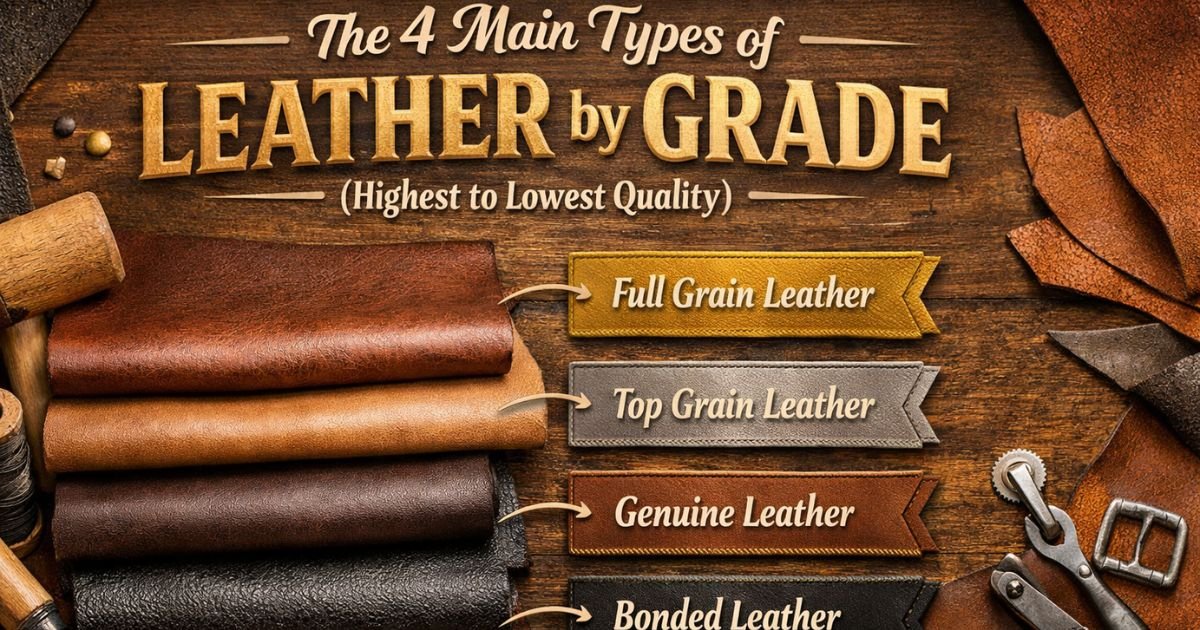
A hide has layers, like a slice of bread. The top layer is dense and tough. The deeper you go, the weaker it gets. The four main leather grades line up almost perfectly with those layers.
Here’s the full picture at a glance:
| Leather Grade | Hide Layer | Durability | Look & Feel | Typical Lifespan | Best For | Price Tier |
| Full-grain | Top, untouched | Excellent | Natural, develops patina | Decades | Wallets, boots, bags, belts | $$$ |
| Top-grain | Top, sanded & coated | Very good | Smooth, uniform | 10–20 years | Furniture, mid-range bags | $$ |
| Genuine | Lower split | Fair | Coated, embossed | 3–5 years | Budget goods | $ |
| Bonded | Scraps + glue | Poor | Fake grain, peels | 1–2 years | Throwaway items | ¢ |
Full-Grain Leather
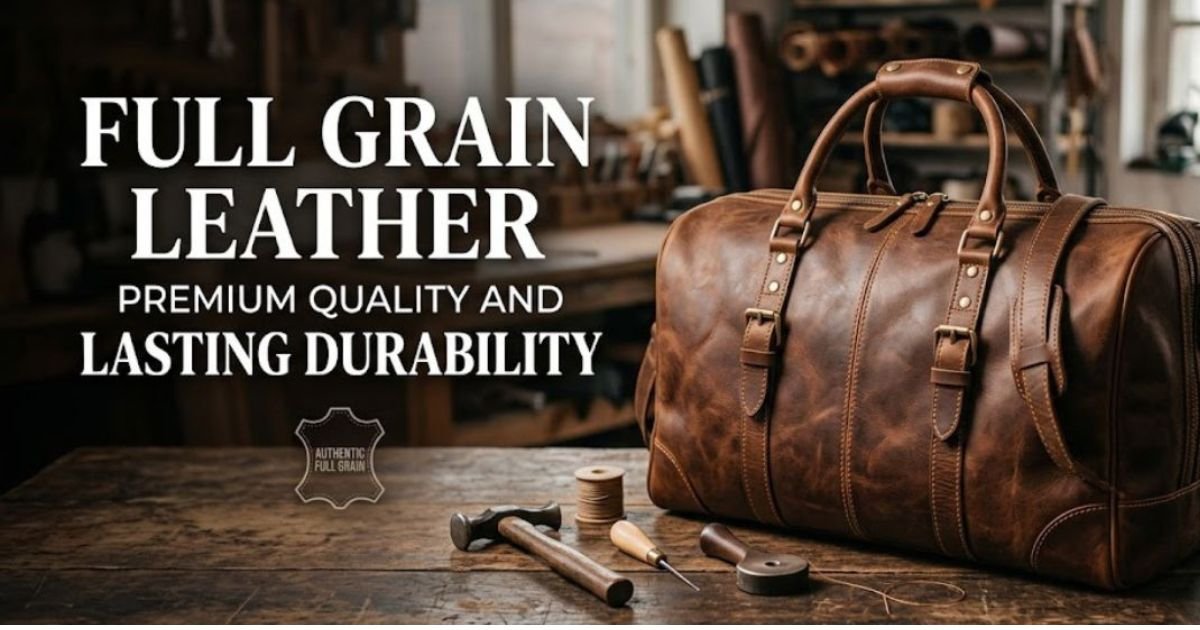
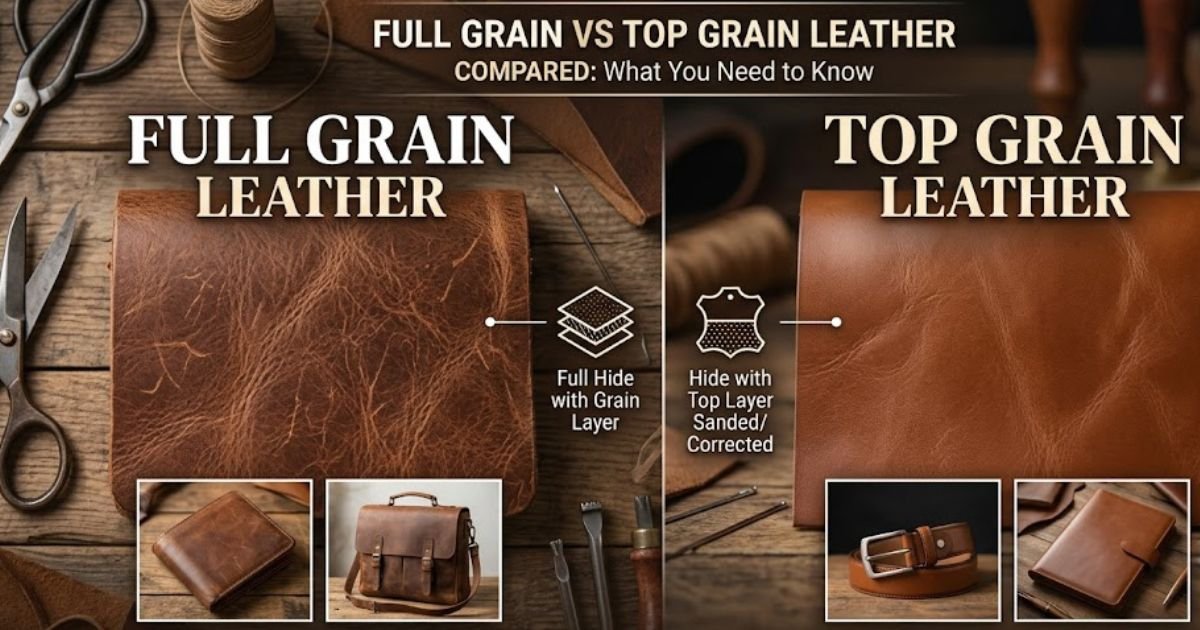
Full-grain leather is the very top of the hide, left completely natural. No sanding. No fake grain stamped on. Every scar, wrinkle, and freckle stays put and that’s the point.
Because the top layer has the tightest fibers, full-grain is the most durable leather you can buy. It breathes, it ages into a rich patina, and a well-made full-grain wallet can outlive your car.
The catch? It costs more and needs a little care. But hold a buttery, broken-in full-grain bag once, and you’ll understand why people happily pay for it.
Top-Grain Leather
Top-grain leather is the same top layer but sanded smooth and sealed with a coating. That sanding removes blemishes, so it looks clean and consistent right off the shelf.
You’ll find it in plenty of mid-range handbags and shoes from well-known brands. It resists stains better than full-grain thanks to that coating, which makes it handy for daily use.
The trade-off: it can’t breathe or build a deep patina the way full-grain does. It ages just not as gracefully.
Genuine Leather
Here’s the big surprise. “Genuine leather” is real leather, but it’s the lowest grade of real leather. It comes from the leftover lower layers after the good top layer is sliced off.
These layers get sanded, stamped with a fake grain, and coated to look presentable. The fibers down here are loose and weak, so genuine leather products tend to crack, peel, or wear through within a few years.
If a product brags mostly about being “genuine leather,” treat that as a reason to dig deeper not a green light.
Bonded Leather
Bonded leather is the hot dog of the leather world. Manufacturers shred leftover scraps, mix them with glue, and press the mush onto a backing. Some bonded leather contains as little as 10–20% actual leather.
It looks like leather at first. Then it peels and flakes often within a year. You’ve probably seen a “leather” office chair that started shedding like a snake.
It’s fine for ultra-cheap, short-term stuff. Just don’t expect it to last.
Buy Now: Men’s Olive Green Leather Jacket
Types of Leather by Animal Source
The animal matters as much as the grade. A soft lambskin jacket drapes like silk because sheepskin is nothing like tough cowhide.
Think of it like cooking. Chicken, beef, and salmon are all great but you’d never treat them the same way and expect the same result.
| Animal Source | Standout Trait | Common Use |
| Cowhide | Tough, versatile, affordable | Bags, boots, furniture |
| Calfskin | Soft, fine-grained | Dress shoes, luxury goods |
| Buffalo | Thick, dense, rustic | Journals, rugged bags |
| Lambskin | Soft, lightweight, drapey | Jackets, gloves |
| Goatskin | Strong yet supple | Bookbinding, gloves |
| Pigskin | Breathable, affordable | Linings, sporting goods |
| Deerskin | Soft, tough, water-friendly | Gloves, moccasins |
| Kangaroo | Lightweight, super strong | Cleats, racing gloves |
| Exotic | Striking, premium | Luxury fashion |
Cowhide and Calfskin
Cowhide rules the leather world. It’s thick, widely available, and endlessly versatile which keeps it affordable. One hide can stretch 40 to 60 square feet, so there’s plenty to work with.
Calfskin is cowhide’s refined younger sibling. It comes from younger animals, so it’s softer and finer. You’ll spot it in high-end dress shoes and luxury gloves.
Buffalo Leather
Buffalo leather sits in a sweet spot. It’s thicker and denser than cowhide, with a bold, textured grain and serious durability. It’s a favorite for rugged journals and bags that are meant to age with character.
Lambskin and Goatskin
Lambskin is feather-light and soft, which is why it’s the go-to for luxury jackets and gloves. Goatskin is the tough cousin supple but surprisingly strong, and a classic choice for bookbinding.
Pigskin, Deerskin, and Kangaroo
These three are the underdogs.
- Pigskin is breathable and budget-friendly, often used as lining.
- Deerskin is soft and tough, and it shrugs off water perfect for gloves.
- Kangaroo has one of the best strength-to-weight ratios on the planet, which is why soccer cleats and racing gloves love it.
Exotic Leathers (Crocodile, Ostrich, Stingray)
Crocodile, ostrich, and stingray turn heads and empty wallets. They’re prized for their wild textures and command sky-high prices in luxury fashion.
One honest warning: many exotic species are protected under CITES, the international agreement that controls trade in endangered animals. Always make sure exotic leather is legally and ethically sourced.
Buy Now: Crocodile Embossed Leather Jacket with Mink Fur
Types of Leather by Finish and Surface Treatment
The finish is the final step that decides how leather looks and feels. The same hide can become a glossy clutch or a velvety notebook cover all depending on the finish.
Aniline, Semi-Aniline, and Pigmented
Think of this as a spectrum from natural to protected:
- Aniline leather is dyed without a surface coating, so the natural grain shows fully. It feels soft and warm but stains easily.
- Semi-aniline adds a light protective coat. You keep most of the natural beauty with a little extra toughness.
- Pigmented leather has a full coating that hides the grain. It’s the most stain-proof and easy to clean, which is why car seats and office furniture love it.
Patent and Pull-Up Leather
Patent leather is coated with a glossy lacquer for that mirror shine. It’s dramatic and great for formal shoes but it cracks in the cold and shows every fingerprint.
Pull-up leather is treated with oils and waxes. When you bend or scratch it, the color lightens in that spot, creating a lived-in look that boots and bags fans adore.
Suede vs. Nubuck
These two fool almost everyone. Both feel soft and velvety, but they come from different places:
- Suede comes from the underside (the split leather layer). It’s soft, lightweight, and great for fashion but water is its worst enemy.
- Nubuck comes from the top grain layer, buffed to a velvety feel. It’s denser and tougher than suede.
The finger test: rub the surface. Nubuck feels fine and tight, almost like velvet. Suede feels fuzzier and looser. A quick water-protector spray keeps both happy.
Sustainable and Alternative Leathers
Not all “leather” comes from animals anymore. A new wave of plant-based and lab-grown materials is shaking things up. Here’s an honest look at how they hold up:
- Piñatex (pineapple) Made from pineapple leaf fibers, a farming byproduct. Decent for fashion accessories, but less durable than full-grain.
- Mylo (mushroom) Grown from mushroom roots. Feels surprisingly close to real leather, though it’s still maturing.
- Desserto (cactus) Made from nopal cactus leaves, grown with no irrigation. Promising and stylish, but newer to the scene.
- Lab-grown leather Grown from real animal cells without slaughter. The most ambitious option, and still early in development.
Quick honesty check: most vegan leather and faux leather options last 2–5 years before wearing out. They’re better for the planet in many ways, but they don’t yet match full-grain for longevity.
Which Type of Leather Is Best for Your Use?
Forget “what’s the best leather” in general. The smarter question is “best type of leather for this?” Here’s a cheat sheet:
| Use Case | Recommended Type | Why | What to Avoid |
| Wallets | Full-grain | Ages beautifully, lasts decades | Bonded leather |
| Bags | Full-grain or top-grain | Durable, holds shape | Genuine leather |
| Belts | Full-grain | Takes daily stress well | Bonded leather |
| Boots | Full-grain or pull-up | Tough, weathers nicely | Coated genuine |
| Furniture | Top-grain | Easy to clean, affordable | Bonded (peels) |
| Car interiors | Pigmented top-grain | Resists heat and fading | Aniline (stains) |
| Gloves | Deerskin or lambskin | Soft yet flexible | Stiff cowhide |
| Journals | Vegetable-tanned buffalo | Rugged, full of character | Bonded leather |
The pattern is clear: for things you want to keep, full-grain wins. For things that just need to look clean and survive daily life, top-grain is a smart, wallet-friendly pick.
How to Identify Real Leather vs. Fake Leather
Want to know real leather vs fake leather in under a minute? Run through this quick checklist:
- Read the label. Specific words like “full-grain” or “vegetable-tanned” signal quality. Vague words like “man-made materials” hint at fake.
- Look at the grain and pores. Real leather has irregular, natural pores and tiny imperfections. Fake leather looks too perfect and repeats its pattern.
- Feel the texture. Real leather warms to your touch and feels slightly uneven. Fake feels cool, smooth, and plasticky.
- Do the smell test. Real leather has a rich, earthy scent. Fake smells faintly like chemicals or plastic.
- Check the cut edges. Real leather edges look fibrous and rough. Fake edges look like clean fabric or foam.
No single test is perfect. But run all five, and you’ll spot faux leather almost every time.
How to Care for Different Types of Leather
A little care doubles the life of your leather. Here’s how to treat each type:
- Full-grain: Condition it every few months to keep it supple. It loves a gentle wipe-down.
- Top-grain: Wipe with a damp cloth. The coating handles most stains for you.
- Suede: Brush it regularly and use a water-protector spray. Never soak it.
- Nubuck: Same as suede brush gently and protect from rain.
- Patent: Buff with a soft cloth to keep the shine and avoid sharp bends.
What damages leather fastest? Water, direct heat, and harsh sunlight. Keep your leather out of the dryer, off the radiator, and away from long stretches in hot cars.
Expert Insight What I Look for When Buying Leather
After years of handling leather goods, I’ve learned the tag lies more often than the leather does. So I trust my hands and nose first.
I once bought a full-grain wallet for around $120. Eight years later, it’s darker, softer, and somehow better-looking than the day I got it that’s the patina at work. A friend grabbed a $35 “genuine leather” wallet around the same time. His cracked at the fold and peeled at the corners within two years.
That side-by-side taught me more than any product description ever could. Cheap leather often costs more over time because you keep replacing it.
When I shop now, I press the grain to see if it springs back, sniff for that earthy scent, and check the edges for fibers instead of foam. If the seller can answer real questions, that’s a great sign.
Here are the four questions to ask before you buy leather:
- What grade is it? (Full-grain, top-grain, genuine, or bonded?)
- How was it tanned? (Vegetable or chrome?)
- Is it certified? (Look for trusted tannery certifications.)
- Where did the hide come from? (A confident answer signals a brand that cares.)
A seller who knows their leather answers these without flinching. One who dodges them just told you everything you need to know.
Conclusion
Choosing the right type of leather depends on your needs, style preferences, and budget. Full-grain and top-grain leather offer superior quality and longevity, while genuine and bonded leather provide more affordable options. Knowing the differences between leather types helps you make informed purchasing decisions and ensures you get the best value for your investment.
FAQs
What is the best type of leather?
Full-grain leather is generally the best for durability and aging, since it develops a rich patina and can last decades. That said, the truly “best” leather depends on your use a soft lambskin glove and a tough full-grain boot are both winners in their own lane.
Is genuine leather good quality?
No, genuine leather is actually the lowest grade of real leather, made from the leftover lower layers of the hide. It’s real, but it tends to crack and peel faster than full-grain or top-grain. Don’t let the reassuring name fool you.
What is the most durable type of leather?
Full-grain cowhide and buffalo leather offer the best all-around durability, especially when vegetable-tanned. For raw tensile strength, kangaroo leather is hard to beat, which is why it’s used in racing gloves and cleats.
What’s the difference between full-grain and top-grain leather?
Full-grain leather is the natural top layer, left untouched, so it’s the strongest and ages best. Top-grain is that same layer sanded smooth and coated, which looks cleaner but breathes less and won’t build a patina the same way.
How long does leather last?
Full-grain leather can last several decades with care, while top-grain typically lasts 10–20 years. Genuine leather usually shows wear in 3–5 years, and bonded leather often starts peeling within 1–2 years.
Is vegan leather as durable as real leather?
Not yet, in most cases. Most vegan and faux leather options last around 2–5 years before the surface starts breaking down, while full-grain can last for decades. Newer plant-based versions are improving fast, though.