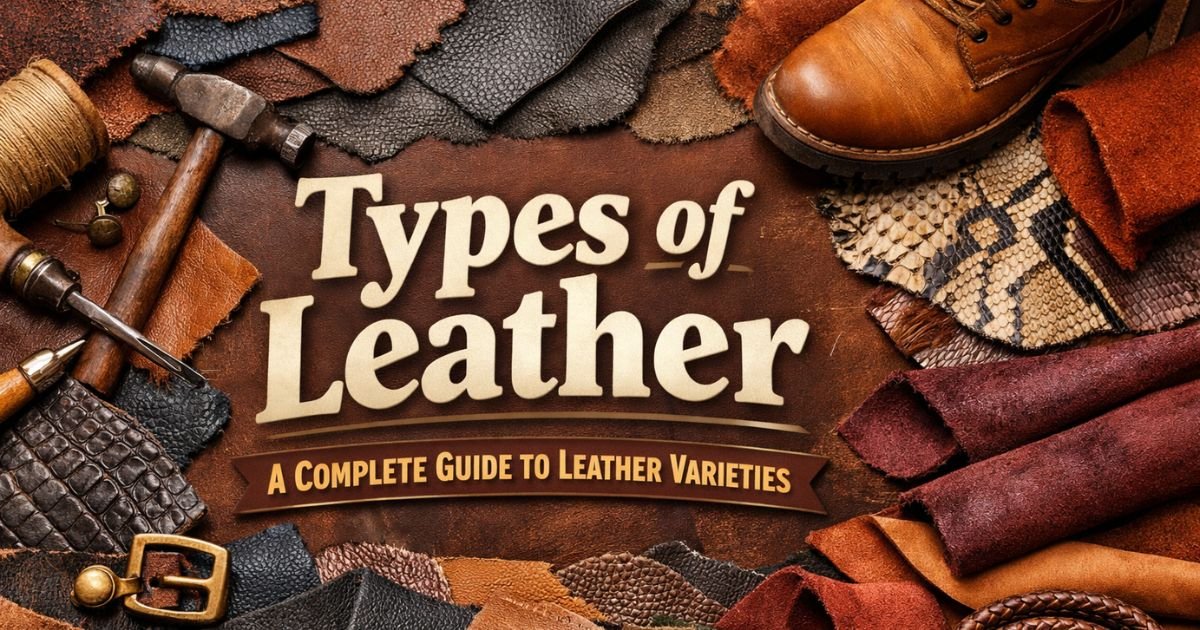
Different types of leather are used in fashion, furniture, footwear, and accessories. Each type has unique characteristics, durability levels, and appearances. Common leather types include full-grain leather, top-grain leather, genuine leather, split leather, bonded leather, and Nappa leather. Understanding these differences can help you choose the best leather for your needs.
What are the 4 main types of leather by grade?
Leather grading refers to which layer of the animal hide a manufacturer uses. The hide is thick, and tanneries split it into multiple layers. The layer chosen dictates the strength, appearance, and price of the final product.
Full-grain leather
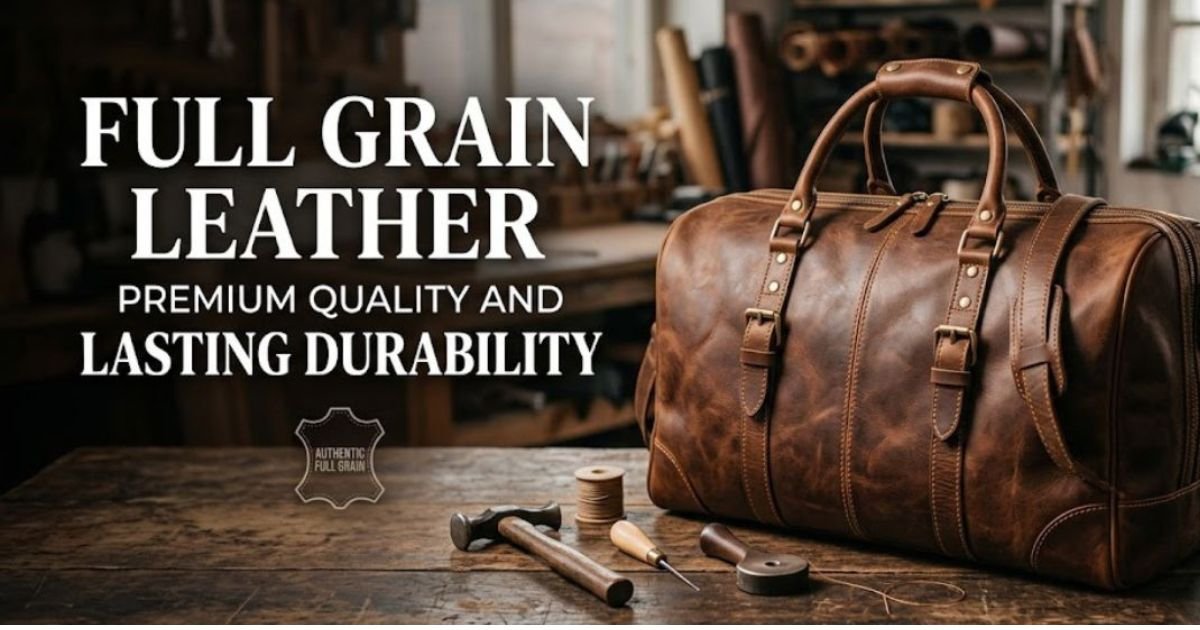
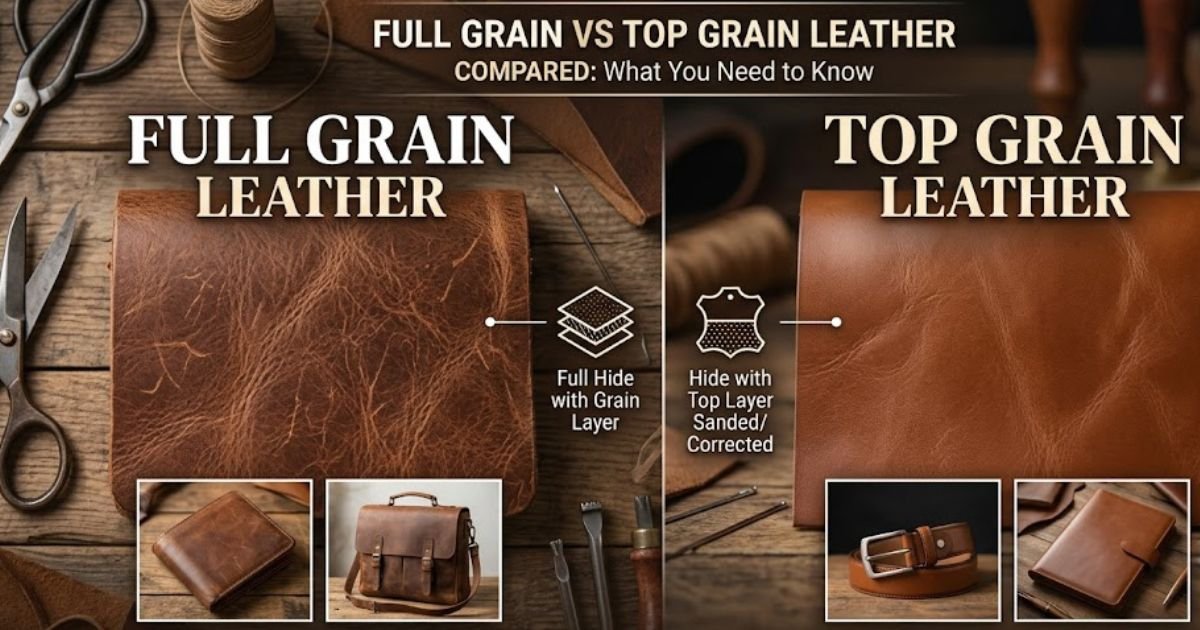
Full-grain leather is the absolute highest quality leather available. Manufacturers leave the outermost layer of the hide completely intact. Because the dense outer fiber structure remains undisturbed, full-grain leather offers maximum durability and water resistance.
You will notice natural imperfections, scars, and variations on full-grain leather products. Over time, full-grain leather absorbs oils and develops a rich, dark patina. Choose full-grain leather if you want a heritage item like a briefcase or heavy-duty boots that will last decades.
Top-grain leather
Top-grain leather is the second-highest quality tier. Tanneries take the top layer of the hide but lightly sand or buff the surface to remove scars and natural blemishes. This correction process creates a highly uniform, smooth appearance.
While slightly less durable than full-grain, top-grain leather remains exceptionally strong. The sanding process makes top-grain leather thinner and more flexible. Manufacturers often apply a protective topcoat to top-grain leather, which prevents stains but also prevents the leather from developing a natural patina. Most luxury designer handbags and premium automotive interiors use top-grain leather.
Genuine leather (and split leather)
The term “genuine leather” simply means the product contains some real animal hide. Technically, genuine leather usually refers to “split leather.” Once the tannery removes the premium top layers (for full-grain and top-grain), the remaining bottom layers become split leather.
This lower layer lacks the dense fiber structure of the surface. Consequently, genuine leather is weaker, stretchier, and highly prone to damage. To make genuine leather look appealing, manufacturers stamp an artificial grain pattern onto the surface and apply heavy paints. Buy genuine leather goods if you need a budget-friendly accessory, but do not expect long-term durability.
Bonded leather
Bonded leather sits at the very bottom of the quality pyramid. Tanneries take leftover leather scraps, grind them into a pulp, mix them with polyurethane adhesives, and roll them onto a paper or fiber backing.
Bonded leather typically contains only 10% to 20% real leather fibers. The heavy plastic coating makes bonded leather temporarily repel liquids, but it inevitably peels, cracks, and delaminates after minimal use. Avoid bonded leather furniture and garments entirely if you want your purchase to last longer than a year.
How do leather finishes affect durability?
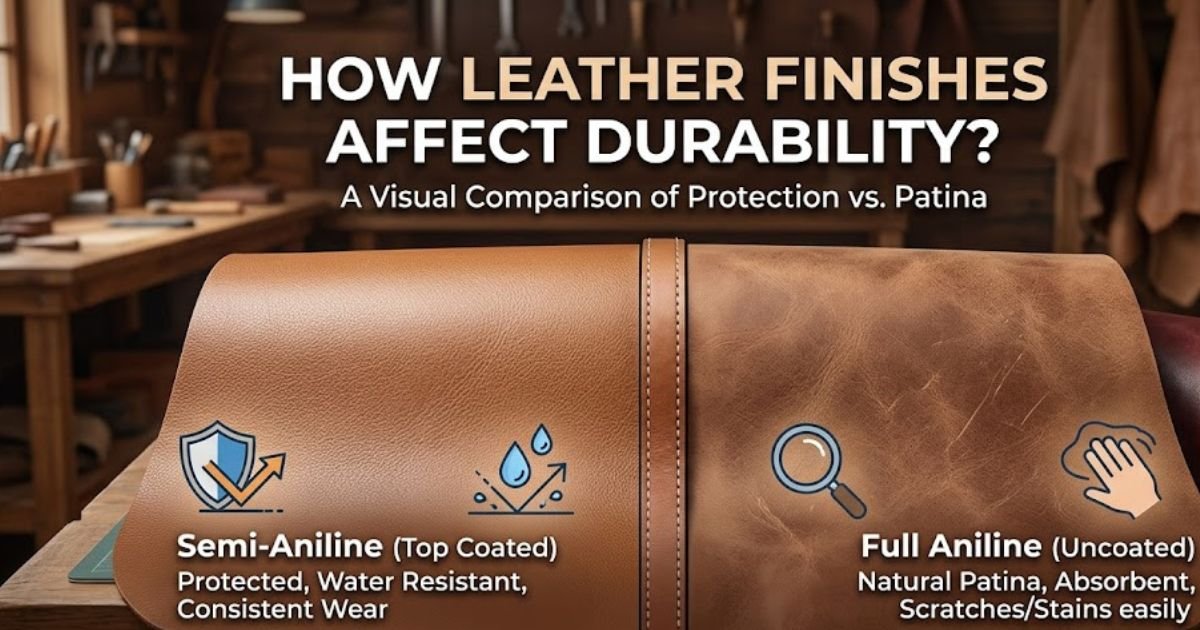
The dye and protective coating applied to the hide determine how the leather reacts to sunlight, water, and daily wear.
Aniline leather
Aniline leather receives a treatment of soluble, transparent dyes. This finish offers zero protective coating, meaning the natural marbling, pores, and scars of the hide remain completely visible. Aniline leather feels buttery soft and warm to the touch.
Because it lacks a protective seal, aniline leather absorbs liquids immediately. It stains easily and fades under direct sunlight. Choose aniline leather only for luxury items that will see gentle, careful use.
Semi-aniline leather
Semi-aniline leather strikes a balance between natural beauty and practical durability. Manufacturers apply a very thin protective topcoat over the transparent dye.
This thin barrier slows down liquid absorption, giving you time to wipe up spills before they stain. Semi-aniline leather resists fading better than pure aniline leather while still retaining a relatively soft feel. This finish works perfectly for high-end living room furniture.
Pigmented (finished) leather
Pigmented leather features a heavy, opaque polymer coating. This sealed surface completely obscures the natural grain of the hide.
Finished leather repels water instantly, resists deep stains, and withstands heavy friction. While it feels stiffer and cooler to the touch than aniline leather, pigmented leather is incredibly easy to clean. Families with pets or children should always choose pigmented leather for their sofas and car seats.
Vegetable tanned vs. chrome tanned leather
Before the hide becomes leather, it must undergo tanning to prevent decomposition. The tanning method heavily influences the leather’s final characteristics.
Vegetable tanning
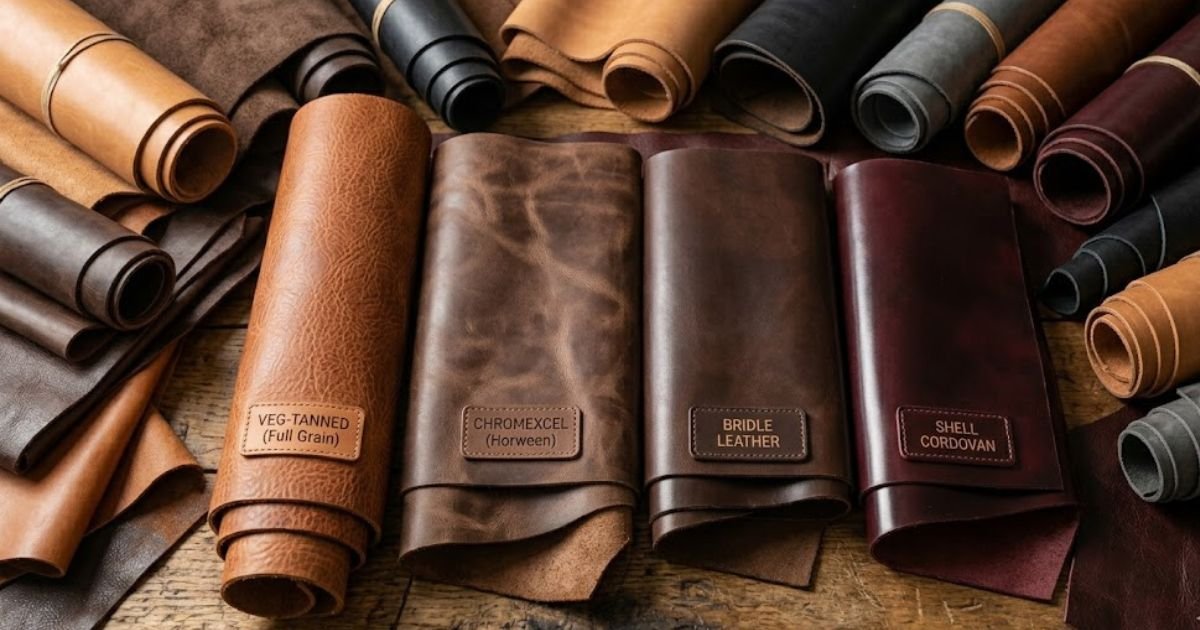
Vegetable tanning relies on natural tannins extracted from tree bark, leaves, and branches. This traditional, eco-friendly process takes up to two months to complete. Vegetable-tanned leather feels thick, stiff, and highly structured. It excels at tooling and carving, making it the premier choice for custom belts, saddles, and premium shoe soles. According to industry standards, vegetable-tanned leather develops the most dramatic and beautiful patina of any tanning method.
Chrome tanning
Invented in the 1850s, chrome tanning uses chromium salts and harsh chemicals to process hides in just a few days. Around 90% of the world’s leather undergoes chrome tanning.
Chrome-tanned leather is soft, supple, and highly resistant to heat and water. It also holds vibrant dye colors much better than vegetable-tanned leather. If you are buying a soft leather jacket or brightly colored sneakers, you are buying chrome-tanned leather.
Different types of leather by animal source
Cowhide dominates the market, but other animal skins offer specialized benefits for different products.
Cowhide and calfskin
Cowhide is the undisputed king of the leather industry. It offers a perfect balance of strength, thickness, and availability. Calfskin comes from younger cattle. It features a much tighter, finer grain structure than adult cowhide. Calfskin is exceptionally soft and lightweight, making it the preferred material for luxury dress shoes and premium book bindings.
Sheepskin and lambskin
Sheepskin is famously soft, delicate, and lightweight. Manufacturers often leave the fleece attached to create shearling leather, which provides incredible insulation for winter coats and slippers. Lambskin is even softer and thinner than sheepskin. High-end fashion houses use lambskin to craft gloves, skirts, and tailored leather jackets.
Exotic leathers
Exotic leathers come from non-traditional sources and command astronomical prices.
- Crocodile and Alligator: Known for their distinct, heavily armored scale patterns. These extremely durable leathers frequently appear in five-figure luxury handbags and bespoke watch straps.
- Ostrich: Ostrich leather features a highly recognizable pattern of raised bumps (quill follicles). It is naturally rich in oils, making it resistant to cracking and stiffening over time.
- Stingray: Stingray leather is covered in tiny calcium deposits that look like thousands of tiny glass beads. It is virtually indestructible and highly resistant to fire and water.
Faux leather and synthetic alternatives
Faux leather mimics the appearance of real animal hide using petroleum-based plastics or plant-based polymers.
Polyurethane (PU) leather
PU leather consists of a synthetic polyurethane coating applied to a fabric backing. It feels relatively soft and replicates the look of top-grain leather well. PU leather is highly water-resistant and entirely vegan. However, PU leather lacks breathability and will eventually crack and peel under heavy friction.
Polyvinyl Chloride (PVC) leather
PVC leather (often called vinyl) is thicker, stiffer, and more durable than PU leather. It utilizes harsh plasticizers to achieve flexibility. PVC leather withstands extreme weather conditions and heavy commercial use. You will often find PVC leather on boat seats, restaurant booths, and motorcycle saddles.
Vegan and plant-based leather
Recent innovations have introduced sustainable alternatives to plastic leathers. Companies now engineer vegan leather from cork, pineapple leaves, apple peels, and mushroom fibers. While these plant-based leathers reduce environmental impact, they generally lack the tensile strength and longevity of traditional full-grain cowhide.
The Ultimate Leather Comparison Table
Use this table to quickly evaluate the different types of leather based on their specific attributes.
| Leather Type | Quality Grade | Durability | Liquid Resistance | Best Use Case |
| Full-Grain | Highest | Extreme | High | Work boots, heirloom bags, thick belts |
| Top-Grain | High | Very Good | Moderate to High | Designer handbags, premium wallets |
| Genuine (Split) | Low | Poor | Low (unless coated) | Budget belts, cheap accessories |
| Bonded | Lowest | Very Poor | Moderate (initially) | Temporary budget upholstery |
| Aniline Finish | Varies | Delicate | Zero | Luxury apparel, decorative furniture |
| Pigmented Finish | Varies | Excellent | High | Car seats, family room sofas |
| PU (Faux) | Synthetic | Fair | High | Fast fashion, budget seating |
What is the best leather for your needs?
Matching the right leather to your specific lifestyle prevents buyer’s remorse.
- Choose full-grain leather if you want a rugged pair of boots or a heavy-duty briefcase that will last 20 years and look better with age.
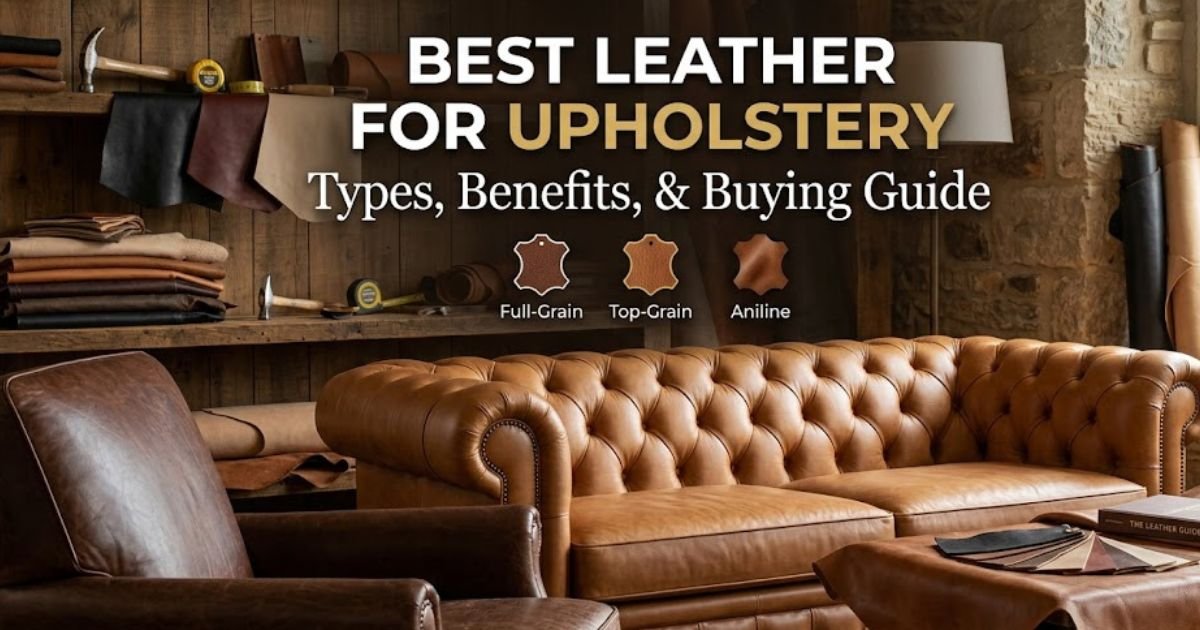
- Choose top-grain, pigmented leather if you need a durable living room sofa that can withstand spilled drinks, dog claws, and daily family use.
- Choose chrome-tanned lambskin if you want a buttery-soft, lightweight fashion jacket that drapes perfectly over your shoulders.
- Choose PVC (vinyl) leather if you are upholstering outdoor furniture or a boat interior that requires total waterproofing and UV resistance.
Conclusion
Knowing the different types of leather is essential when purchasing leather products. Full-grain leather offers the highest quality and durability, while other types provide affordable alternatives for various applications. Selecting the right leather depends on your budget, intended use, and desired appearance.
FAQs
Is genuine leather real leather?
Yes, genuine leather contains real animal hide. However, the term refers to the lowest grade of usable hide (split leather). Genuine leather lacks the durability and structural integrity of full-grain and top-grain leathers.
What is the highest quality leather?
Full-grain leather is the absolute highest quality leather. It utilizes the dense, uncorrected top layer of the animal hide, providing unmatched durability, breathability, and the ability to develop a natural patina over time.
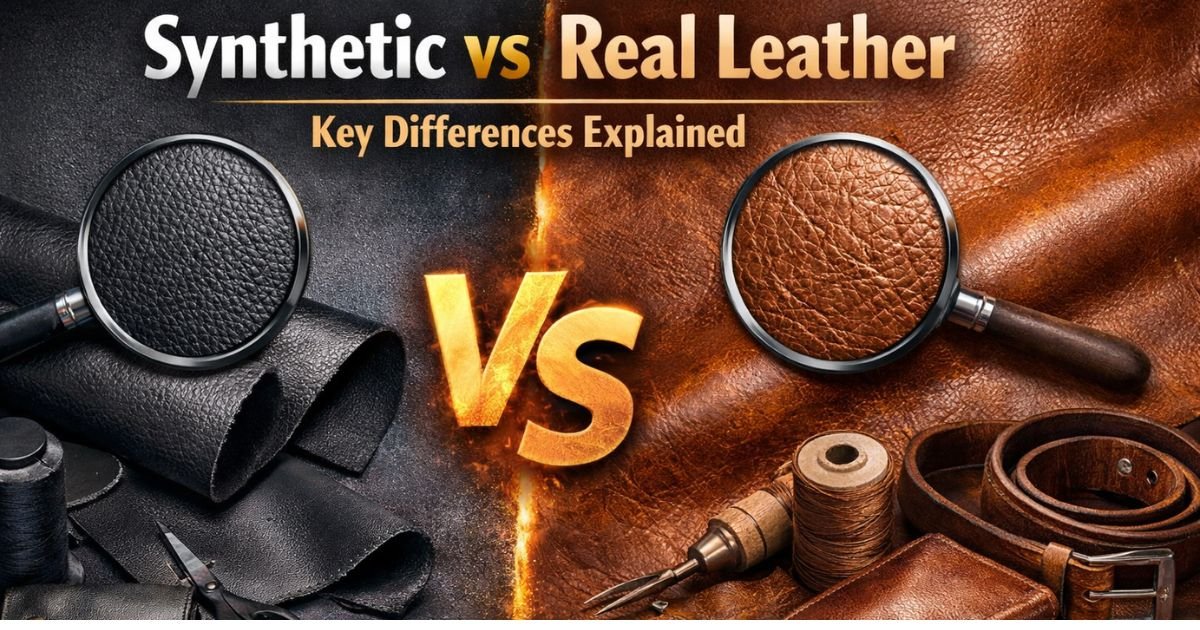
How can you tell if leather is real or faux?
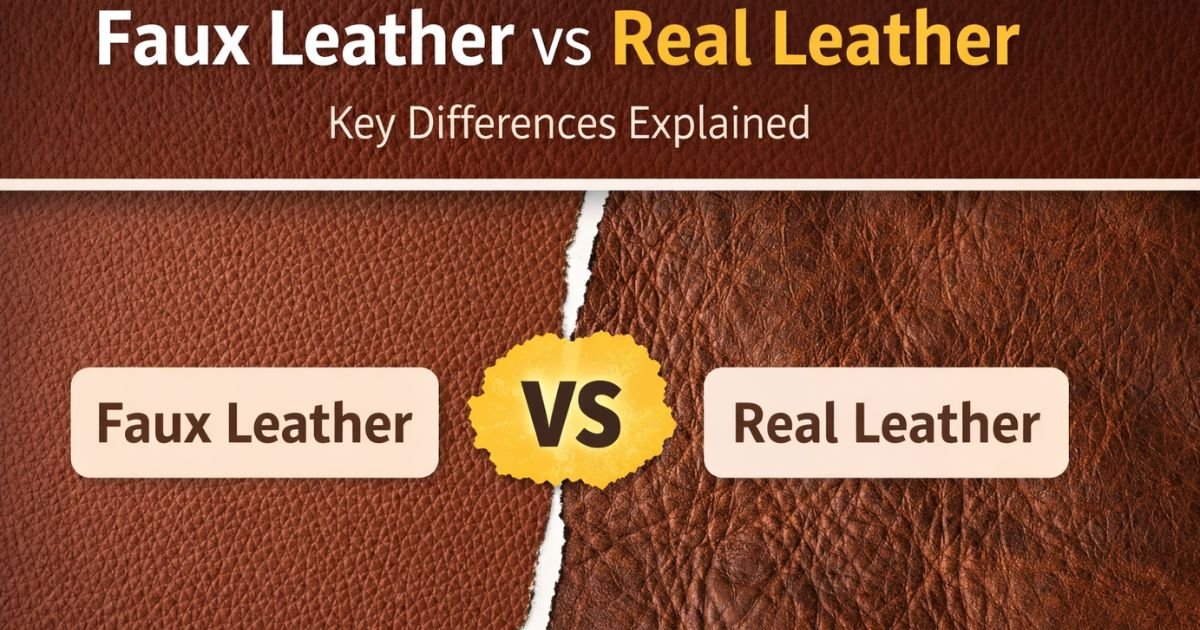
Real leather features inconsistent pores, random natural blemishes, and a distinct earthy smell. Faux leather smells like plastic or chemicals and features a perfectly repeating, uniform pore pattern. Furthermore, real aniline and semi-aniline leathers will gradually absorb a small drop of water, whereas faux leather completely repels water instantly.
Why does bonded leather peel?
Bonded leather peels because it consists of loose leather dust glued to a synthetic backing and covered in a heavy plastic topcoat. Flexing and friction break down the weak adhesive bonds rapidly, causing the plastic surface to separate and flake away from the base material.